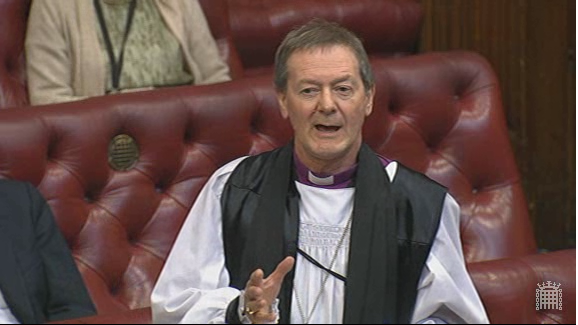
Make 2015 a year of action on development and climate change, Bishop of Birmingham urges

The following letter, co-signed by the Bishop of Birmingham and leaders of other faiths, appeared in The Times newspaper on 6th January 2015:

A year for progress

Sir, This year will provide a once-in-a-generation opportunity: in September world leaders decide on new goals for sustainable development and in December a new climate treaty.

Continue reading “Make 2015 a year of action on development and climate change, Bishop of Birmingham urges”

Bishop of Sheffield calls for creative communication of post-2015 development goals

“The threat of climate change, the desire for sustainable growth, digital communications and the movements of peoples have all contributed to this sense of one world and the desire for a good globalisation. It is a vision profoundly rooted in the Judaeo-Christian vision of the world: a family of diverse nations, cherishing peace, seeking justice, nurturing wisdom and looking for the flourishing of all.”

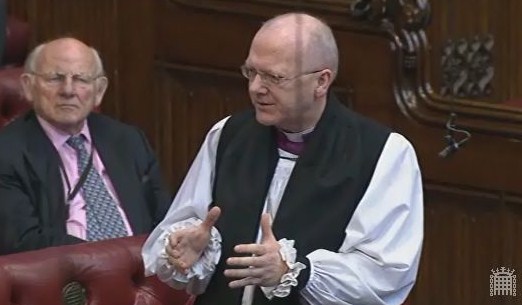
14.03.27 Bishop of SheffieldOn 11th December 2014, Labour Peer Lord McConnell of Glenscorrodale led a take-note debate in the House of Lords on the case for establishing new global development goals in 2015. The Bishop of Sheffield, the Rt Revd Steven Croft, took part in the debate. He paid tribute to the Government’s role in the continuing international dialogue and noted the significant achievements made through the Millennium Development Goals. He challenged all stakeholders in the post-2015 process to think creatively about how best to communicate these successes, in order to engage more people in the process. He noted that the Church, through the Anglican Communion is a key partner in international development. He commended the work of Christian Aid on the process and highlighted four key priorities identified by the agency – tackling climate change, a stand-along goal on gender justice, increased capacity to respond to natural disasters, and a focus on global inequality and a fairer global economic system.
Continue reading “Bishop of Sheffield calls for creative communication of post-2015 development goals”

Archbishop of Canterbury leads House of Lords debate on conflict prevention

“I hope that in this debate we will see how the different strands of soft and hard power can be better combined, and there can be a clearer sense of the narrative which sustains this wonderful country which has in the past given so much to the world when at its best, and has the potential to give even more if the advantages of our history, the skills of our institutions and the courage of our people are combined with a clear aim in view.”

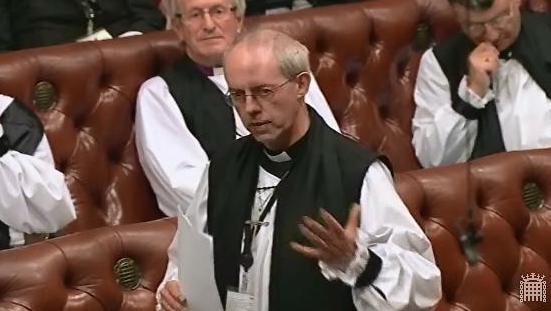
Archbishop of CanterburyOn 5th December 2014, the Archbishop of Canterbury, the Most Revd and Rt Hon Justin Welby, led a debate in the House of Lords to take note of the role of soft power and non-military responses to conflict prevention. In his opening speech, he reflected on the UK’s role in the wider world and the soft power assets it has at its disposal – the diplomatic services, the BBC, the British Council, the Commonwealth, overseas development assistance and the Church, particularly through relationships with the Anglican Communion. He spoke of the need to better understand ourselves, so as to be more effective in projecting the values and influence of the UK overseas. He also noted that the next Strategic Defence and Security Review needed to reflect the central relationship between soft and hard power, and called for more joined-up working across Government to ensure this was the case. Following his opening speech, twenty-six other members of the House contributed to the debate, including the Bishop of Derby, whose remarks can be read here. The Archbishop closed with his reflections on the topics discussed in the course of the debate. Continue reading “Archbishop of Canterbury leads House of Lords debate on conflict prevention”

Bishop of Derby calls for hope in the face of conflict, during Archbishop’s debate

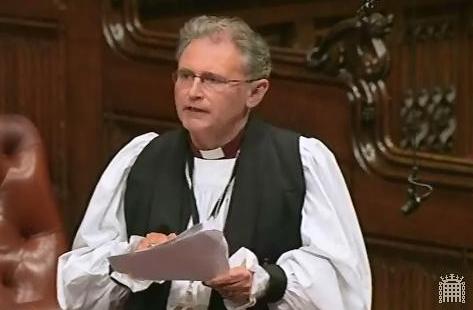
DerbyOn 5th December 2014, the Bishop of Derby, the Rt Revd Alastair Redfern, took part in the Archbishop of Canterbury’s debate on the role of soft power and non-military responses to conflict prevention. He noted that for soft power to be successfully exercised, it requires a great deal of trust – particularly trust in a bigger overview, the dignity of all people, a trust in the goodness of heart of people – and a willingness to learn new things. He also reflected on how the Anglican Church at its best is a model for these forms of trust.

The Lord Bishop of Derby: My Lords, I, too, congratulate my colleague the most reverend Primate—or perhaps I should say from these Benches my honourable friend—on his securing this debate. Continue reading “Bishop of Derby calls for hope in the face of conflict, during Archbishop’s debate”

Bishop of Coventry asks Government about humanitarian support for Iraq and Syria

On 13th October 2014 the Bishop of Coventry, Rt Rev Christopher Cocksworth received answers to written questions on Iraq and Syria. The Bishop asked Government about the UK’s involvement in offering humanitarian aid, peacebuilding and support for displaced persons.

13.10 Bishop of Coventry

Continue reading “Bishop of Coventry asks Government about humanitarian support for Iraq and Syria”

Bishop of Coventry – Iraq and Syria (Written Answers)

On 13th October 2014, the Bishop of Coventry, the Rt Revd Christopher Cocksworth, received answers to five written questions on the subjects of Iraq and Syria.

Iraq

13.10 Bishop of CoventryThe Lord Bishop of Coventry: To ask Her Majesty’s Government what steps they will take to ensure the long-term provision of humanitarian assistance for internally displaced people in Iraq.[HL1874]

Lord Wallace of Saltaire: Her Majesty’s Government (HMG) has allocated £23 million to respond to the humanitarian crisis. £17.5 million of this is funding partners already working in Iraq to enable them to provide immediate life-saving assistance. HMG is also providing logistics, coordination and staffing support to the Kurdish and the UN systems to ensure long-term humanitarian provision.

**

The Lord Bishop of Coventry: To ask Her Majesty’s Government what assistance they are providing to the authorities in Iraq to ensure that newly born children of those displaced from northern Iraq are issued with birth registration documents.[HL1876]

Lord Wallace of Saltaire: HMG provided £1 million to UNHCR in Iraq in June 2014, which included support for 4,500 families with legal assistance, protection and support to registration. UNHCR is discussing these issues with the Government of Iraq and leading work to provide legal assistance to internally displaced persons.

(via Parliament.uk) Continue reading “Bishop of Coventry – Iraq and Syria (Written Answers)”

Bishop of St Albans – food security in Angola (Written Answer)

On 11th August 2014 the Bishop of St Albans, the Rt Revd Alan Smith, received an answer to a question on food security in Angola.

Bishop of St AlbansThe Lord Bishop of St Albans: To ask Her Majesty’s Government what discussions they have had with the government of Angola regarding food insecurity in that country; and whether they have encouraged that government to undertake an assessment of the situation.

Baroness Northover (LD): Poor seasonal rainfall early in 2014 in parts of Western Angola has affected the harvest and food availability there. However, throughout most of the country production is considered to be good and expected to be higher than normal. This has helped to maintain reasonable food prices for urban populations.

The Government has not had recent bilateral discussions with the Government of Angola regarding the food situation. The Government of Angola is leading the food assistance programme and is best placed to prepare for and lead such a response with the support of UN partners. The Government of Angola has set up an Inter-ministerial Commission to tackle the drought. The Government of Angola is also embarking on infrastructure projects, such as water supply projects, to mitigate drought impact in the future.

(via Parliament.uk)

Somalia: Written Question from Bishop of Coventry

On March 19th 2014 the Bishop of Coventry, Rt Rev Christopher Cocksworth, received an answer to a written question about the promotion of stability in Somalia.

13.10 Bishop of CoventryThe Lord Bishop of Coventry: To ask Her Majesty’s Government what assistance they are providing to the Federal Government of Somalia to make progress on delivering security, stability and services to all its people.

Baroness Northover: The UK Government is committed to promoting security, stability and service delivery in Somalia. Funding is not provided directly to the Federal Government of Somalia. UK assistance is mainly delivered through international partners such as the UN, NGOs and private sector providers. DFID support includes work to deliver more legitimate governance structures and promote conflict resolution, supporting increased access to justice and security; and the provision of basic services through health and education programmes.

In addition, DFID, the Foreign and Commonwealth Office and the Ministry of Defence co-finance the Conflict Pool, which provides support to promote security in Somalia.

(Via Parliament.uk)

The Bishop of Wakefield speaks in debate on situation in Syria and the Middle East

The Bishop of Wakefield spoke during the debate on Syria and the Middle East, highlighting the increasing complexity of the conflict in Syria, the difficulties facing outside countries such as the UK in responding appropriately and effectively, the huge displacement of the Syrian population, and the need to invest significant resources in the region to facilitate a peaceful solution to the conflict. He asked the Government to support efforts to bring about reconciliation between two key actors in the conflict – Iran and Saudi Arabia, and called for support of civil society within the refugee populations, particularly in Lebanon and Jordan.

The Lord Bishop of Wakefield: My Lords, I thank the Minister for her characteristically clear introduction to this debate and for setting the context so succinctly.
In December 2002, I was called to 10 Downing Street for a clandestine meeting with the Prime Minister’s appointments secretary to talk about the possibility of my going to the See of Wakefield. When I arrived, I was terrified that my cover might be blown, since television cameras surrounded us and, indeed, I followed Andrew Marr through the security gate. The cameras were, of course, not for us but for President Assad, who was paying an official visit to the then Prime Minister, Tony Blair. Indeed, there was even talk at the time of persuading the Queen to confer a knighthood on the Syrian leader. Continue reading “The Bishop of Wakefield speaks in debate on situation in Syria and the Middle East”

Bishop of Wakefield calls for close links with civil society to end violence against women

The Lord Bishop of Wakefield: My Lords, I, too, congratulate the noble Baroness, Lady Prosser, on securing this debate. I reassure noble Lords that I am not speaking simply to bring a modicum of gender balance to the Chamber.

Many years ago now, when we were living in the East Midlands, my wife was a volunteer at a women’s refuge. She was scrupulous in maintaining confidentiality about those who used the refuge. None the less, on occasion, she would return home shocked and distressed at the violence that women had experienced, even here in our own country. It was a phenomenon that did not relate to just one stratum of society. Continue reading “Bishop of Wakefield calls for close links with civil society to end violence against women”