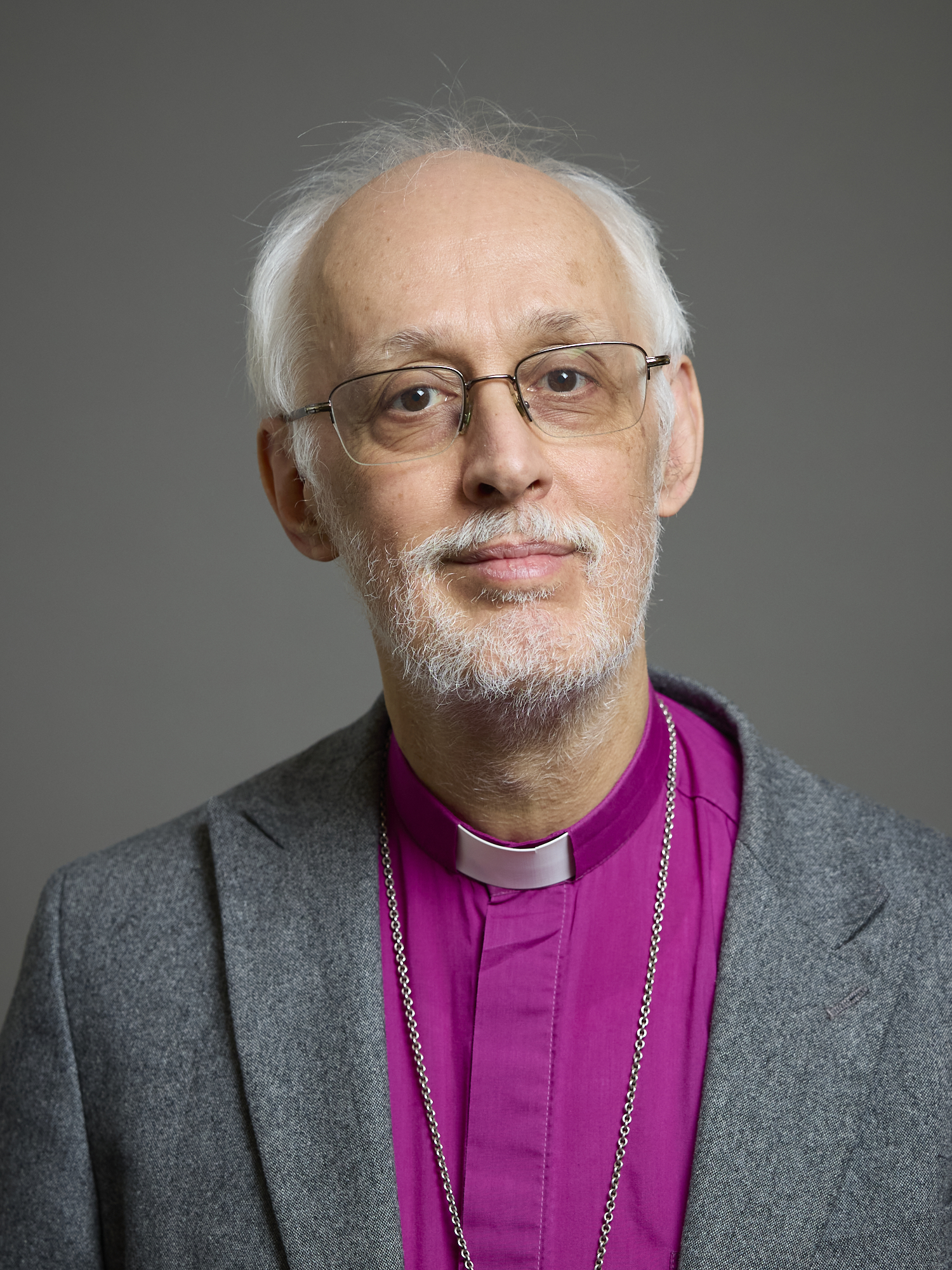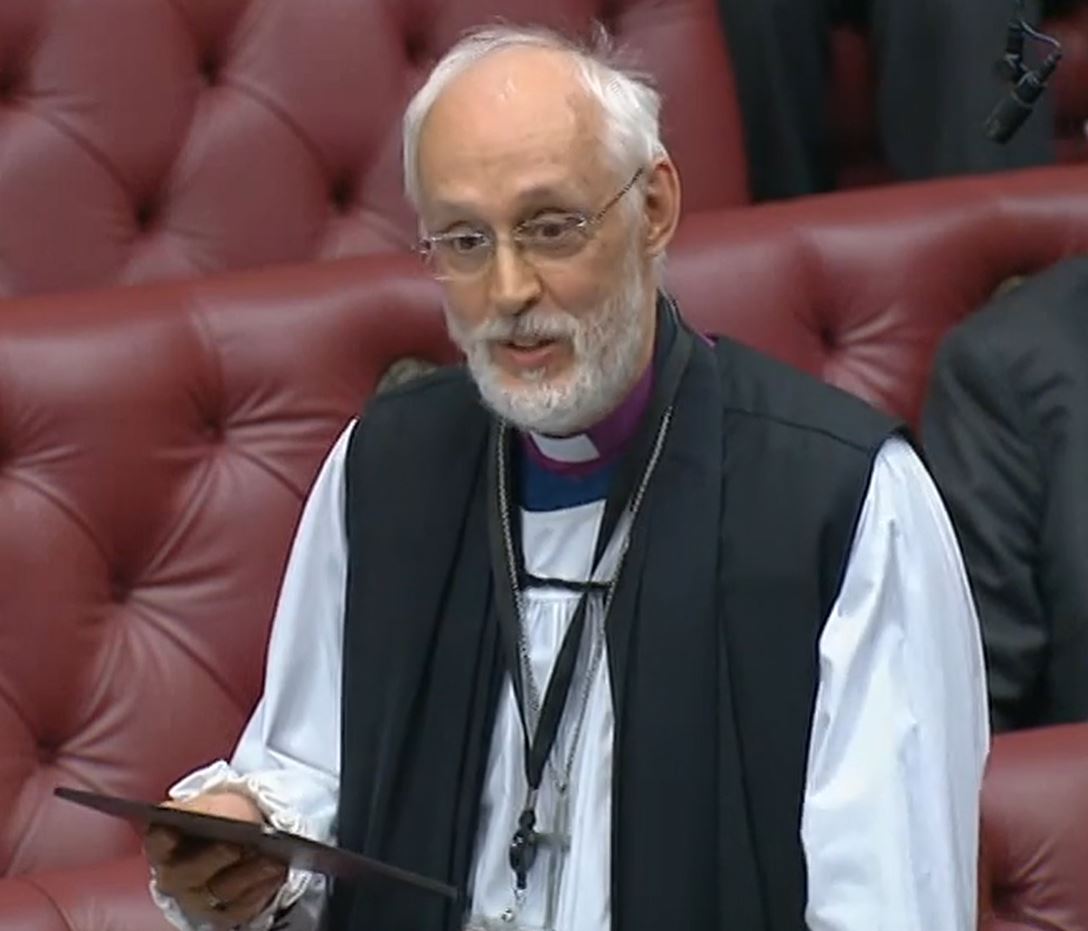
Children’s Wellbeing and Schools Bill: Bishop of Lincoln moves safeguarding amendments on behalf of the Bishop of Manchester

The Bishop of Lincoln moved two amendments in place of the Bishop of Manchester on lifelong safeguarding for children in care during a debate on the Children’s Wellbeing and Schools Bill on 19th June 2025:

The Lord Bishop of Lincoln:

146B: Clause 21, page 39, line 21, at end insert—

(e) to have due regard to the need to remove or minimise the disadvantages suffered by looked-after children and relevant young persons.”Member’s explanatory statement

The amendment seeks to expand and strengthen Clause 21 by replacing the light-touch duty to be “alert to” their needs with a stronger requirement for public bodies to have “due regard” to eliminating disadvantage and to take reasonable steps to mitigate any harmful effects of their policies. The amendment intends to create a legally enforceable, lifelong safeguard for anyone who has ever been in care.

My Lords, I move the amendments in the name of the right reverend Prelate the Bishop of Manchester. In relation to Amendment 146B, 120 councils around the country have already committed themselves voluntarily to embrace the “due regard” implementation, but this amendment intends to create a legally enforceable, legislative and lifelong safeguard across government for anyone who has ever been in care.

Continue reading “Children’s Wellbeing and Schools Bill: Bishop of Lincoln moves safeguarding amendments on behalf of the Bishop of Manchester”

Children’s Wellbeing and Schools Bill: Bishop of Manchester supports amendments on safeguarding children’s rights

On 17th June 2025, the House of Lords debated the Children’s Wellbeing and Schools Bill. The Bishop of Manchester spoke in support of amendments to the bill that would ensure safeguards and limits on deprivation of liberty for children: 

The Lord Bishop of Manchester: My Lords, I have added my name to a number of the amendments in this group; I could probably have added it to all of them. Like other noble Lords, I am very grateful for the work of the Nuffield Family Justice Observatory, which has been quoted several times. I am ignoring all the careful facts and figures I had prepared for this evening, because most of them have already been given by other noble Lords, and it is a principle here that we do not repeat what has already been said. Rather, I would like to speak to the broad principles and the moral case, and to be brief.

Continue reading “Children’s Wellbeing and Schools Bill: Bishop of Manchester supports amendments on safeguarding children’s rights”

Children’s Wellbeing and Schools Bill: Bishop of Manchester supports amendment on bereavement policies in schools

On 9th June 2025, the Bishop of Manchester spoke in support of an amendment to the Children’s Wellbeing and Schools Bill tabled by Baroness Bennett of Manor Castle, which would establish a requirement for schools to have bereavement policies to support children affected by loss:

The Lord Bishop of Manchester: My Lords, I am grateful for the Bill as an opportunity to address a number of what we call adverse childhood experiences. I suspect that, given the lateness of the hour, we are not going to reach some of my amendments on care leavers that are scheduled for later. This group, particularly Amendment 171, deals with children who have experienced bereavement. Not much has been said about that in this short debate, so I will say a few words.

Continue reading “Children’s Wellbeing and Schools Bill: Bishop of Manchester supports amendment on bereavement policies in schools”

Renters Rights Bill: Bishop of Manchester tables amendments on temporary accommodation and notice for property inspections

On 14th May 2025, the Bishop of Manchester tabled two amendments to the Renters Rights Bill in committee:

The Lord Bishop of Manchester: 249: Clause 101, page 129, line 2, leave out from “(homelessness)” to end of line 4

Member’s explanatory statement:

This amendment would make the Decent homes standard apply to all homeless temporary accommodation provided under the Housing Act 1996.

I thought that my amendment was never going to come. Amendment 249 stands in my name, and I am glad to support Amendment 252, to which I have added my name, and Amendments 250 and 251 in this group. I declare my interest as co-owner, with my wife, of one rather modest apartment in the West Midlands, which we let out.

As someone who has chaired a wide range of housing associations, including a large local authority transfer and an arm’s-length management company, I have seen the huge positive impact that the decent homes standard has had since one was first applied to social housing. Not least, it has forced landlords to pay proper attention to their existing stock, rather than focusing all their energies and resources on new developments. Hence, I am delighted that this Bill will, for the first time, extend the standard to much of the private rented stock; it is a sector desperately plagued by underinvestment in repairs, maintenance and stock improvement. One in five privately rented homes does not currently meet the decent homes standard compared to 10% for social housing. More than one in 10 has a category 1 hazard, which is two and a half times the figure for social housing.

Continue reading “Renters Rights Bill: Bishop of Manchester tables amendments on temporary accommodation and notice for property inspections”

Bishop of Manchester asks about ethical trade considerations in UK-India partnership

On 13th May 2025, the Bishop of Manchester asked a question on ethical trade considerations following a government statement on trade negotiations between the UK and India:

The Lord Bishop of Manchester: My Lords, I too welcome both trade agreements in recent weeks and congratulate His Majesty’s Government on achieving them. I know that in my diocese in Manchester, the large Indian diaspora community will be working hard to help British exports where they have improved opportunities.

Continue reading “Bishop of Manchester asks about ethical trade considerations in UK-India partnership”

Children’s Wellbeing and Schools Bill: Bishop of Manchester highlights impact on care leavers and faith communities

The Bishop of Manchester spoke at the second reading of the Children’s Wellbeing and Schools Bill on 1st May 2025, highlighting the potential impact of the bill on care leavers and faith communities:

The Lord Bishop of Manchester: My Lords, I begin by expressing my thanks to all noble Lords who have reached out to me following the announcement that I will be taking up the role of Convenor of the Lords Spiritual next month. I look forward to working with all noble Lords. I also look forward to hearing today the maiden speeches from the noble Lords, Lord Mohammed of Tinsley and Lord Biggar, the latter a fellow clergyman and a theological mind of some high repute.

Debate during the recent passage of my own Private Member’s Bill through this House highlighted the severe disadvantages faced by many care leavers. Research by Barnardo’s showed that 39% of care leavers aged 19 to 21 are not in education, employment or training, compared with 13% of young people in general. We are failing almost two in five of those who have care experience. Moreover, care leavers I met through the charity Become highlighted how much depends on the whim of their particular local authority. Young people who move away for work or further education are especially prone to losing support. We need a universal offer for young people leaving care that local authorities are obliged to meet.

Continue reading “Children’s Wellbeing and Schools Bill: Bishop of Manchester highlights impact on care leavers and faith communities”

Bishop of Manchester asks about community cohesion following tensions in Kashmir

The Bishop of Manchester asked a question on efforts to de-escalate tensions and reassure communities in the UK on 30th April 2025, following a government statement on a recent terrorist attack and rising tensions in Kashmir:

The Lord Bishop of Manchester: My Lords, I have had a number of distressed emails from Hindu leaders in my own diocese, and as faith leaders we are trying to see how we can respond to this incident. Will the Minister say a little more about how he expects civil society organisations and faith communities to play a part in helping to de-escalate tensions in the UK?

Continue reading “Bishop of Manchester asks about community cohesion following tensions in Kashmir”

Bishop of Manchester to be Convenor of the Lords Spiritual

The Bishop of Manchester, David Walker, has been appointed as Convenor of the Lords Spiritual.Bishop David Walker in the House of LordsParliament TV

Bishop David will take over the role of supporting and coordinating the work of the 26 bishops in the House of Lords from the Bishop of St Albans, Alan Smith, on his retirement at the end of May. Bishop Alan has served as Convenor since 2022.

Continue reading “Bishop of Manchester to be Convenor of the Lords Spiritual”

Bishop of Manchester raises potential issues around seal of the confessional in abuse disclosures

The Bishop of Manchester spoke in response to a government statement on tackling child sexual abuse on 22nd April 2025, outlining the Church of England’s response to the issue and the conversation around the seal of the confessional:

The Lord Bishop of Manchester: My Lords, I am grateful for the opportunity to have this short session this evening. I also gave evidence at IICSA in person: I was an expert witness on Anglican religious communities, because that was one of the guises in which Bishop Peter Ball had justified his abuse.

Continue reading “Bishop of Manchester raises potential issues around seal of the confessional in abuse disclosures”

Renters Rights Bill: Bishop of Manchester tables amendment on tied accommodation for clergy

On 22nd April 2025, the Bishop of Manchester spoke in support of his amendment to the Renters Rights Bill at the first day of committee, on the safeguarding of tied accommodation for clergy:

The Lord Bishop of Manchester: My Lords, Amendment 62 in this group, in my name and that of the noble Earl, Lord Leicester, is also about a particular form of occupational housing. I need to declare an interest: I own one small apartment in the West Midlands which has been let out to a tenant for a long time, but, according to some of the media, that makes me a kind of Rachmanite landlord who is trying to destroy the Bill. I can assure your Lordships that that is the last thing I have in mind.

This is about people who live in tied accommodation. As a Church of England bishop, I live in what I suppose we should call a tied palace rather than a tied cottage, but it is accommodation that I inhabit only for as long as I exercise my current office. That is the situation for the vast majority of stipendiary Church of England clergy, many other ministers of religion, and also for farm workers and estate workers who are required, for the better performance of their duties, to live where they actually work. It is a category that is accepted by HMRC, in terms of taxation legislation, as a special form of tenure. A large proportion of those who live in tied accommodation do not have the capacity during their working lives to save up and be able to provide for themselves in retirement, when they eventually have to move out of their tied dwelling.

Continue reading “Renters Rights Bill: Bishop of Manchester tables amendment on tied accommodation for clergy”