
On 2nd December 2021 the Bishop of Liverpool, Rt Revd Paul Bayes, made his maiden speech in the House of Lords, during a debate led by Lord Bragg “That this House takes note of the BBC’s value to the United Kingdom and a wider global audience and the case for Her Majesty’s Government giving it greater support.”
The Lord Bishop of Liverpool (Maiden Speech): My Lords, I am grateful for the opportunity to address your Lordships for the first time and on this subject, and for the privilege of following the noble Lord, Lord Bilimoria. I am grateful to the noble Lord, Lord McNally, for his kind words*. I thank all noble Lords for the warmth of the welcome that I have received, and, for the quality of briefing and induction from the officers and staff of your Lordships’ House, which has been exemplary and profoundly helpful.
I speak as one whose first degree was in drama and theatre arts, and who was almost employed by the BBC as a trainee script editor in what was then called “English Regions Drama”, at the Pebble Mill studios in Birmingham, in 1975. With whatever wisdom, I chose instead to enter the ordained ministry of the Church, and there have been times when I have felt that I chose the lower calling. Forty-two years of ministry in six different dioceses have culminated in the enormous privilege of my being appointed Bishop of Liverpool in 2014. I have been preferred to your Lordships’ House late in my ministry, but I am very grateful to be here and to receive wisdom for at least a few months.
Among its many dimensions, I want to speak of what the BBC does uniquely in our fragmented public square. To me, the gift and value of public service broadcasting is a matter of form before it is a matter of content: it rests on the decision to assume a tone of voice. The value of the BBC to this nation and our global position is rooted in its decision to be calm, to choose a particular volume and quality of scrutiny and to sustain it, no matter how unpopular it may be.
Continue reading “Bishop of Liverpool makes maiden speech on importance of scrutiny, in BBC debate”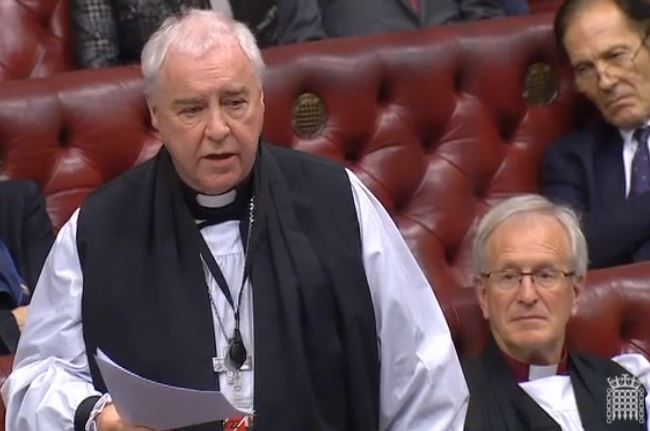

 The Lord Bishop of Oxford [V] : My Lords, I thank the Minister for her answer. What will the Government do if other platforms do not follow the Netflix example? According to the BBFC, over 90% of parents said that age-related guidance was helpful, and there is no doubt that voluntary action may be more forthcoming if platforms are very clear that the UK Government expect content consumed here in the UK to be properly signposted with BBFC symbols and content advice. How else do the Government plan to ensure that only age-appropriate content is accessible to young and vulnerable viewers?
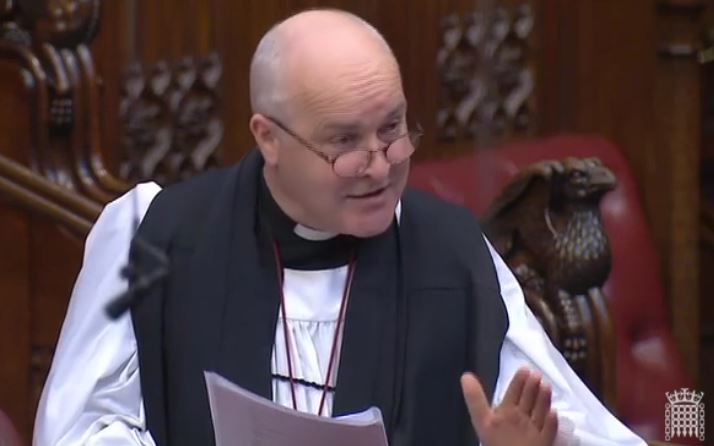 On 12th June 2019 the House of Lords debated a report from the Communications Committee, “That this House takes note of the Report from the Communications Committee Regulating in a digital world (2nd Report, HL Paper 299).” The Bishop of Chelmsford, Rt Revd Stephen Cottrell, who served on the Committee, spoke in the debate.
 The Lord Bishop of Gloucester: My Lords, I thank the noble Baroness, Lady Kidron, for obtaining this debate. I, too, thank her for her tireless work in this area.
 The Lord Bishop of Chelmsford: My Lords, I, too, am a member of the House of Lords Communications Committee. We normally meet on a Tuesday afternoon, so it is nice to have our meeting through the medium of this debate, in which members past and present can speak to each other. I thank other noble Lords for joining in as well. I also want to pay tribute to the noble Lord, Lord Best, for the wise and winsome way he chaired the committee for three years and, in particular, for helping us to produce this report, which we dare to think has made a bit of a difference.
 The Lord Bishop of Chelmsford My Lords, I too thank the noble Lord, Lord Best, for bringing this debate to the House and for his wise and winsome chairing of the Select Committee on Communications. I speak as a member of that committee. I was not part of the committee that produced this report—that illustrates just how long it has taken for it get here—so I also thank my predecessors on the committee for all their work.

You must be logged in to post a comment.