Bishop of Gloucester asks about conditions in UK prisons

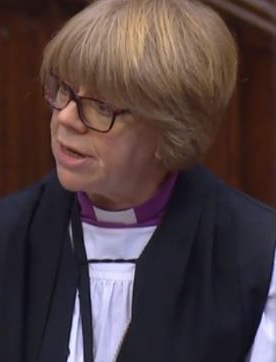
The Bishop of Gloucester received the following written answers on 19th January 2022:

The Lord Bishop of Gloucester asked Her Majesty’s Government how many women in prison aged (1) 18–24, or (2) 25 years or older, have been (a) in receipt of mental health care, or (b) referred to mental health support, whilst in custody.

Continue reading “Bishop of Gloucester asks about conditions in UK prisons”

Health & Care Bill: Bishop of London advocates for improved funding for mental health services

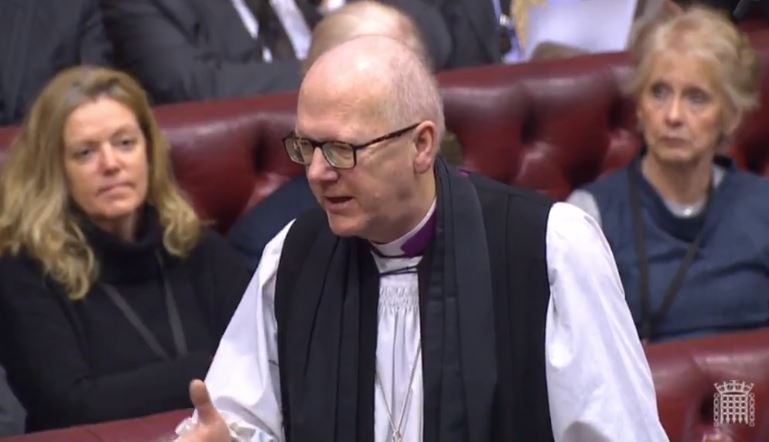
On 11th January 2022, the Bishop of London spoke in support of a group of amendments to the Health and Care Bill aimed at addressing shortfalls in mental health funding:

The Lord Bishop of London: My Lords, I am grateful to the noble Lords who have tabled the amendments in this group. I am very aware of the expertise that exists within this Chamber. As we have heard, mental health has not always been funded in the same way as physical health. However, we have seen improvements, not least in the way we speak about our own mental well-being. We have seen a reduction in stigma and an improvement in services, but the pandemic has taught us that there is a huge unmet need around mental health, and I suspect we will not know the full impact of the pandemic for a number of years. Clearly, those groups of people requiring support around their mental health will include us and our children as well as our health and social care workers.

Continue reading “Health & Care Bill: Bishop of London advocates for improved funding for mental health services”

Armed Forces Bill: Bishop of St Albans tables amendment to mandate research into problem gambling and gambling related harm in the military

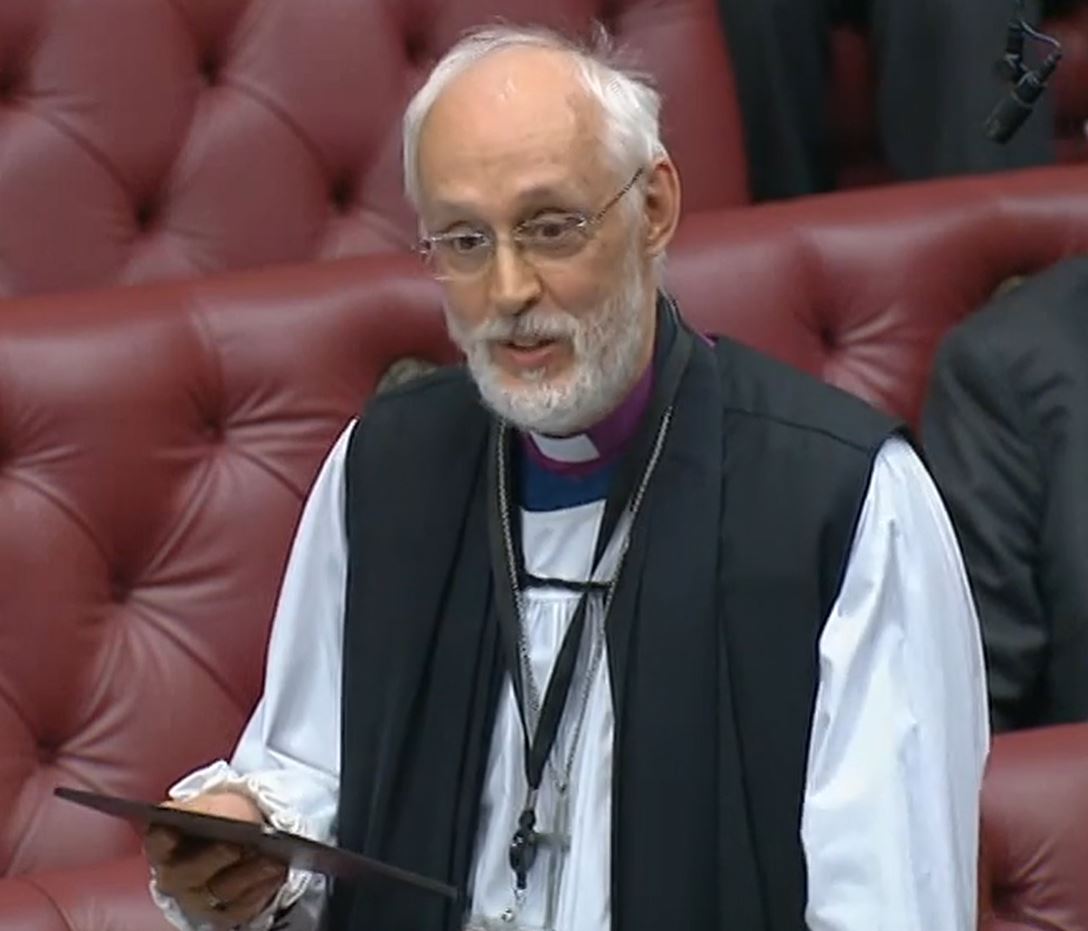
On 2nd November 2021, the House of Lords debated the Armed Forces Bill in committee. The Bishop of St Albans tabled an amendment to the bill which would require that the Ministry of Defence conduct research into gambling related harm in the military, and stood as part of a group of amendments focused on mental health and wellbeing in the armed forces:

The Lord Bishop of St Albans: My Lords, I declare my interest as a vice-chair of Peers for Gambling Reform. I rise to speak to Amendment 60 in my name. I tabled it because I am concerned that the Ministry of Defence is not taking gambling-related harm in the military community sufficiently seriously. On two occasions in response to my concerns in this area, the Ministry of Defence has stated that it has seen no evidence, or does not hold information, suggesting that serving personnel are more prone to problem gambling than any other group in society.

At the same time, it was disappointing to hear that evidence from the United States that suggested that serving personnel were more prone to problem gambling did not constitute an evidence base for the UK Armed Forces. This leaves us with a clear impasse, where the Government refuse to accept research from abroad but, at the same time, do not commit to researching whether there is a problem.

Continue reading “Armed Forces Bill: Bishop of St Albans tables amendment to mandate research into problem gambling and gambling related harm in the military”

Police, Crime, Sentencing and Courts Bill: Bishop of Manchester supports amendments consolidating mental health and family support for police force

On 2oth October 2021, the Bishop of Manchester spoke in a debate on the Police, Crime, Sentencing and Courts Bill, adding his support to a group of amendments intending to create a police covenant to better support the mental health and wellbeing of police and their families:

The Lord Bishop of Manchester: My Lords, I draw your Lordships’ attention to my interests in the world of policing as set out in the register, particularly in policing ethics, both with the Greater Manchester Police and the National Police Chiefs’ Council.

At Second Reading I referred briefly to the culture of policing. I did not specifically mention a policing covenant given that time was so short, but I have been intrigued by the debate we have had this afternoon. I note the way in which Members have referred to the Armed Forces covenant. That is helpful in some ways, although I am just a little concerned. As I said at Second Reading, the heart of the policing model is that our police are civilians in uniform; they are not the Armed Forces. We need to be careful not to put police too easily into the same category as the Armed Forces. The Armed Forces are agents of the state while police are agents of society in a slightly different way. That is an important civilian distinction I would want always to hold before us.

Continue reading “Police, Crime, Sentencing and Courts Bill: Bishop of Manchester supports amendments consolidating mental health and family support for police force”

Armed Forces Bill: Bishop of St Albans highlights mental health issues affecting members of the armed forces

On 7th September 2021, the Armed Forces Bill had its second reading in the House of Lords. The Bishop of St Albans welcomed the bill, and spoke on the importance of recognising the high levels of mental health issues faced by members of the armed forces:

The Lord Bishop of St Albans: My Lords, I too want to pay tribute to our Armed Forces. In repaying their service, it is right, as the Armed Forces covenant states, that

“those who have served in the past, and their families, should face no disadvantage compared to other citizens”.

I welcome the provisions in the Bill enabling greater legal enforcement of the covenant in achieving this parity.

Continue reading “Armed Forces Bill: Bishop of St Albans highlights mental health issues affecting members of the armed forces”

Skills and Post-16 Education Bill: Bishop of Durham backs amendments on mental health support for students

On 15th July 2021, the Bishop of Durham spoke in a debate on the Skills & Post-16 Education Bill, expressing his support for amendments focused on supporting students’ mental health:

The Lord Bishop of Durham: My Lords, I particularly want to support Amendment 63, but also the others in the group. Just last month, in June 2021, the DfE itself published a report, Student Mental Health and Wellbeing, based on research done before the pandemic. It points out that 96% of institutions ask their students about their mental health but only 41% ask them about their general well-being. It also notes that only 52% of universities would say that they have a “dedicated strategy” for the mental health and well-being of their students. So the DfE’s own report, from last month, highlights that there is plenty of work to be done on universities having proper, dedicated strategies around mental health and well-being—particularly on the well-being side.

Continue reading “Skills and Post-16 Education Bill: Bishop of Durham backs amendments on mental health support for students”

Bishop of Carlisle asks about relationship between obesity and mental health

The Bishop of Carlisle asked a question on the importance of understanding links between obesity and mental health conditions on 29th May 2021, during a discussion on the government’s health policies:

The Lord Bishop of Carlisle: My Lords, I too echo all the appreciative comments made about the Lord Speaker. Does the Minister agree that any interventions to address obesity must take account of the complex relationship between mental health and obesity? For example, people who are obese have a 55% increased risk of developing depression over time, and people living with depression have a 58% increased risk of becoming obese. Can we ensure that attempts to remedy one problem do not exacerbate the other?

Continue reading “Bishop of Carlisle asks about relationship between obesity and mental health”

Bishop of London asks about potential mental health risks of asthma drug

The Bishop of London received the following written answer on 12th April 2021:

The Lord Bishop of London asked Her Majesty’s Government what recommendations have been made by the Medicines and Healthcare products Regulatory Agency regarding the prominence of warnings concerning mental health risks associated with the use of Montelukast in children; and what is the timescale for implementation of any such recommendations.

Continue reading “Bishop of London asks about potential mental health risks of asthma drug”

Mental health, Armenia, gambling, Ethiopia

On 18th January 2021 in the House of Lords the Bishop of Bristol asked a question about mental health, the Bishop of Coventry asked about Armenian heritage.

Meanwhile the Bishop of St Albans and the Archbishop of York received written answers to questions on gambling-related harm and Ethiopia.

Full text below.

Continue reading “Mental health, Armenia, gambling, Ethiopia”

Bishop of Oxford – more mental health funds needed due to Covid and rise in youth unemployment

On 15th October 2020 Lord Baker of Dorking asked the Government “further to the estimate by the Office for National Statistics in Labour market overview, UK: October 2020, published on 13 October, that approximately 60 per cent of those unemployed as a result of the COVID-19 pandemic are aged between 16 and 24, what action they are taking to reduce youth unemployment.” The Bishop of Oxford asked a further question:

The Lord Bishop of Oxford: My Lords, I thank the Minister for the compassion and passion in her answers but, as we must acknowledge, this is a very serious situation. The Resolution Foundation now forecasts that unemployment among the 18 to 29 year-olds could triple to 17% by late 2020—a level not seen since 1984. Given the well-established link between unemployment and mental health, and the risks of a mental health epidemic, will the Government undertake to fund support for additional mental health provision, in addition to the education and employment initiatives which she has unpacked, to support this very hard-pressed and vulnerable Covid generation? Continue reading “Bishop of Oxford – more mental health funds needed due to Covid and rise in youth unemployment”