On 12th March 2020 the House of Lords debated a motion from Baroness Tyler of Enfield, “that this House takes note of the case for Her Majesty’s Government to use wellbeing as a key indicator of national performance when setting budgets, deciding policy priorities and reviewing the effectiveness of policy goals.” The Bishop of Portsmouth, Rt Revd Christopher Foster, spoke in the debate:
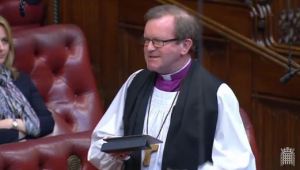 The Lord Bishop of Portsmouth: My Lords, I begin by humbly making two recommendations of ways in which your Lordships might profitably spend their time.
The first is to visit Portsmouth’s historic dockyard, where the nations historic naval hardware is on display. It is the stuff of national myth: from the “Mary Rose” to HMS “Victory” to HMS “Warrior”. Beyond them, visitors can see one or sometimes both of the Royal Navy’s latest, hugely powerful expressions of British sea power: the great aircraft carriers HMS “Queen Elizabeth” and “Prince of Wales”. These great ships, old and new, represent projections of hard power, but what often speaks more powerfully to those visiting the dockyard is the soft side to life on board: the story, how people lived their lives, their feelings, aspirations, hopes and fears—their well-being.
It seems to me that this exemplifies the challenge faced by policymakers and any assessment of how well, and if, a policy has worked: whether it has produced the desired outcome. Crunching the numbers is one way, but what policy looks and feels like in Whitehall and Westminster can be very different from the feelings and experience of those it directly affects. Continue reading “Bishop of Portsmouth call for measurement of children’s well-being on national level”


 On 22nd October 2019 Parliament continued to debate the Queen’s Speech, including scrutiny of measures relating to Health and Social Care. The Bishop of London, Rt Revd Sarah Mullally (and formerly Chief Nursing Officer for England), contributed to the debate:
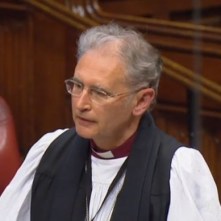 The Lord Bishop of Coventry: My Lords, several heads in Coventry and Warwickshire have told me about the heavy demands on their energies and budgets from, to quote one primary head, children who are not on the SEN register but face horrific circumstances at home and so need extra help; for example, families who are homeless through domestic violence and children whose mental health is so poor—these are nine year-olds—that they threaten suicide. Does the Minister recognise the pressures on schools in mainstream education from children who do not meet the thresholds of special needs but who nevertheless have severe needs and require acute support? Is he confident that there is sufficient funding for them?
 On 22nd July 2019 Baroness Bull asked the Government “what assessment they have made of the impact of weight- and shape-related bullying, criticism and teasing on long-term mental health”. The Bishop of Ely, Rt Revd Stephen Conway, asked a follow-up question:
 The Lord Bishop of St Albans: My Lords, I too thank the noble Lord, Lord Bird, for bringing forward this debate, for his distinctive introduction of a kind that we always enjoy when he speaks in the House, and for his tireless work in trying to support people who, for all sorts of reasons, find themselves disadvantaged. I pay tribute to him.
 On 1st July 2019 the Parliamentary Under-Secretary of State, Department of Health and Social Care repeated a statement made by the Secretary of State for Health and Social Care on the implementation of the NHS long-term plan. The Bishop of Carlisle, Rt Revd James Newcome, asked a follow-up question:
 On 25th June 2019 Lord Dubs asked the Government “
 On 24th June 2019 the Bishop of St Albans, Rt Revd Alan Smith, received written answers from Government, in reply to five questions about problem gambling and gaming machines in the armed forces and on the armed forces estates: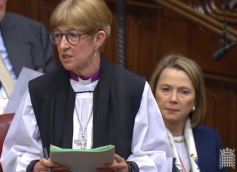


You must be logged in to post a comment.