Bishop of London asks for hold on dismissal of unvaccinated NHS staff

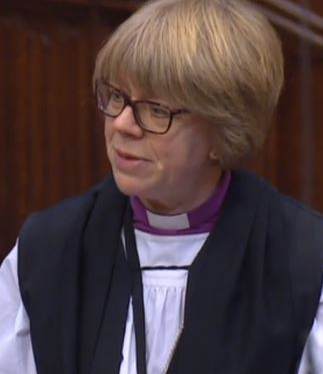
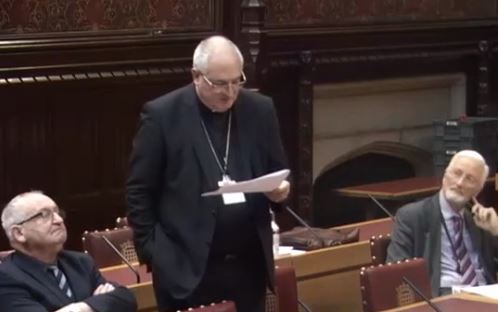
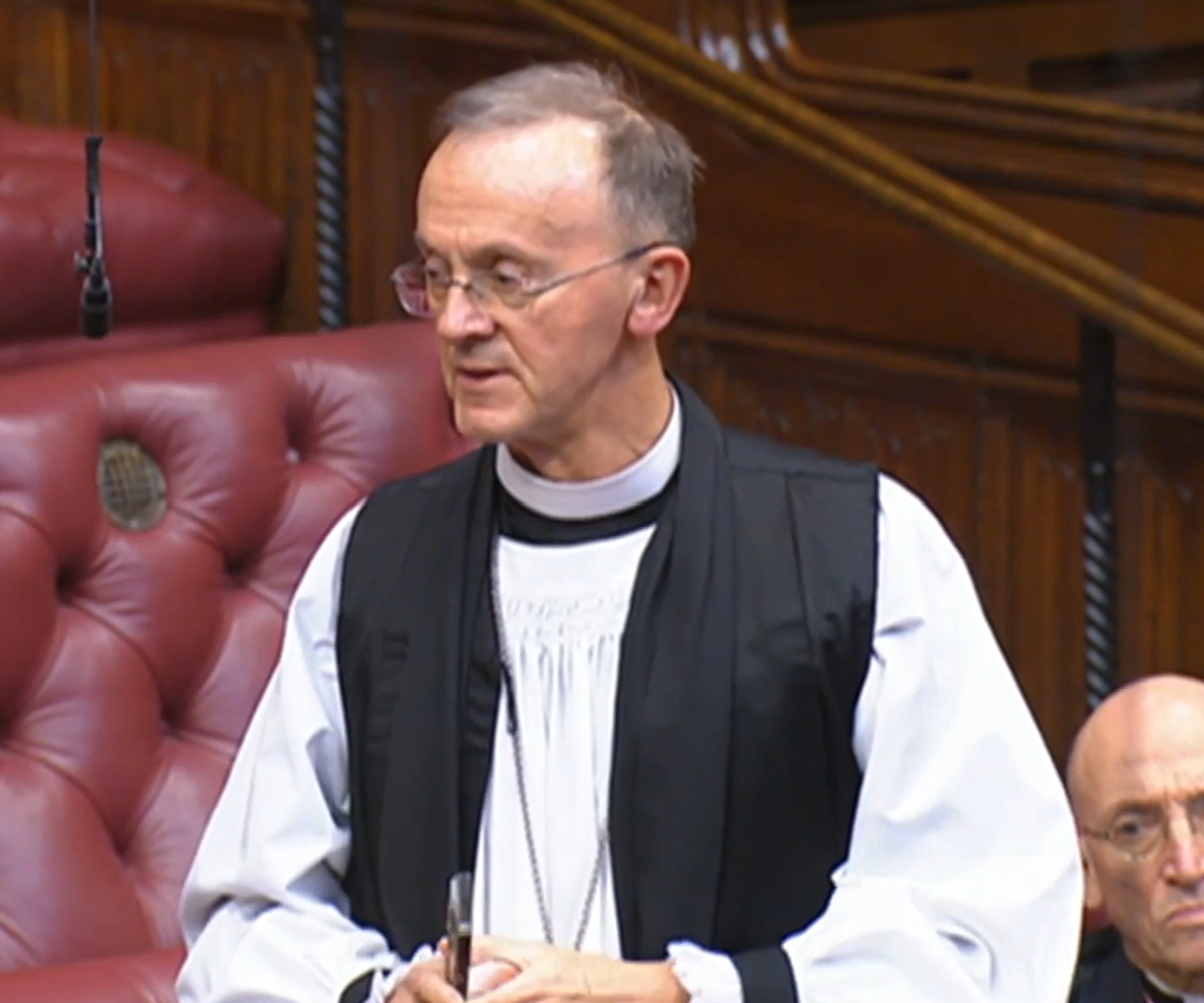
The Bishop of London asked that the government consider placing a hold on legislation to dismiss any NHS staff that remained unvaccinated after April 2022, during a debate on the easing of COVID-19 restrictions on 20th January 2022:

The Lord Bishop of London: My Lords, I thank the noble Baroness for her update. I believe that NHS staff who have not received two doses of the vaccine face dismissal from 1 April onwards. It is estimated that this will result in London losing something like 12.5% of its midwives, putting at risk the lives of pregnant women and their babies. Such a loss of staff may be thought to be justified were it not for the case that two doses of the vaccine are not understood to protect against the omicron variant of Covid-19. We shall lose precious midwives to implement a policy that has been superseded by the evolution of the virus. Will Her Majesty’s Government put the implementation of existing legislation on hold, given that it may now lead only to harm and not the good that it was designed to promote?

Continue reading “Bishop of London asks for hold on dismissal of unvaccinated NHS staff”

Health & Care Bill: Bishop of London supports voices of patients on Integrated Care Boards

On 13th January 2022, during a debate on the Health & Care Bill, the Bishop of London spoke in support of an amendment to the Health & Care Bill that would allow for patients to be represented on Integrated Care Boards (ICBs):

The Lord Bishop of London: My Lords, I rose on the first day of this Committee to speak to the membership of NHS boards. I rise today for a similar reason: I think it is very difficult to stipulate the membership of boards, just as the noble Baroness has said. However, as I said with NHS boards, I say with ICB boards that I think the voice of the patient is central. Along with my role as the Government’s Chief Nursing Officer, I was director of patient experience while I was in the Department of Health. As a nurse at that time, I believed I had a patient focus. However, I learned that my default was always as a professional and that the patient needs a voice and empowerment. While I recognise the clinical voice and would always want it on the NHS board and the ICB board, it does not replace the voice of the patient and the carer.

Continue reading “Health & Care Bill: Bishop of London supports voices of patients on Integrated Care Boards”

Health & Care Bill: Bishop of London supports greater advocacy for patients

On 11th January 2022, the House of Lords debated the Health & Care Bill in committee. The Bishop of London spoke in the debate, supporting stronger voices for patients in the NHS, particularly in governing boards:

The Lord Bishop of London: My Lords, I declare my background as a former government Chief Nursing Officer and non-executive director of a number of healthcare trusts. I was not going to speak, but I have listened to noble Lords’ comments today and I come down with the noble Baroness, Lady Harding, in saying that we should not stipulate what skills are required of a board too tightly. What is in front of organisations changes over time, so the chair needs to be empowered to change. However, one caveat is that it would be wise to consider having somebody on the board with a background in patients. I speak from experience as a clinical professional: we can too easily forget the patient and to see things through their eyes. Far too often, we see things through the eyes of the clinician, which is not always in the best interest of patients.

Hansard


Bishop of Ely asks about number of children awaiting speech and language therapy, physiotherapy, and occupational therapy

The Bishop of Ely asked a question on the number of children waiting for speech and language therapy, physiotherapy and occupational therapy assessments following initial assessments on 16th November 2021, during a debate on NHS waiting lists in England:

The Lord Bishop of Ely: My Lords, can the Minister confirm the number of children waiting for treatment for speech and language and for physiotherapy and occupational therapy assessments after their initial assessment? Those treatments are vital for supporting educational development of children as we recover from the pandemic. Are those figures included in the published waiting list figures—and, if not, why not?

Lord Kamall (Con): I thank the right reverend Prelate for that question. Unfortunately, I do not have the statistics with me, but I shall write to him.

Hansard

Bishop of Carlisle asks about informed consent in collection of medical information

On 8th June 2021, during a discussion on collection of patient care records by the NHS, the Bishop of Carlisle asked a question on the issue of informed consent for patients to opt out of having their data collected and stored:

The Lord Bishop of Carlisle: My Lords, informed consent is at the heart of good patient care. Can the Minister tell us what plans Her Majesty’s Government have to inform patients that they have the right to opt out of having their personal medical information collected in this way? How will this be advertised?

Continue reading “Bishop of Carlisle asks about informed consent in collection of medical information”

Bishop of Worcester asks about sourcing NHS pay rises

The Bishop of Worcester asked a question on tackling inefficiencies in NHS resources to provide for future pay rises for health workers, during a discussion on the NHS pay review on 9th March 2021:

The Lord Bishop of Worcester: My Lords, I appreciate the immense, unprecedented and unforeseen pressure that the Government are under as they struggle with the devastating effects of the pandemic on public finances. At the same time, as has been noted, we all want to recognise the huge debt of gratitude that we owe to nurses and other health workers. Recognising that would best be done by a pay increase. We are told that a 1% increase is all that can be afforded. Can the Minister comment on whether he thinks tackling the estimated £2 billion lost annually through inefficiencies related to unnecessary A&E attendance and GP consultations might give more wriggle room?

Continue reading “Bishop of Worcester asks about sourcing NHS pay rises”

Domestic Abuse Bill: Bishop of London supports amendment on provision of medical letters for abuse victims

On 8th February 2021, during a debate on the Domestic Abuse Bill, the Bishop of London spoke in support of an amendment tabled by Lord Kennedy of Southwark which would aim to prevent GPs who had a contract with the NHS from charging victims of domestic abuse for letters confirming their injuries which they would need in order to seek legal aid:

The Lord Bishop of London [V]: My Lords, I add my voice to this amendment simply because it should go without saying that some things need to be penned into law for there to be consistent access to justice. Amendment 161 has been tabled because it prevents GPs charging survivors of domestic abuse for letters which confirm injuries they have suffered—evidence which survivors need for their legal aid applications. The case for this amendment has been extremely well made by the noble Lord, Lord Kennedy, and the noble Baroness, Lady Bull. I agree with the statements they have made, so there is no need to add much to what has been said.

Continue reading “Domestic Abuse Bill: Bishop of London supports amendment on provision of medical letters for abuse victims”

Bishop of Carlisle speaks in debate on report from the Economic Affairs Committee

On 28th January 2021, the Bishop of Carlisle took part in a debate on a report from the Economic Affairs Committee, focusing on the need for health and social care reform:

The Lord Bishop of Carlisle [V]: My Lords, I add my own expression of gratitude to the Economic Affairs Committee for such a clear and coherent report, based as it is on such careful research and presenting us with such direct and forthright conclusions. Its basic principles for reform are eminently sensible. Like others, I applaud the emphasis, pace Dilnot, on a partnership approach to the funding of social care, and the principles of free personal care, with a cap on accommodation costs, and increased funding enabled by general taxation. I will focus my brief contribution on principle (j), which reads:

“Invest in the social care workforce and ensure a more joined up approach to workforce planning with the National Health Service.”

If that is ignored, any increase in funding will run the risk of being wasted.

Continue reading “Bishop of Carlisle speaks in debate on report from the Economic Affairs Committee”

Bishop of St Albans asks about costs of treating gambling addiction for the NHS

The Bishop of St Albans received the following written answer on 21st January 2021:

The Lord Bishop of St Albans asked Her Majesty’s Government what assessment they have made of (1) the cost of gambling addiction to the NHS in each of the last five years; and (2) the likely cost in each of the next five years.

Continue reading “Bishop of St Albans asks about costs of treating gambling addiction for the NHS”

Bishop of St Albans asks about increasing funding for hospice sector

The Bishop of St Albans received the following written answer on 5th January 2021:

The Lord Bishop of St Albans asked  Her Majesty’s Government what plans they have to increase the funding that clinical commissioning groups provide to the charitable hospice sector.

Continue reading “Bishop of St Albans asks about increasing funding for hospice sector”