
On 22nd October the Bishop of Oxford asked a question he had tabled to Government on the impact of Covid-19 on the gig economy. The exchanges and further questions from other Members, are below:
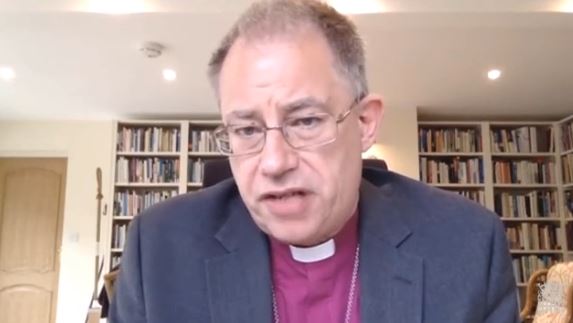 Asked by The Lord Bishop of Oxford
To ask Her Majesty’s Government what assessment they have made of the impact of the COVID-19 pandemic on the gig economy.
Baroness Penn (Con): My Lords, the Government have stood by businesses and workers with one of the most comprehensive and generous packages of support globally. We are working intensively with employers and industry groups to understand the long-term effects of Covid-19 and specific challenges to businesses and workers, including in the gig economy. Following announcements of further measures to control the spread of Covid-19, we are continuing to monitor the impact of government support in different sectors.
The Lord Bishop of Oxford [V]: I thank the Minister very much for her Answer. While the job coaches and extra provision made may improve the CVs and present conditions of those forced into the gig economy, they will do nothing to improve the security or the working conditions of those so precariously employed and poorly protected. Therefore, will the employment Bill provide a clearer definition of what counts as an employer-employee relationship? How will it stop platform employers retaining all of the profits while socialising essential costs such as sickness pay or a basic pension in old age? Continue reading “Bishop of Oxford asks Government about impact of covid-19 on the gig economy”
 The Lord Bishop of Oxford: My Lords, I thank the Minister for the compassion and passion in her answers but, as we must acknowledge, this is a very serious situation. The Resolution Foundation now forecasts that unemployment among the 18 to 29 year-olds could triple to 17% by late 2020—a level not seen since 1984. Given the well-established link between unemployment and mental health, and the risks of a mental health epidemic, will the Government undertake to fund support for additional mental health provision, in addition to the education and employment initiatives which she has unpacked, to support this very hard-pressed and vulnerable Covid generation?
  The Lord Bishop of Oxford: My Lords, I welcome this report and it is good to hear the Minister welcome it too. Deprivation is an issue that goes to the core of natural justice, and therefore our common good as a nation. Does the Minister accept in particular the report’s findings that employment interventions are as critical as educational improvement in addressing systematic inequalities and levelling up? What additional steps do the Government propose to take to improve employment opportunities, particularly when facing the current recession, in the cold spots that the report identifies across the nation?
  The Lord Bishop of Oxford [V]: My Lords, I thank the Minister for her Answer and for what the Government have already done. Before the pandemic, 23% of children in socioeconomic groups D and E lacked home broadband and access to laptops, et cetera. Does the Minister agree that we now need to measure data poverty and its effects more carefully? Will the Government commit to legislating for household digital access to be treated as a utility on an equal footing with the right to access for water and heat—a change supported by the general public?
  The Lord Bishop of Oxford: My Lords, I warmly welcome this debate. The country faces the triple challenge in the next decade of the threat of climate change, the deepest recession for generations and the health challenges of Covid, all of which will exacerbate existing inequalities. I support much of what other noble Lords have said and will focus my remarks on the vital theme of digital inclusion.
 The Lord Bishop of Oxford: My Lords, I declare an interest as a board member of the CDEI and a member of the Ada Lovelace Institute’s new Rethinking Data project. I am also a graduate of the AI Select Committee. I am grateful to the noble Lord, Lord Clement-Jones, for this important debate.
 The Lord Bishop of Oxford: My Lords, I warmly welcome this report and this vital debate. Never before in the scale of human history has there been such a wide and deep threat to our ecosystem or to human flourishing that was so clear and predictable on the horizon. Technology alone is not enough.
 The Church of England in Parliament
You must be logged in to post a comment.