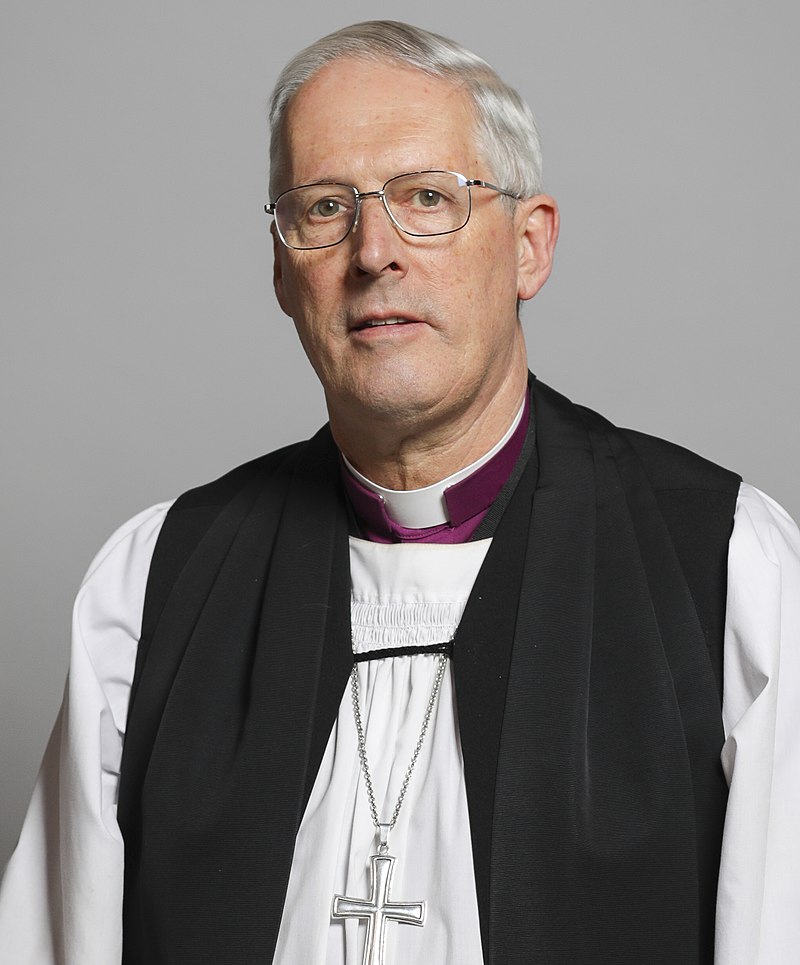
Bishop of Bristol calls for peacebuilding initiatives alongside Strategic Defense Review

The Bishop of Bristol made her final speech in the House of Lords during a debate on the Strategic Defence Review on 18th July 2025:

The Lord Bishop of Bristol: My Lords, I am grateful to the noble Lord, Lord Robertson, for bringing the SDR to debate to this House, and I look forward to continuing to hear this House’s wide-ranging expertise. I also look forward to the maiden speech of the noble Lord, Lord McCabe.

George Bell, formerly the Bishop of Chichester, thought deeply about the ethics of international relations and spoke, on occasions controversially, in this House about his conclusions. Speaking more generally of the Church in wartime—and I too believe that we are in a time of considerable risk of war—he asserted that the task of the Church, in its service and witness, was to be the Church, and often, that would be in practical endeavour within a whole-society response.

Last weekend the General Synod of the Church of England in York responded to the current international threat level very practically by providing new legislative arrangements to hold the records of military chaplains centrally, not locally. That will allow chaplains, regular or reservists, to be licensed to move much more rapidly into operation. I commend this new legislation to members of the Ecclesiastical Committee and to the whole House, as the Church seeks to support the aim of increasing agility in deployment.

Continue reading “Bishop of Bristol calls for peacebuilding initiatives alongside Strategic Defense Review”

Bishop of London urges investment in diplomacy and peacebuilding during debate on the war in Ukraine

The Bishop of London spoke in a debate on UK policy on the war in Ukraine on 17th March 2025, advocating for a just and lasting peace in Ukraine, and for investment in preventative diplomacy, conflict resolution, and peacebuilding by the UK:

The Lord Bishop of London: My Lords, it is a privilege to follow the noble Lord, Lord Purvis.

As he points out, peace is not only the absence of war but the presence of justice and of the conditions for human flourishing. Therefore, what we need is a just and lasting peace. This peace must address the causes of the war and provide for Ukraine’s security, sovereignty and freedom. We must recognise that this peace needs to be negotiated by all parties and cannot be dictated by the US. We must recognise that any ceasefire will need to be maintained through a combination of mechanisms, such as troops on the ground and trained mediators who can deal with the contentious and central issues, such as access to resources and the repatriation of civilians.

Continue reading “Bishop of London urges investment in diplomacy and peacebuilding during debate on the war in Ukraine”

Archbishop of Canterbury speaks in debate on conflict in Sudan, urging long term view towards peacebuilding

The Archbishop of Canterbury spoke in a debate on the situation in Sudan on 13th September 2024, urging the government to work towards peacebuilding and reconciliation in the region:

The Lord Archbishop of Canterbury: I too am grateful to the Minister for arranging this debate, in which we are hearing extraordinary expertise—with some exceptions. In particular, there are former Ministers for Africa. We have heard from the noble Lord, Lord Ahmad, who has had an extraordinarily distinguished career, and I look forward to hearing the speech of the noble Lord, Lord Bellingham. The speech given by the noble Lord, Lord Alton, was truly remarkable.

It is noticeable in what we have heard so far that the history of Sudan has been very present to us. I echo the words we have heard more than once: that this is not simply a conflict between two major power groups seeking power in Sudan. It is based in the fragility of a society that has seen war more than it has seen peace since Sudan became independent—both in what is now South Sudan and in Sudan itself.

Continue reading “Archbishop of Canterbury speaks in debate on conflict in Sudan, urging long term view towards peacebuilding”

Archbishop of Canterbury calls for peacebuilding to be prioritised in UK foreign policy

The Archbishop of Canterbury gave a speech in response to a motion to take note of the UK’s position on foreign affairs on 5th March 2024, expressing the hope that peacebuilding would be a focus of the government’s foreign policy:

The Lord Archbishop of Canterbury: My Lords, I join in the tributes to the noble Lord, Lord Ahmad, for his opening and his many distinguished years of service—may he continue in his current position—and to the energy that the noble Lord, Lord Cameron, as Secretary of State, has brought to the present process and this debate.

I want to focus, as the noble Baroness, Lady Smith of Newnham, did, on the means rather than the end. Like many noble Lords here, I was in Ukraine three weeks ago—for about a week, in my case—in Kyiv and Odesa. I was there, coincidentally, at the same time as the head of the European foreign service, and we managed, with some of his staff, accidentally to be in the same bomb shelter at the same time, which gives one an opportunity to talk to people. One of the things that came across was the determination of Europe to protect Ukraine from defeat—to support it. However, in conversations with senior politicians in Ukraine, as well as the most senior religious leaders in that very religious country, the question they put was not just what the West intends and what the UK intends—their warm words about the UK were very striking—but what were the means to those ends. You do not win wars by good intentions.

Continue reading “Archbishop of Canterbury calls for peacebuilding to be prioritised in UK foreign policy”

Bishop of Bristol expresses strong concern over conflict in Gaza and calls for political leaders to work for peace

The Bishop of Bristol spoke in a debate on the current humanitarian situation in Gaza on 8th February 2024, expressing concern about the rejection of a proposed ceasefire and the impact of total war on civilians:

The Lord Bishop of Bristol: My Lords, I am grateful to the noble Baroness for securing this debate. Today the future seems bleak after Prime Minister Netanyahu, perhaps understandably, rejected a ceasefire because, as reported, total victory may be achieved in months. In my city of Bristol, women from Jewish and Muslim communities stand silently together in public vigil, and those of all faiths and none march each week campaigning for a cessation of violence on all sides.

Total victory within months—what does that mean for the hostages held in tunnels, for the women who are pregnant without medical support, for babies whose mothers have no breast milk? What we see is a horrible inversion of the word of the prophet Joel: the dreams of old men are shattered and the visions of young men are betrayed. The hopes of so many Jews, Muslims and Christians are destroyed. May God and our political leaders have mercy, source aid and work unrelentingly for peace.

Hansard

Bishop of Worcester asks about government approach to peace process in Israel and Gaza

The Bishop of Worcester received the following written answer on 24th January 2024:

The Lord Bishop of Worcester asked His Majesty’s Government what steps they are taking (1) to assess the lessons of the Oslo peace process, especially in relation to the inclusion of regional actors, and (2) to apply those lessons in their response to current calls from regional players for a ceasefire in Gaza.

Continue reading “Bishop of Worcester asks about government approach to peace process in Israel and Gaza”

Bishop of Leicester asks about long-term strategy for supporting interfaith relations in UK

The Bishop of Leicester spoke in a debate on the Abraham Accords between Israel, the UAE, and Bahrain and what steps the UK the government will take to ensure the success of the Accords on 14th September 2023, emphasising the need for supporting communication between faith communities in the UK as well as abroad:

The Lord Bishop of Leicester: My Lords, I add my thanks to the noble Lord, Lord Polak, for securing this short debate and my admiration and gratitude to all those who have supported and championed the Abraham accords all across the Middle East and beyond. They are truly an historic achievement, and I applaud the courage of all those who seek to bring peace to this long-troubled region. I add my thoughts and indeed prayers for the people of Morocco as well.

Noble Lords have already mentioned a number of reasons for why the accords are so significant for the region as well as for the UK. I wish to add to this debate my observation that, at the same time as supporting peace efforts in the Middle East itself, we must be proactive in addressing the tensions which conflict in the Middle East can cause here in the UK. We saw an example of this during the May 2021 Gaza conflict, when there was a steep increase in hate crimes committed against both Muslims and Jews in this country. We cannot presume, therefore, that peaceful coexistence between Jewish and Muslim communities will come about automatically in the UK simply because we are at a geographical remove from the Middle East. It is by no means impossible, but it does not come of its own accord.

Continue reading “Bishop of Leicester asks about long-term strategy for supporting interfaith relations in UK”

Archbishop highlights increased risk of climate change-driven conflict and migration

On 30th March 2023 the House of Lords held a short debate on a Motion from Lord Naseby: To ask His Majesty’s Government what plans they have to introduce new economic policies to address the challenges of climate change in developing countries, particularly those that are members of the Commonwealth.

The Archbishop of Canterbury: My Lords, I am grateful to the noble Lord, Lord Naseby, for tabling this Question. In his travelogue, he mentioned, to my alarm, the areas for which I am directly responsible—I suppose because they could not go anywhere else—notably, the Falkland Islands, Antarctica, Sri Lanka and Bermuda; I do not know what is going to happen to Kent.

The OECD’s most recent States of Fragility report found that, in 2022, 23% of the world’s population were living in fragile contexts, often linked to climate change, but 73% of the world’s extreme poor were. This figure is projected to rise to 86% of the world’s poor on the lowest incomes by 2030. For the Anglican Communion, within 165 countries over 150 of them are affected by such changes.

Continue reading “Archbishop highlights increased risk of climate change-driven conflict and migration”

Bishop of Southwark asks about peace-building activities in Israel

The Bishop of Southwark received the following written answer on 1st March 2022:

The Lord Bishop of Southwark asked His Majesty’s Government what assessment they have made of the decision by the government of Israel to prohibit Palestinians under the age of 22 from entering Israel to participate in organised peace-building activities and the impact that this will have on UK-funded cross-community peace building work in the region.

Continue reading “Bishop of Southwark asks about peace-building activities in Israel”

Archbishop of York speaks about Russian invasion of Ukraine and urges prayer for peace

On 25th February 2022, the Archbishop of York made a speech in response to the Russian invasion of Ukraine, urging prayers for peace and swift action to support peacemaking:

The Lord Archbishop of York: My Lords, noble Lords may have seen that my most reverend friend the Archbishop of Canterbury and I have already spoken about the unprovoked attack on Ukraine as a great act of evil. This is indeed a dark hour for Europe. We have called on Anglican churches to make this coming Sunday a day of prayer for peace and on Tuesday encourage parishes to join the Anglican diocese in Europe in prayer at 6 pm, especially for those who minister and witness for peace in Ukraine itself, where we have chaplaincies and minister alongside other denominations and faith communities. We are all invited to join Pope Francis in making Ash Wednesday—next Wednesday—a day of fasting and prayer for peace.

Perhaps in the West we have taken peace for granted. The horrors being visited on Ukraine must be a wake-up call for us that peace is something you need to work at. What is happening in Ukraine is truly shocking but, sadly, it is not surprising. We have seen it coming. Ukraine now stands alone, unprotected by the treaties that protect us and allow us to believe that peace is a normal state of affairs—but it is not. Peace is a choice, a decision that we make each day about the way we live and about our responsibilities to and with our neighbour, be that in our family, in our community or between the nations of the world. We need the policies, the wisdom, the tenacity and the international resolve that will deliver it.

Continue reading “Archbishop of York speaks about Russian invasion of Ukraine and urges prayer for peace”