Bishop of Durham calls for urgent changes to “flawed system” of universal credit

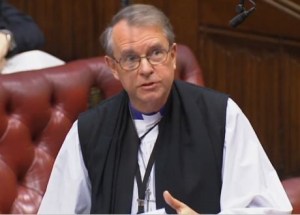
On 16th November 2017 the House of Lords debated a motion from Baroness Hollis of Heigham “That this House takes note of the impact of Universal Credit on claimants.” The Bishop of Durham, Rt Revd Paul Butler, spoke in the debate:

The Lord Bishop of Durham: My Lords, I, too, congratulate the noble Baroness, Lady Hollis, on securing this debate and on her introduction.

Universal credit originally set out to simplify a fragmented, complex system and to reduce poverty through the simple, noble philosophy of making work pay. While it still has the potential to transform this ​broken system, its current shape risks undermining these two core objectives for the neediest in the nation and thus failing British families. Almost every week, I receive heart-breaking stories about how the transition to UC is devastating the lives of claimants. What does the five or six-week waiting period, which is often longer, actually look like for a family or single parent with young children? Continue reading “Bishop of Durham calls for urgent changes to “flawed system” of universal credit”

Bishop of Durham asks about impact of cost of living increase and benefits freeze on families

On 2nd November 2017 the Bishop of Durham, Rt Revd Paul Butler, received two written answers to questions about income related benefits:

The Lord Bishop of Durham:

(i) To ask Her Majesty’s Government what is their assessment of the impact of the changing cost of living on incomes, particularly for those in receipt of income-related benefits.

(ii) To ask Her Majesty’s Government what is their assessment of the impact that the four-year freeze on income-related benefits will have on family budgets in England and Wales. Continue reading “Bishop of Durham asks about impact of cost of living increase and benefits freeze on families”

Bishops raise concern about cutbacks to local authority welfare assistance schemes

Seven bishops signed a letter to the Guardian newspaper, printed on 14th September 2017, voicing concern about cutbacks to local authority welfare assistance schemes. Four of the signatories were Lords Spiritual:

Local welfare assistance schemes are a vital lifeline for people who find themselves in a crisis and without basic essentials, such as food, electricity, or a working oven. It is therefore very worrying that most of these schemes have been cut back considerably in recent years and that 26 local councils have now closed them altogether, including in many areas that we represent (English councils’ local welfare schemes in ‘meltdown’, 12 September). Continue reading “Bishops raise concern about cutbacks to local authority welfare assistance schemes”

Bishop of Leeds highlights rocketing number of food bank users in employment

On 13th July 2017,  Lord Bird asked the Government “what steps they are taking to prioritise their focus on the root causes of poverty and disadvantage.” The Bishop of Leeds, the Rt Rev. Nick Baines, asked a question in follow up.

The Lord Bishop of Leeds: My Lords, does the Minister agree that there is a problem here, in that we want to applaud the employment figures released today but, at the same time, we need to recognise that it is people in employment who are using our food banks, where the numbers have rocketed in the last few years? Therefore, the simple statement that we applaud the rise in employment disguises a deeper problem.

Continue reading “Bishop of Leeds highlights rocketing number of food bank users in employment”

Bishop of Durham asks Government about number of affected and poverty impact of two-child limit on benefits

durham-230117On 24th April 2017, the Bishop of Durham, the Rt Revd Paul Butler, received written answers to two questions on Child Tax Credit and Universal Credit: 

The Lord Bishop of Durham:

(i) To ask Her Majesty’s Government how many families will be affected by the introduction of the two-child limit on Child Tax Credit and the child element of Universal Credit in (1) 2017–18, (2) 2018–19, and (3) 2019–20. [HL6344]

(ii) To ask Her Majesty’s Government what projections they have made of the effect of introducing the two-child limit on Child Tax Credits and the child element of Universal Credit on the number of children in poverty, according to the income-based measures used in the official Households Below Average Income statistics. [HL6345] Continue reading “Bishop of Durham asks Government about number of affected and poverty impact of two-child limit on benefits”

Bishop of Portsmouth asks Government about child poverty, two-child limit and benefit support

On 7th April 2017 the Bishop of Portsmouth, Rt Revd Christopher Foster, received three written answers from Government about levels of child poverty, the two-child limit and benefit support:

The Lord Bishop of Portsmouth: To ask Her Majesty’s Government what is their estimate of the impact of the recent increase in inflation on the number of children in poverty; and what plans they have for protecting low income families against the rising cost of basic essentials. Continue reading “Bishop of Portsmouth asks Government about child poverty, two-child limit and benefit support”

Bishop of Durham asks Government about action to reduce in-work poverty

On 6th April 2017 the Bishop of Durham, Rt Revd Paul Butler, received a written answer to a question on poverty:

The Lord Bishop of Durham: To ask Her Majesty’s Government, in the light of the Households Below Average Income statistics revealing that 3.2 million adults in working families were in relative poverty in 2015–16, what action they will take to reduce in-work poverty. [HL6346] Continue reading “Bishop of Durham asks Government about action to reduce in-work poverty”

Bishop of Oxford asks Government about link between benefit delays and food bank use

On 9th March 2017 Labour Peer Baroness Sherlock asked Her Majesty’s Government “what assessment they have made of the impact on claimants of the time taken between applying for Universal Credit and receiving payments.” The Bishop of Oxford, Rt Revd Steven Croft, asked a follow up question.

The Lord Bishop of Oxford: My Lords, in the last three months I have visited a large number of food banks across the diocese of Oxford in seemingly affluent communities, building on my experience of food banks in the diocese of Sheffield. All have underlined to me that the most common reason why people access food banks is delay in accessing welfare payments. Continue reading “Bishop of Oxford asks Government about link between benefit delays and food bank use”

Bishop of Southwark asks about the impact of benefit cap on children of single parents

southwark-20feb17On 22nd February 2017, Lord McKenzie of Luton asked Her Majesty’s Government “what estimate they have made of the extent to which the new lower benefit cap will encourage people into work or to move into smaller homes”. The Bishop of Southwark, the Rt Revd Christopher Chessun, asked a follow up question.

The Lord Bishop of Southwark: My Lords, according to the Government’s own impact assessment nearly a quarter of a million children are affected by the reduced benefit cap, more than two and a half times the number of affected adults. This includes many preschool children in lone-parent families at greater risk of poverty. Given that the prime aim here is to encourage more people into work, will the Minister consider exempting single parents with young children, who would not otherwise be expected to work under the current benefit rules and who rely on familiar social networks and services?

Continue reading “Bishop of Southwark asks about the impact of benefit cap on children of single parents”

Bishop of St Albans on importance of welfare system that leaves no one hungry

On 21st December 2016 Lord Farmer led a short debate in the Lords, to ask Her Majesty’s Government “what progress they are making in rolling out Universal Credit, and what assessment they have made of its impact”. The Bishop of St Albans, Rt Revd Alan Smith, took part in the debate:

Bishop of St AlbansThe Lord Bishop of St Albans: My Lords, I too thank the noble Lord, Lord Farmer, for this important debate. On behalf of these Benches, I take the opportunity to thank the Minister for his very considerable contribution, drive and service to this House, and wish him well as he leaves the Front Bench.

I think it is true to say that very few in this House disagree with the stated aims of universal credit—to simplify the benefits system and ensure that work always pays. However, I also suspect that there are quite a few of us in this House and, indeed, on these Benches, who fear that on occasion Her Majesty’s Government may have lost sight of that aim. Indeed, it seems that successive cuts to the welfare budget have been prioritised as an easy way of balancing the Government’s finances. Continue reading “Bishop of St Albans on importance of welfare system that leaves no one hungry”