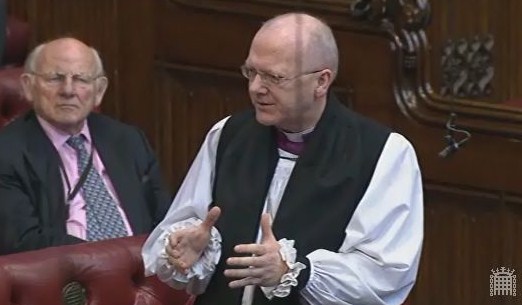
Bishop of Birmingham speaks in Lords debate on Chancellor’s Autumn Statement

On 29th November 2016, Lord Young of Cookham moved that the House take note of the economy in the light of the Autumn Statement. The Bishop of Birmingham, the Rt Revd David Urquhart, spoke in the debate:

Bishop of Portsmouth responds to Chancellor’s Autumn Statement

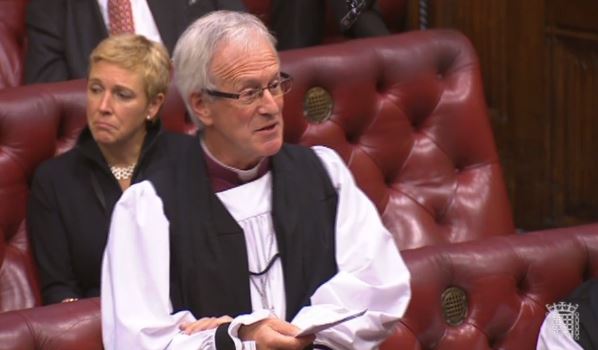
portsmouth241016On 29th November 2016, Lord Young of Cookham moved that the House take note of the economy in the light of the Autumn Statement. The Bishop of Portsmouth, the Rt Revd Christopher Foster, spoke in the debate:
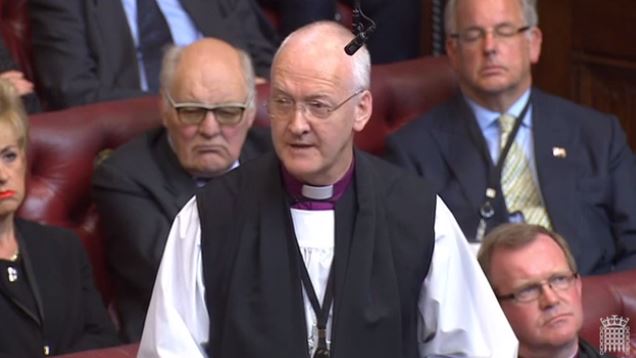
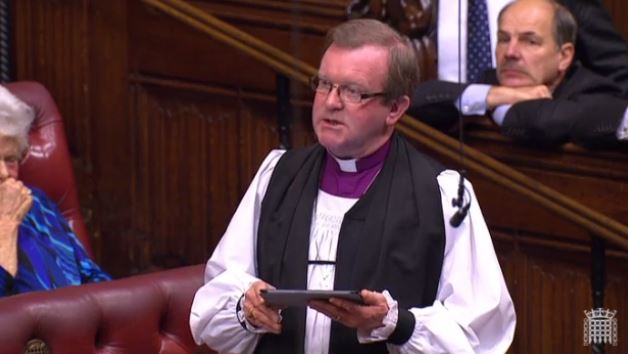
The Lord Bishop of Portsmouth My Lords, after nearly three years in this House, and having had the opportunity to speak in most of the debates responding to the Budget and Autumn Statements, it is not difficult to note the tendency for some contributors to applaud proposals they consider welcome; for others to criticise proposals they consider to have sectional interest or bias; and to have the expectation—or at least the hope—conveyed that the Chancellor and the Government will, and can, do even more when they are praised for welcome initiatives. I want to do a little of that this afternoon, though recognising the restrictions the Chancellor faces. I invite the Minister, and through him the Government, to reflect on what they ought to do—I introduce a moral note in using that phrase—to repair the fractures of trust, address growing injustices that are perceived as more hurtful than inequalities, and create not just a flourishing economy but a nation where people believe there is more that unites us than divides us. Indeed, my question to the Minister is whether the Government can better articulate their rationale and approach in the important area of inequality and injustice. Continue reading “Bishop of Portsmouth responds to Chancellor’s Autumn Statement”

Bishop of St Albans on the action needed to address child poverty

On 17th November 2016 the House of Lords debated a motion from Crossbench Peer Lord Bird, “to ask Her Majesty’s Government what plans they have to address the root causes of child poverty across the United Kingdom”.The Bishop of St Albans, Rt Revd Alan Smith, spoke in the debate:


The Lord Bishop of St Albans: My Lords, my thanks go to the noble Lord, Lord Bird, for tabling this important debate and for the challenging and spirited way in which he always makes his speeches, which not only entertain but very often get to the heart of many of the crucial issues. This debate is particularly timely because of the figures recently released by the End Child Poverty Coalition, which show that child poverty levels continue to rise steeply, reaching 47% in some areas. In his maiden speech the noble Lord, Lord Bird, spoke of the need to give those in poverty a hand up and not a handout. He focused on the importance of creating opportunities, rather than dependency. This of course has been one of the great themes of his life’s work. I believe that that is a crucial message. Continue reading “Bishop of St Albans on the action needed to address child poverty”

Bishop of Leeds calls on Government to protect children from effects of reduction in benefit cap

Leeds160620On 8th November 2016 the House of Lords debated a motion from Liberal Democrat Peer Lord Kirkwood to regret the changes to the benefit cap introduced by the Government and taking effect that week. The Bishop of Leeds, Rt Revd Nick Baines, supported the motion:

Lord Kirkwood of Kirkhope: That this House regrets that the Government have not, in advance of the entry into force of the Benefit Cap (Housing Benefit and Universal Credit) (Amendment) Regulations 2016 (SI 2016/909), made additional support available to those individuals affected by the benefit cap to find work.

The Lord Bishop of Leeds: My Lords, we have heard a number of impressive figures and statistics this evening. It seems to me that the principle underlying all this is that you can save money with one hand but you will pay it out with another. According to End Child Poverty statistics released this month, we have 3.5 million children living in poverty in the United Kingdom in the 21st century. In some regions, up to 47% of children are living in poverty. In my own diocese, in the Bradford local authority area, 32.7% of children are living in poverty after housing costs. The national average is 29%. In Leeds Central, it is 41.8%. If children are living in housing and food poverty—as we know they are from food banks and all the other stuff we see on the ground in our cities, towns and rural areas—then we will end up paying out through the National Health Service and in other ways for the consequences of what children do not have at present. Continue reading “Bishop of Leeds calls on Government to protect children from effects of reduction in benefit cap”

Bishop of Portsmouth says social mobility needs to be about more than helping people to ‘just manage’.

“It is hard, and sometimes impossible, to seek a new or better job or to support your children in their education if your daily preoccupation has to be with getting by.” – Bishop of Portsmouth, 27/10/16 

BishPortsspeechtaxcredits

On 27th October 2016 the House of Lords debated a motion from Lord Holmes of Richmond “To move that this House takes note of Her Majesty’s Government’s plans to promote social mobility.” The Bishop of Portsmouth, Rt Revd Christopher Foster, took part in the debate:

The Lord Bishop of Portsmouth: My Lords, in these few minutes I should like to set the concern and aspirations for social mobility—already so well introduced by the noble Lord, Lord Holmes, and other noble Lords—in the context of the challenges faced by many people, some in my own diocese, who face the daily grind and trial of simply getting by for the day or, at best, the week. The Prime Minister has referred to the need to focus on “just managing” families, and I agree with her, but surely the task is to help make it possible for them to do better than just manage, enabling their energy to be taken up not just in dealing with the everyday challenges but in improving life chances for themselves and their families, including social mobility. Continue reading “Bishop of Portsmouth says social mobility needs to be about more than helping people to ‘just manage’.”

Bishop of St Albans calls for better coordination to improve Troubled Families programme

St Albans 2On 12th September 2016 Baroness Massey of Darwen asked the Government “how they will respond to the unpublished report on the effectiveness of the Troubled Families programme.” The Lord Bishop of St Albans, the Rt Revd Alan Smith, asked a follow-up question.
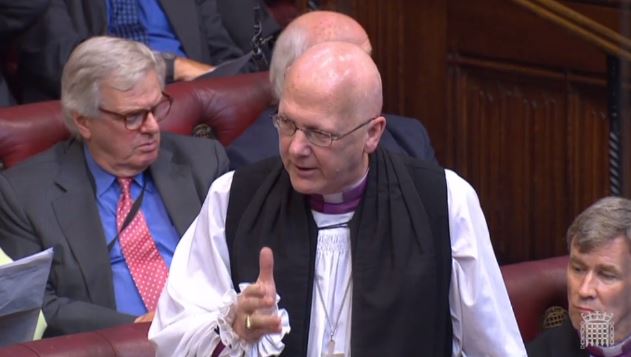
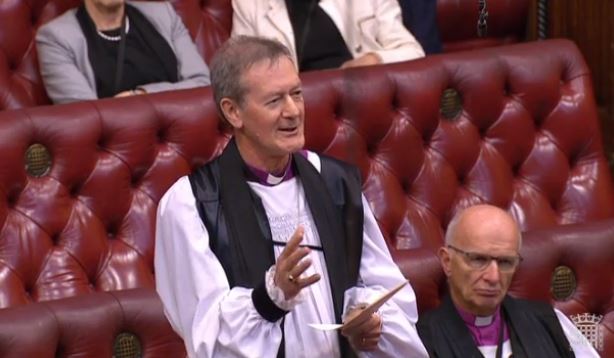

Bishop of St Albans: My Lords, one of the successes of this programme, which I have seen in a number of places, has been to try to get proper co-ordination. With so many different silos addressing this and so many resources going to a limited number of families, one success has been the way that progress has been made by bringing real focus and integration. Can the Minister assure us that that lesson has been learned and that we will continue to see how we can get movement on this relatively small but very problematic and difficult group, and find the way forward? Continue reading “Bishop of St Albans calls for better coordination to improve Troubled Families programme”

Bishop of St Albans says tackling housing insecurity key to tackling poverty

On 14th July 2016 the House of Lords debated a motion from Lord Bird, “That this House takes note of the case for tackling the causes of poverty in the United Kingdom”. The Bishop of St Albans, Rt Revd Alan Smith, spoke about the need to tackle housing insecurity. He began by paying tribute to Baroness Sharp, who had made her valedictory speech.

The Bishop of Derby’s speech in the same debate can be seen here.

St Albans 2The Lord Bishop of St Albans: My Lords, it is a great privilege on behalf of all noble Lords to thank the noble Baroness, Lady Sharp of Guildford, for her nearly 18 years of service to this House, and not least for that pertinent and passionate valedictory speech, which went to the heart of many of the issues we are debating today. I am constantly amazed at the sheer talent and expertise that is on display in this Chamber, of which she has just demonstrated an outstanding example. Her scholarly contributions to this place, particularly her steadfast championing of adult and further education, have been greatly valued, especially during her time as a Front-Bench spokesperson. Continue reading “Bishop of St Albans says tackling housing insecurity key to tackling poverty”

Bishop of Derby speaks on tackling poverty and powerlessness

On 14th July 2016 the House of Lords debated a motion from Lord Bird, “That this House takes note of the case for tackling the causes of poverty in the United Kingdom”. The Bishop of Derby, Rt Revd Alastair Redfern, spoke in the debate and his remarks are below. The Bishop of St Albans’ speech in the same debate can be seen here.

Derby 191115cThe Lord Bishop of Derby: My Lords, I, too, thank the noble Lord, Lord Bird, for introducing this important issue of tackling the causes of poverty. We learn from the briefing notes that the noble Baroness, Lady Lister, makes it clear in her textbook that it is almost impossible to define poverty. That is part of the complexity with which we have to wrestle because, as poverty is relative, it is very hard to design appropriate responses.

In my trade, we have two phrases: we talk about the poor and about the poor in spirit. The word for spirit means power, and I want to look at to what extent to be poor and in poverty means to be lacking in power—the kind of power that allows you to feel good about yourself and to have security of work, security of a living place and security of contributing to society. How do we bless people with a sense of power over their lives, for themselves and those around them, and to make a contribution to society? Continue reading “Bishop of Derby speaks on tackling poverty and powerlessness”

Church Commissioner questions: Out of school settings, human trafficking, women bishops, House of Lords, poverty, church toilets

On 7th July 2016 Rt Hon Caroline Spelman MP answered questions from MPs in the House of Commons, in her capacity as Second Church Estates Commissioner. Questions were asked on out of school settings, human trafficking, women bishops, bishops in the House of Lords, poverty and church toilets.

Mr Speaker: Order. We come now to questions to the Second Church Estates Commissioner, the right hon. Member for Meriden (Mrs Spelman), representing the Church Commissioners, and to the right hon. Member for South West Devon—[Interruption.] I mean the hon. Member for South West Devon (Mr Streeter)—it is only a matter of time—representing the Speaker’s Committee on the Electoral Commission.


Spelman CCQs June 2015 4Church Commissioners

The right hon. Member for Meriden, representing the Church Commissioners was asked— Continue reading “Church Commissioner questions: Out of school settings, human trafficking, women bishops, House of Lords, poverty, church toilets”

Archbishop of Canterbury on the future for the United Kingdom after the EU Referendum

On 5th July 2016 the House of Lords debated a motion “That this House takes note of the outcome of the European Union referendum.” The Archbishop of Canterbury, Most Revd & Rt Hon Justin Welby, spoke in the debate. His speech is below in full, followed by extracts from the speeches of other Peers. 

2ABCEUdebateThe Archbishop of Canterbury:  My Lords, the events of the past two weeks have led to some of the most traumatic and dynamic changes that we have known. The course of the campaign was robust—as it properly should be on such great issues—but at times veered over the line on both sides: it was not merely robust but unacceptable. Through such comments were created cracks in the thin crust of the politeness and tolerance of our society, through which, since the referendum, we have seen an outwelling of poison and hatred that I cannot remember in this country for very many years. It is essential, not only for this House but for the leaders of both sides and throughout our society, to challenge the attacks, xenophobia and racism that seem to have been felt acceptable, at least for a while.

Just over a week ago, at Lambeth Palace, at the breaking of the fast of Ramadan, I shared an iftar with the new Mayor of London, Sadiq Khan, and the Chief Rabbi. There were more than 100 young people of every faith and of no faith there. That sense of hope and energy for the future carried us through the rest of the week. It is there and we can reach for it. If, however, we are to thicken the crust through which the cracks have come, if we are to move to a place where we are not yet speaking of reconciliation but beginning to get on a path where in future healing and reconciliation will begin to happen, we need to beware. St Paul, in his letter to the Galatians, says to them at one point:

“Love one another, cease to tear at one another, lest at the end you consume one another”.

We are in danger of doing that in the way that our politics is developing at the moment. If we are to tackle that, we have to put in place some fundamental issues to be capable of creating the agile, flexible, creative, entrepreneurial and exciting society—full of the common good and of solidarity and love for one another—which is the only way that this country will flourish and prosper for all its citizens in the world outside the European Union of the future. Continue reading “Archbishop of Canterbury on the future for the United Kingdom after the EU Referendum”