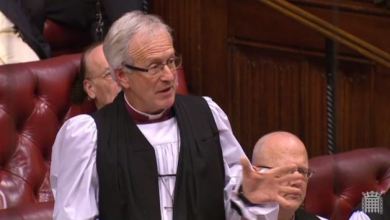
The Bishop of Peterborough makes his maiden speech in the House of Lords

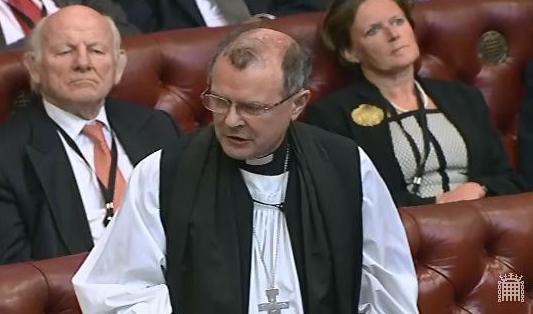
The Bishop of Peterborough delivered his maiden speech to the House of Lords on 25th February 2014, during the debate tabled by Lord Low of Dalston: ‘To ask Her Majesty’s Government what is their response to Tackling the Advice Deficit, the report of the Low Commission on the future of advice and legal support on social welfare law in England and Wales’.

The Lord Bishop of Peterborough: My Lords, as I make this m14.02 Peterboroughaiden speech I am delighted to have the opportunity to thank the many Members and staff of your Lordships’ House who have made me so very welcome here. I am also most grateful to the noble Lord, Lord Low, for initiating this debate, and for producing with his colleagues this excellent, wide-ranging and challenging report.

I suppose it to be inevitable that cuts in government spending, however necessary they may be, will always hit the poorest most. It is therefore all the more important to give attention to ways of helping the most vulnerable to claim and receive the support to which they are entitled and the professional advice they may need. This report does that: I welcome it most warmly and hope that Her Majesty’s Government can do so too. Continue reading “The Bishop of Peterborough makes his maiden speech in the House of Lords”

Bishop of Worcester commends the living wage as tool to tackle inequality

Lord Giddens asks Her Majesty’s Government what policies they have to address economic inequalities in British society.

The Bishop of Worcester asked a supplementary question:

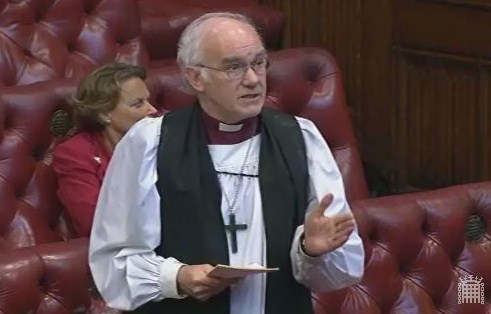
The Lord Bishop of Worcester: My Lords, is the Minister aware of the first report published today by the Living Wage Commission, chaired by my friend the most reverend Primate the Archbishop of York, which found that emerging economic recovery will have no effect on more than 5 million workers unless employers pay a living wage. It found furthermore that 6.7 million of the 13 million people in poverty in the UK are in a family where someone works—which, for the first time, is more than half the total. Will the Minister tell the House what steps the Government are taking to address this real concern?

Lord Newby: My Lords, the Government are encouraging employers to pay the living wage where they can. One of the key things about people in work on very low incomes is that a large proportion of them are working a small number of hours or a smaller number of hours than they would like. Economic growth will mean that more of those people are able to work longer hours, which will help deal with their household circumstances.

(via parliament.uk)

Bishop of Wakefield urges Government to support pupils in areas of rural deprivation

Lord Horam asked Her Majesty’s Government what plans they have to increase the Pupil Premium for the most disadvantaged primary school children.

The Bishop of Wakefield asked a supplementary question:

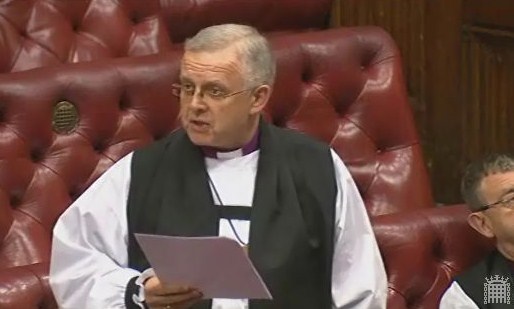
The Lord Bishop of Wakefield: My Lords, can the Minister tell us whether the Government are considering ways in which an increase in the pupil premium can be targeted at the forms of deprivation most difficult to address? Rural deprivation, for example, particularly in church schools, is very significant in our part of West Yorkshire, in the Diocese of Wakefield.

Lord Nash: The right reverend Prelate is quite right to point out the problems with rural deprivation; it is similar to coastal deprivation. There are particular schemes that schools follow: mentoring; systemic feedback; much more involvement of parents; early intervention, particularly using the better teachers; and peer tutoring. Much can be learnt from groups like Ark, whose academy in Portsmouth, for instance, which is in a classic coastal town, has improved results in four years from 24% to 68%.

(via parliament.uk)

Bishop of Chester responds to Government Statement on energy bills

On 2nd December 2013, the Bishop of Chester asked a question in the House of Lords on energy bills, following a Governmnet Statement on the subject.

14.03 Bishop of ChesterThe Lord Bishop of Chester: My Lords, there is much in the Statement that I welcome, particularly a point that has not been commented on directly. The move in support for the social aspects of the programme from energy bills to general taxation will have some impact on the poorest and on fuel poverty and is entirely to be welcomed. The renewables obligation payments are still going to be collected through energy bills. When will the expected increases in those precepts on bills eat up the £50 which has been announced today?

Continue reading “Bishop of Chester responds to Government Statement on energy bills”

Bishop of Birmingham questions Government over Child Poverty figures

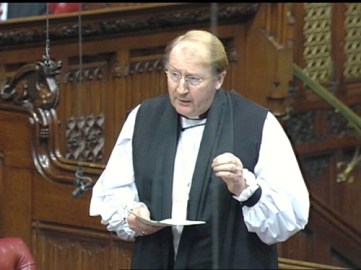
Birmingham 171115On the 14th May 2013 Lord Dubs asked the Government a question about child poverty, the Bishop of Birmingham, the Rt Revd David Urquhart asked a supplementary question regarding the ways in which the Government could close the gap.
Continue reading “Bishop of Birmingham questions Government over Child Poverty figures”

Bishop of Exeter responds to the Queen’s Speech on the importance of social cohesion

bishop of exeter_500x375On the 9th May 2013 the Bishop of Exeter, the Rt Revd Michael Langrish responded to the Queen’s Speech addressing his remarks to devolution, community cohesion, and the need to address the increasing London-centric bias of policy making. Bishop Michael used the Church of England as an example of a way to successfully balance competing interests to create a sense of cohesion and mutual belonging in our society.

Continue reading “Bishop of Exeter responds to the Queen’s Speech on the importance of social cohesion”