Bishop of St Edmundsbury & Ipswich raises need for comprehensive strategy to tackle poverty

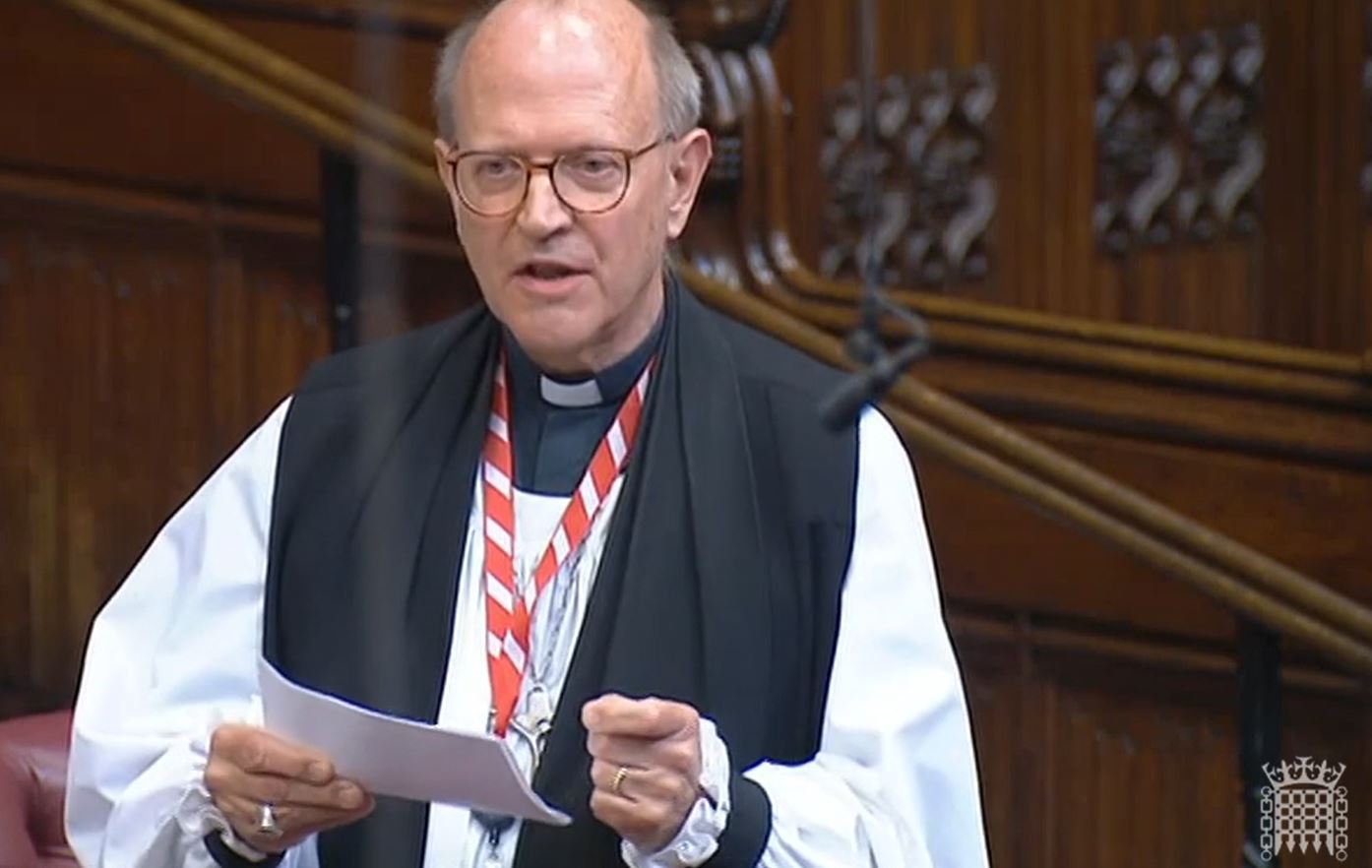
On 22nd June 2023, the Bishop of St Edmundsbury and Ipswich asked a question on whether the government had considered the need for a comprehensive anti-poverty strategy, following a statement on cost of living support:

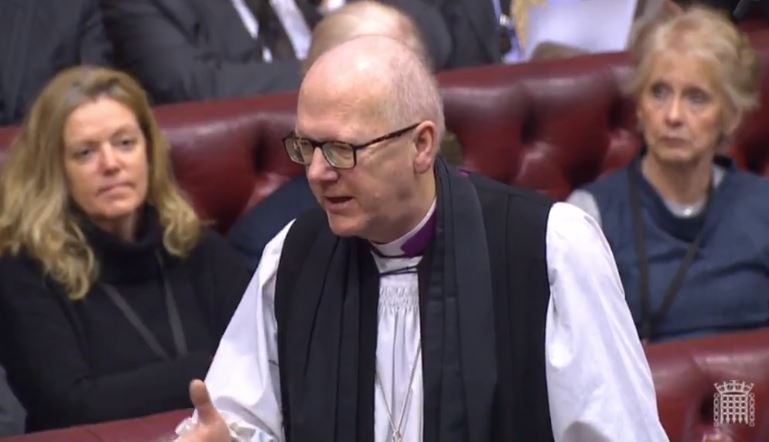
The Lord Bishop of St Edmundsbury & Ipswich: My Lords, we recognise the value of the immediate and urgent provision that is being suggested and those points being argued for. However, in the light of our experience of the deepening crisis, I wonder whether, because of the interlocking nature of so many factors, now is the time to be looking at a comprehensive anti-poverty strategy.

Continue reading “Bishop of St Edmundsbury & Ipswich raises need for comprehensive strategy to tackle poverty”

Bishop of Durham asks about effect of benefit caps on children and ethnic minority groups

The Bishop of Durham received the following written answers on 19th June 2023:

The Lord Bishop of Durham asked His Majesty’s Government what assessment they have made of the number of children who would no longer be in poverty if the benefit cap were (1) abolished, and (2) returned to its original levels.

Viscount Younger of Leckie (Con): No assessment has been made.

Continue reading “Bishop of Durham asks about effect of benefit caps on children and ethnic minority groups”

Bishop of Durham asks about cap on social security benefits

The Bishop of Durham received the following written answers on 16th June 2023:

The Lord Bishop of Durham asked His Majesty’s Government, whether they intend to abolish the benefit cap following their research which found that only five per cent of affected households moved into work as a result of it.

Viscount Younger of Leckie (Con): The benefit cap continues to provide a work incentive and fairness for hard-working taxpaying households, whilst providing a reasonable safety net of support for the most vulnerable. The Government firmly believes that where possible it is in the best interests of children to be in working households and the benefit cap provides a clear incentive to move into work.

Continue reading “Bishop of Durham asks about cap on social security benefits”

Bishop of Chelmsford asks about government approach to those at risk of poverty

The Bishop of Chelmsford asked a question on government assessments of those at risk of falling into poverty during a debate on rising food prices on 25th May 2023:

The Lord Bishop of Chelmsford: My Lords, in the diocese which I serve, charities in Harlow alone have fed more than 1 million people in the last year, which, frighteningly, represents a slower than the average demand for food banks nationally. I draw the Minister’s attention to the Bounty Club, which works with local businesses and people on the edge of crisis, helping them access a large bag of fresh food for £2.50, saving households on average £20 to £40 a week. Demand in Harlow is such that queues are regularly seen from St Paul’s Church right down the street. What assessment have the Government made of the number of people who are on the cusp of falling into poverty? What strategies are they considering to prevent people requiring the use of their local food bank or even charities such as the Bounty Club?

Continue reading “Bishop of Chelmsford asks about government approach to those at risk of poverty”

Bishop of Leeds asks about two child benefit cap

The Bishop of Leeds asked a question on the purpose of the two child benefit cap on 18th April 2023, during a debate on universal credit reform:

The Lord Bishop of Leeds: My Lords, could the Minister remind the House what the point of the two-child limit is and what its impact is on the provision of essentials?

Viscount Younger of Leckie (Con): The House will be very aware of this subject, which does keep cropping up. The House will be aware that, since 6 April 2017, families have been able to claim support for up to two children and there may be further entitlement for other children if they were born before 6 April 2017 or if an exception applies. As the right reverend Prelate will know, there are a number of exceptions, including any child in a household who is adopted, any child living long-term with friends or family or who would otherwise be at risk of entering the care system.

Hansard

Bishop of Durham speaks on the effects of child poverty

The Bishop of Durham spoke in a debate on vulnerable teenagers on 26th January 2023, emphasising the negative effects of child poverty on later life:

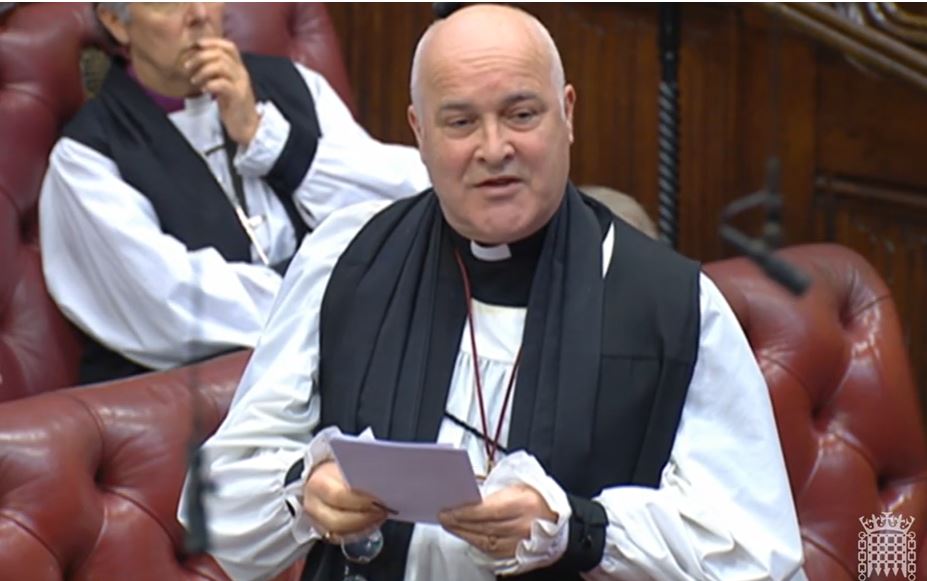
The Lord Bishop of Durham: My Lords, it is a real pleasure to follow the noble Lord, Lord McConnell; I associate myself with everything he said, particularly about adopting the recommendations. He also reminded us that this is no new problem. He talked about his experience in the 1980s; I could do the same from when I was doing youth work. You can also quote Greek writers and philosophers about the problems of young people in the era of the Greeks, so this is something we have always lived with.

I also thank the noble Baroness, Lady Armstrong, for securing this debate. It is always lovely to share something with someone else from this part of the north-east of England. I congratulate Anne Longfield on the report, Hidden in Plain Sight. As the Commission on Young Lives’ report demonstrates, young people falling vulnerable to violence and exploitation and entering the criminal justice system is not an issue that is shrinking, nor one that could possibly be ignored. 

The effects of this problem are widespread, impacting not only the lives and futures of the young people themselves but the prosperity and security of our whole country. Such an issue cannot be resolved through sticking plasters or short-term solutions; it is instead vital that we examine and address the root causes and respond with long-term solutions.

As the report states,

“it is impossible to overestimate how important poverty is as a driver for so many of the social problems ruining and holding back lives.”

Continue reading “Bishop of Durham speaks on the effects of child poverty”

Archbishop of York asks about effects of benefit cap and two child limit

The Archbishop of York asked a question on the effects of the benefit cap and two child limit on vulnerable families on 24th January 2023:

The Lord Archbishop of York: My Lords, it is encouraging to see that the Government are keeping a check on the numbers of people being affected by these policies, but I was not quite sure whether I heard that work is being done to measure the impact of the policies on families. I can say, and it gives me no joy to say it, that from where I serve in the north of England—I am thinking particularly of Middlesbrough and Hull—I see the disturbing impact of an increase in poverty, child poverty and families in very difficult situations, not least with the cost of living crisis on top of all this. My simple, genuine and heartfelt question is: how would you explain this to a mum expecting her third child, or a family with three or four children who have been pushed into benefits over the past couple of years? They do not understand why this is happening but they are suffering as a consequence of it. How do we explain to them the rightness of this policy?

Continue reading “Archbishop of York asks about effects of benefit cap and two child limit”

Bishop of St Albans asks about greater support for food bank facilities

The Bishop of St Albans asked a question on help for food banks to freeze and store food, during a debate on health and malnutrition on 14th December 2022:

The Lord Bishop of St Albans: My Lords, food banks across my diocese are reporting a huge increase in need and a huge decrease in the amount of food being donated, simply because of the cost of living crisis. One of the things that makes a difference for food banks is having enough capacity to freeze food. There is an urgent need to see whether we can help them with freezers. Is there anything the Government can do to work with food banks to help them increase their capacity for storing food when it is spare so that is available at other times?

Continue reading “Bishop of St Albans asks about greater support for food bank facilities”

Bishop of Chelmsford asks about extending access to free school meals

The Bishop of Chelmsford asked a question on extending free school meals to all children from families in receipt of universal credit on 13th December 2022, during a debate on free school meals funding and decision making power:

The Lord Bishop of Chelmsford: My Lords, building on the question the noble Lord has just asked, research by the Joseph Rowntree Foundation has found that out of 3.9 million children living in relative poverty in the UK, only 2.3 million receive free school meals. Can the Minister say whether the Government intend to extend free school meals to all children from families receiving universal credit?

Continue reading “Bishop of Chelmsford asks about extending access to free school meals”

Bishop of Gloucester responds to Chancellor’s Autumn Statement

The House of Lords debated the Chancellor’s Autumn Statement on 29th November 2022

The Lord Bishop of Gloucester: My Lords, growth is good and necessary, and it is clear that money does not grow on those proverbial trees. We find ourselves in extremely challenging times, and it seems to me that some of the measures that are set out in the Autumn Statement are prudent and necessary to rebalance the budget. I thank the Government for their desire to focus on supporting the poorest households, which is right and just, including their decision to increase benefits in line with inflation. Yet I have a number of concerns. I want to use my time to focus on just two key issues: first, food and feeding people, and, secondly, the criminal justice system. I declare an interest both as a trustee of Feeding Britain and as Anglican Bishop for prisons in England and Wales.

Continue reading “Bishop of Gloucester responds to Chancellor’s Autumn Statement”