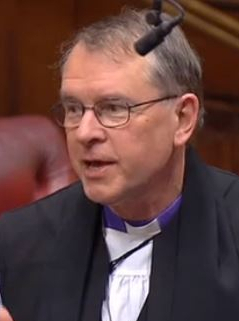
Bishop of St Albans speaks about the challenges facing pensioners and low-income workers

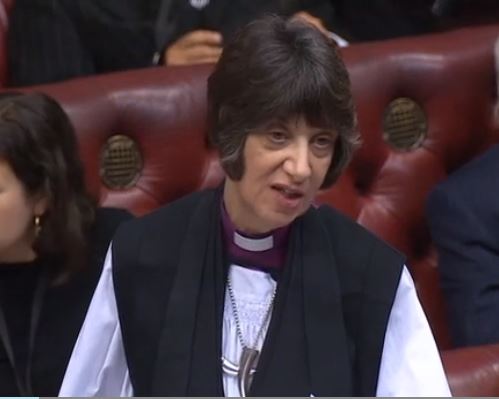
The Bishop of St Albans spoke in a debate on financial stability on 3rd November 2022, focusing on the effects of the current financial situation and cost of living crisis on low-income workers and on pensioners:

The Lord Bishop of St Albans: My Lords, we are living in challenging times, with inflation rates at a 40-year high. Turbulence in the financial markets, with higher interest rates and larger mortgage payments, is adversely affecting people in all walks of society. With the wholesale price of energy and gas increasing due to Putin’s appalling and illegal invasion of Ukraine, it is vital that His Majesty’s Government do all they can to protect renters, those with mortgages and, of course, pensioners.

To put a human face to this debate, I thought it might be worth while just quoting one of a number of emails I have received from communities in my diocese this very week. One person emailed me on Friday: “In my role as chair of a food bank, we are having to make decisions around both frightening increases in demand and a growing decline in donations. This summer, we increased our warehouse capacity to handle food for somewhere around 500 food parcels a day. The problem is in-work poverty which is growing substantially. In the past few weeks, we have been approached by a hospital, a large business, schools and a local council about whether they can refer low-paid staff to us.” He went on: “Apparently, employers are not prepared to talk about the problem of in-work poverty, feeling ashamed. They would like to raise wages and want the best staff welfare but can’t because that would move them into a deficit budget.” The human reality of what we are facing is stark. Unfortunately, the mini-Budget of 23 September made a challenging financial climate much worse.

Continue reading “Bishop of St Albans speaks about the challenges facing pensioners and low-income workers”

Archbishop of York asks whether benefits will rise with inflation

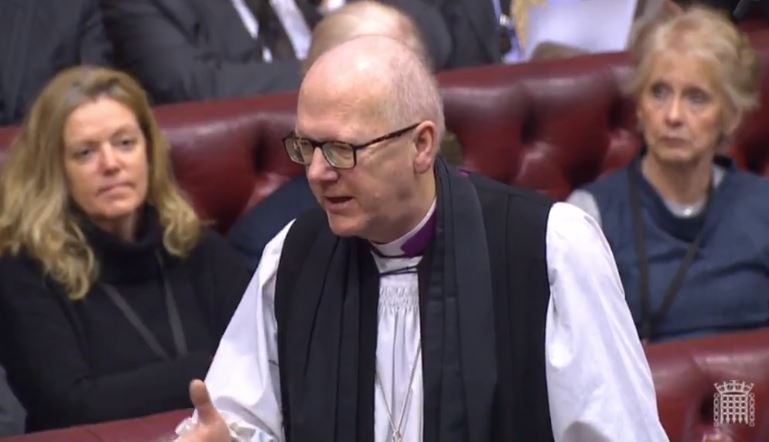
The Archbishop of York asked a question about benefits rising with inflation on 19th October 2022, during a debate following a statement on the economy:

The Lord Archbishop of York: My Lords, I do not pretend to know the ins and outs of exactly where we find ourselves but I serve communities in the north. I think particularly of people I have met recently in Middlesbrough and Hull, where there were great hopes for levelling up. It now seems a distant dream. I recently visited a school where children go in the morning with an empty lunch box for them to fill up with food from the food bank in the playground at the end of the day. The budget for school meals has gone up by 2% yet food inflation has gone up by more than 10%. We need to make tough decisions—I am glad to hear that the triple lock will remain in place—but, on behalf of the communities where I serve, I must ask this: will benefits rise in line with inflation? If not, millions of people will be moved into poverty. Those who recently donated to food banks are now visiting them themselves.

Continue reading “Archbishop of York asks whether benefits will rise with inflation”

Bishop of Oxford asks about “compassionate conservatism”

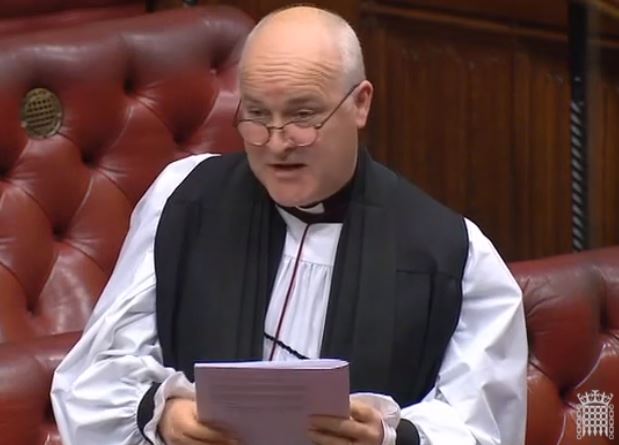
On 18th October 2022, the Bishop of Oxford asked a question in response the new Chancellor of the Exchequer, Jeremy Hunt’s, speech on the economy:

The Lord Bishop of Oxford: My Lords, I welcome the new Chancellor, many of the measures announced yesterday, and the increased prospect of greater stability. I noticed that in his Statement yesterday he used the phrase “compassionate conservatism” several times. I wonder if the Minister would unpack that phrase a little, particularly on how the Chancellor will navigate to privilege the needs of the very poorest in society, perhaps especially in the outworking of the increase in benefits in line with price inflation, and in looking to see a decrease in the use of foodbanks in the coming years, which has escalated in major ways in the last decade.

Continue reading “Bishop of Oxford asks about “compassionate conservatism””

Bishop of Durham speaks on poverty and social security

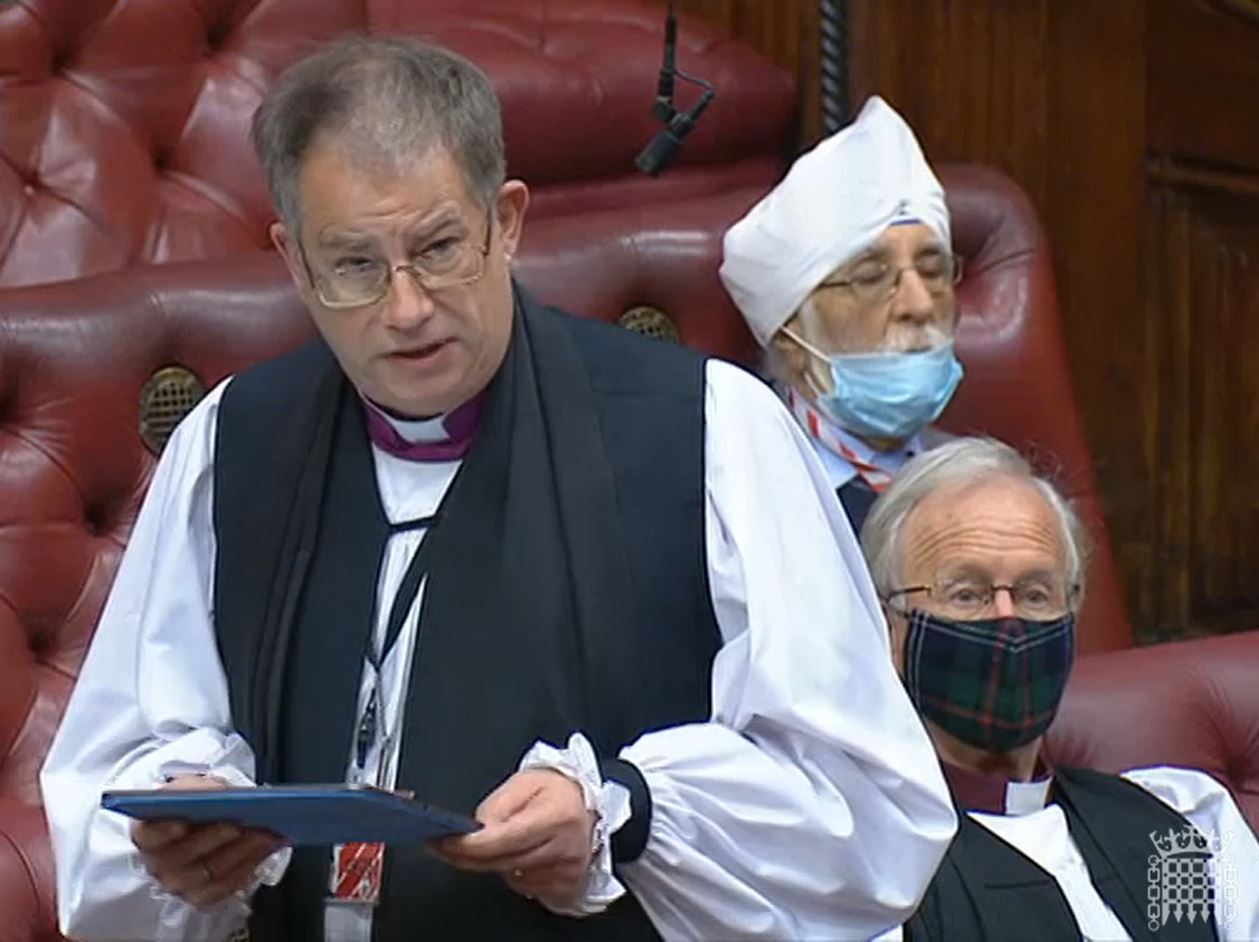
On 10th October 2022, the Bishop of Durham spoke about poverty and social security during a debate on the government’s economic growth plan:

The Lord Bishop of Durham: My Lords, I congratulate my friend of more than 40 years, the right reverend Prelate the Bishop of Birmingham, on his valedictory speech. I thank him for his contributions to this House, particularly as our convenor, and pray God’s blessing for his future endeavours. I also congratulate the noble Baroness, Lady Gohir, on her excellent maiden speech.

In Luke, chapter 16, Jesus tells of a rich man who

“lived in luxury every day”,

while a beggar named Lazarus lay longing to eat what fell from his table. Sat at the rich man’s gate, Lazarus was in plain sight, yet he was invisible to the rich man—a man blind to suffering and the needs of Lazarus.

The Trussell Trust has revealed devastating statistics regarding those in poverty. In recent months, its food banks have provided 50% more parcels. Of those on universal credit, 2 million have skipped meals to meet other essential costs. These statistics continue to rise; poverty is in plain sight. Yet a policy of trickle-down economics renders those in poverty invisible. Like Lazarus waiting to eat what fell from the rich man’s table, this policy does not address urgent needs. These people cannot wait for the benefits of this economic policy to trickle down; this is especially the case for children and young people. We all get only one childhood, which shapes the rest of our lives. Children do not have time to wait for the “pie” to grow; they need meaningful investment now. God does not “trickle down” his love for us; he pours it out extravagantly. Jesus’s priority was to lift up the poor, not wait for some small advance to trickle down.

Continue reading “Bishop of Durham speaks on poverty and social security”

Bishop of Durham asks about Social Security payments

The Bishop of Durham asked a question about rising poverty on 10th October 2022, during a debate on social security and inflation:

The Lord Bishop of Durham: My Lords, I take the Minister back again to the question asked by the noble Baroness, Lady Lister. This morning, the Legatum Institute made it very clear that the number of people in poverty will rise if the rates are not increased by the rate of inflation. Will the Minister acknowledge that that is simply the fact if the Government do not do that?

Continue reading “Bishop of Durham asks about Social Security payments”

Bishop of Gloucester asks about increasing community advice services to low income households

The Bishop of Gloucester received the following written answer on 13th July 2022:

The Lord Bishop of Gloucester asked Her Majesty’s Government whether they have carried out an impact assessment of increasing the numbers of face-to-face advice services covering (1) household finances, and (2) benefit entitlement, in community centres that provide food to households on low incomes.

Continue reading “Bishop of Gloucester asks about increasing community advice services to low income households”

Bishop of Durham asks about the impact of inflation on families

The Bishop of Durham asked a question on benefits for families with children during a debate on inflation on 16th March 2022:

The Lord Bishop of Durham: To ask Her Majesty’s Government what assessment they have made of the impact of inflation on the real terms value of the benefits received by families with children.

Continue reading “Bishop of Durham asks about the impact of inflation on families”

Bishop of St Albans asks about alleviating rural poverty

The Bishop of St Albans tabled a question on efforts to alleviate in-work poverty in rural areas on 25th October 2021:

The Lord Bishop of St Albans: To ask Her Majesty’s Government, further to the report by the Rural Services Network Towards the UK Shared Prosperity Fund, published in June, what plans they have accurately to reflect in-work rural poverty in future funding allocation mechanisms.

Continue reading “Bishop of St Albans asks about alleviating rural poverty”

Bishop of Durham asks about food waste

The Bishop of Durham asked a question on food waste on 20th October 2021, during a debate on government plans for protection of the most vulnerable in the event of energy or necessity shortages:

The Lord Bishop of Durham: My Lords, one of the other necessities mentioned by the noble Lord, Lord Brooke of Alverthorpe, is food. Nationally and globally, we waste a third of all food. When 1.7 million children, between September 2020 and February 2021, were living in food poverty along with their families, surely there must be a better way. This week, the Earthshot Prize celebrated Milan’s citywide food-waste policy, which saves 260,000 meals-worth a year. What steps are Her Majesty’s Government taking to encourage and support the better local collection and distribution of food waste in the UK more effectively?

Continue reading “Bishop of Durham asks about food waste”

Social Security (Up-rating of Benefits) Bill: Bishop of Durham calls for further action on benefits issues

On 13th October 2021, the House of Lords debated the Social Security (Up-rating of Benefits) Bill in its second reading. The Bishop of Durham spoke in the debate, urging the government to do more to support those in poverty:

The Lord Bishop of Durham: My Lords, when I read the title of the Bill I thought, “Good: we will have before us a measure that covers the wide issues of the uprating of the wide range of social security benefits we have, most notably pensions, universal credit and perhaps the question of legacy benefits.” So I was very disappointed to discover that, actually, the scope of the content was purely to do with pensions.

In relation to pensions, I have sympathy with the proposals tackling a specific issue that appears to have emerged as something of an anomaly, given our recent experience of the pandemic. I think the triple lock was probably the right move when it was introduced and it has served pensioners well. However, I now have questions as to whether having such a lock in one part of the social security system actually prevents both the Treasury and the Department for Work and Pensions from truly looking at the system and its funding as a rounded whole—although I note with care the comprehensive and careful input of the noble Baroness, Lady Drake, and that of the noble Baroness, Lady Greengross, just now on the double lock. But this is an uprating Bill for the system, it is not about changing the system, so with some reluctance I accept the proposals in the Bill.

However, I now turn to my deep disappointment with the Bill. I join many noble Lords in raising a concern that the Bill does not address the universal credit uplift cut. I recall the debate in this Chamber back in February, in which many Peers expressed their concern that a Bill would not address what is historically one of the most significant cuts to social security benefits. The letter sent by the Minister outlining the content of this Bill began by stating:

Continue reading “Social Security (Up-rating of Benefits) Bill: Bishop of Durham calls for further action on benefits issues”