Bishop of Exeter asks about mitigation of antimicrobial resistance

The Bishop of Exeter received the following written answer on 27th February 2023:
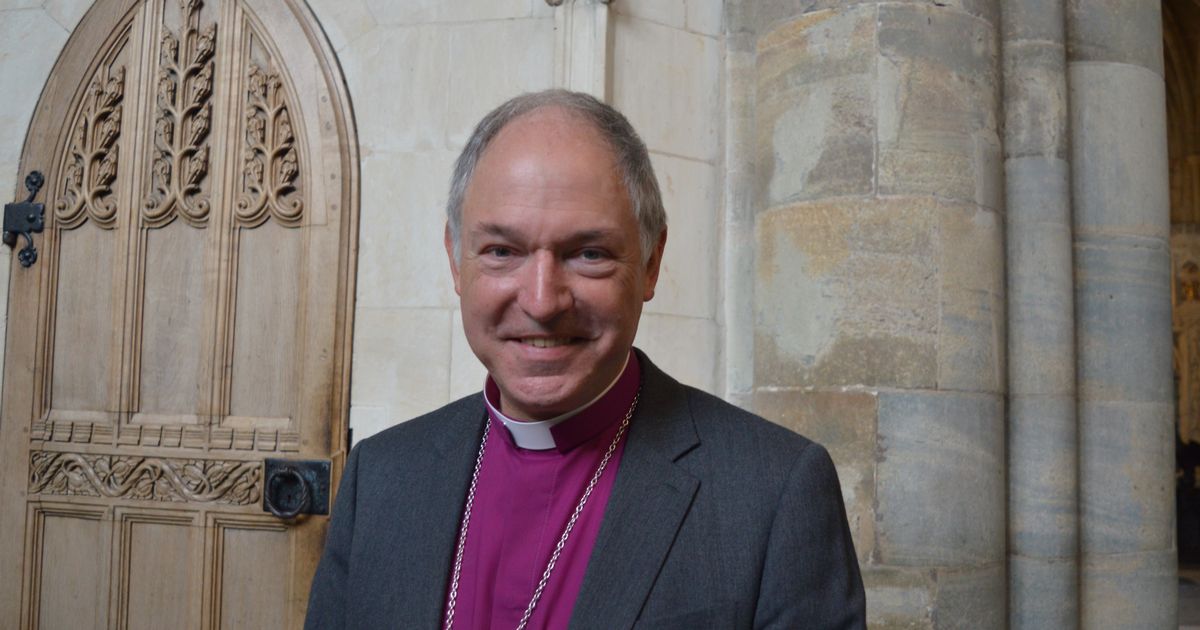
The Lord Bishop of Exeter asked His Majesty’s Government what discussions they are having with water companies to mitigate the risks of antimicrobial resistance.

Lord Benyon (Con): The Department of Environment, Food and Rural Affairs (DEFRA) and the Environment Agency (EA) have been working with the water industry to research the occurrence and transport of bacteria that are resistant to antibiotics through wastewater treatment works as part of the industry-funded Chemical Investigations Programme. Investigations have been carried out at 10 sites across the country to understand how the different treatment processes affect the presence and prevalence of particular organisms and resistance genes. The results were published by UK Water Industry Research in February 2023. In addition, the EA has completed a study to look at the amounts of antifungal substances that remain in biosolids as one of the final products of these wastewater treatments. These results will also be published in early 2023.

Continue reading “Bishop of Exeter asks about mitigation of antimicrobial resistance”

Levelling up and Regeneration Bill: Bishop of Leeds speaks in support of amendment on health disparities

On Wednesday 22nd February 2023, the House of Lords debated the Levelling Up and Regeneration Bill in the second day of committee. The Bishop of Leeds spoke in the debate, supporting amendments by the Bishop of London and other peers relating to health disparities:

The Lord Bishop of Leeds: My Lords, at Second Reading, I remember applauding, broadly speaking, the ambitions of the White Paper. However, I share the concerns of the right reverend Prelate the Bishop of London, who of course brings to this much more experience than I do.

I am pleased that, already, the noble Baroness, Lady Hayman, has alluded to the interconnectivity of all these different missions; they cannot be seen in silos or in isolation. For example, if you have children who are turning up at school unfed or living in poor housing, you can try teaching them what you will but it may not be very successful, and that has an impact not only on individuals but on communities and their flourishing.

Continue reading “Levelling up and Regeneration Bill: Bishop of Leeds speaks in support of amendment on health disparities”

Bishop of London asks about publication of Health Disparities White Paper

The Bishop of London received the following written answer on 3rd February 2023:

The Lord Bishop of London asked His Majesty’s Government whether their new Major Conditions Strategy will include the content of their unpublished Health Disparities White Paper.

Lord Markham (Con): The Major Conditions Strategy will consider major conditions in the round, including disparities due to geography and other factors. Many stakeholders have already responded to government consultations on mental health, dementia, health disparities and cancer. We will draw on the insights and evidence provided through these processes and the Department will set out opportunities to contribute further in due course.

Hansard

Bishop of London asks about development of healthcare strategies

The Bishop of London received the following written answer on 1st February 2023:

The Lord Bishop of London asked His Majesty’s Government what the consultation process will be in the development of their Major Conditions Strategy.

Lord Markham (Con): Through the Retained EU Law (Revocation and Reform) Bill, the Government is currently reviewing which retained European Union law should be repealed, reformed or preserved. The Government continues to work with a range of stakeholders to ensure that current standards in patient safety and public health are maintained.

Hansard

Bishop of Durham asks about cholera outbreak in Burundi

The Bishop of Durham received the following written answer on 24th January 2023:

The Lord Bishop of Durham asked His Majesty’s Government what assessment they have made of the recent outbreak of cholera in Burundi.

Lord Goldsmith of Richmond Park: We note reports of a recent outbreak of cholera in Burundi and urge the Government of Burundi to continue taking preventative measures to limit further risks to the population. FCDO officials have engaged with international partners to discuss how we can limit the outbreak of cholera worldwide.

Hansard

Bishop of Carlisle asks about PPE purchasing systems

The Bishop of Carlisle asked a question on whether the government have revised their PPE purchasing systems for possible future pandemics on Monday 16th January 2023:

The Lord Bishop of Carlisle: My Lords, can the Minister tell us whether His Majesty’s Government have yet put in place a revised system to purchase PPE during a pandemic?

Lord Markham (Con): PPE is an example of where we all agree that we could have done better, to say the least. At this stage, I should declare an interest in that I set up a Covid testing company—not PPE—which never supplied the Government. I want to be clear about that, so that the House is fully aware of it in terms of my replies, now we are talking about PPE and related areas. Yes, we can learn a lot about PPE. At the same time, we did buy 35 billion items, 97% of which worked very well. It is important that we keep all this in context; we got 97% of things right.

Hansard

Bishop of London urges government to work with faith groups to tackle health inequalities

On 12th January 2022, the House of Lords debated changing mortality rates in the UK in Grand Committee. The Bishop of London spoke in the debate, advocating for greater inclusion of faith groups to aid in tackling health inequalities:

The Lord Bishop of London: My Lords, I thank the noble Lord, Lord Sikka, for securing this important debate. I also look forward to hearing from the noble Lord, Lord Evans, in his maiden speech.

The paper at the heart of this debate provides a useful focus, because it highlights one of the worst health outcomes that we have seen in the past 10 years: that of widening inequalities. It is also helpful because, by focusing on the impact of austerity, we begin to see that public health is impacted by many factors besides healthcare access—factors called the social determinants of health. Those include housing, our jobs, our environment, our education and much more. They can be summed up as the opportunities that we have to lead healthy lives. The Heath Foundation noted that 50% of people in the most deprived areas report poor health by the age of 55 to 59, which is more than two decades earlier than in the least deprived areas. It is not just about life expectancy; it is also about healthy life expectancy.

The debate is poignant also because it comes at a time of great strain on the NHS and on social care, and at a time when those other determinants of health are challenging for many of us. We are also at a moment when I hope we are beginning to realise the importance of prevention of ill health, which is essential for the sustainability of our healthcare system.

Continue reading “Bishop of London urges government to work with faith groups to tackle health inequalities”

Bishop of St Albans asks about public health impacts of sewage discharges

The Bishop of St Albans asked a question about the public health consequences of sewage being discharged into the sea and rivers on 14th November 2022:

The Lord Bishop of St Albans: My Lords, this is not just causing devastation in our rivers—not least in our wonderful chalk streams in Hertfordshire and Bedfordshire in my diocese—it is also a public health issue. Noble Lords may have seen the story of Jayne Etherington, a 22 year-old who went swimming in Pembrokeshire, caught E. coli from sewage and landed up in hospital with serious damage to her organs. What does the NHS think about this as a health hazard which is affecting a significant number of people and stopping them getting exercise by swimming in the sea?

Continue reading “Bishop of St Albans asks about public health impacts of sewage discharges”

Bishop of Chichester asks about health outcomes in coastal communities

The Bishop of Chichester asked a question on government plans to tackle higher levels of disability and poor health in coastal communities on 10th February 2022, during a debate on the National Disability Strategy:

The Lord Bishop of Chichester: My Lords, last year, the Chief Medical Officer’s annual report focused on health in coastal communities, noting higher levels of deprivation and disability in these locations. What will the Government do to tackle the levels of multiple need and disability in these communities?

Baroness Scott of Bybrook (Con): My Lords, I cannot say specifically, but I will certainly write with the answer. Across the whole of this country, there are areas where disability is more of an issue than in others. That is why we have this cross-government strategy, and why we will deliver on it.

Hansard

Bishop of Exeter asks about access to dental service in rural communities

The Bishop of Exeter asked a question on access to dental services for rural communities on 31st January 2022, during a debate on issues in NHS dental care:

The Lord Bishop of Exeter: My Lords, the report of Healthwatch England states that, of all the areas in the country with lack of access to NHS dentistry,

“the worst affected is Devon, as there are currently no practices showing as taking on adult or child patients.”

Can the Minister assure the House that, as part of the Government’s levelling-up policy, rural communities in Devon and elsewhere will not be further disadvantaged and will have access to NHS dental services?

Continue reading “Bishop of Exeter asks about access to dental service in rural communities”