On 2nd March 2022, the House of Lords debated the Nationality and Borders Bill in its second day of the report stage. Votes were held on amendments to the bill, in which Bishops took part.

On 2nd March 2022, the House of Lords debated the Nationality and Borders Bill in its second day of the report stage. Votes were held on amendments to the bill, in which Bishops took part.
On 28th February 2022, the House of Lords debated the Nationality and Borders Bill in the first day of the report stage. Votes were held on amendments to the bill, in which Bishops took part:
During a debate on amendments to the Nationality and Borders Bill on 28th February 2023, the Bishop of Durham spoke in favour of several amendments:
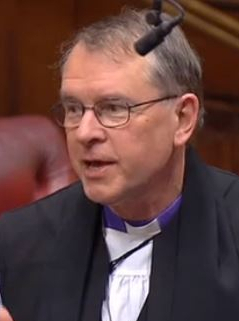
The Lord Bishop of Durham: My Lords, I fully support the amendment from the noble Baroness, Lady Stroud, and my noble and right reverend friend behind me here supports it as well. I will speak to the amendment from the noble Lord, Lord Coaker, and the two amendments from the noble Baroness, Lady Hollins, which I fully support.
We may have 125,000 asylum seekers but let me focus on two. This is why I support both amendments. One is an asylum seeker who lives in my area who heard from the Home Office within the first three weeks of arrival then heard nothing for 12 months, in spite of inquiry after inquiry. That is why we need a code of practice. That is why we need better ways of working. It beggars belief what that says to him about how he is seen in our society and by our society. That is, of course, told time and again.
Continue reading “Nationality and Borders Bill: Bishop of Durham supports amendments proposed to ensure well-being and fair treatment of refugees and asylum seekers”During a debate on the Nationality and Borders Bill in the first day of the report stage, on 28th February 2022, the Bishop of Chelmsford spoke in support of an amendment tabled by Baroness Stroud that would allow for the right to work for people seeking asylum who had been resident in the UK for six months:
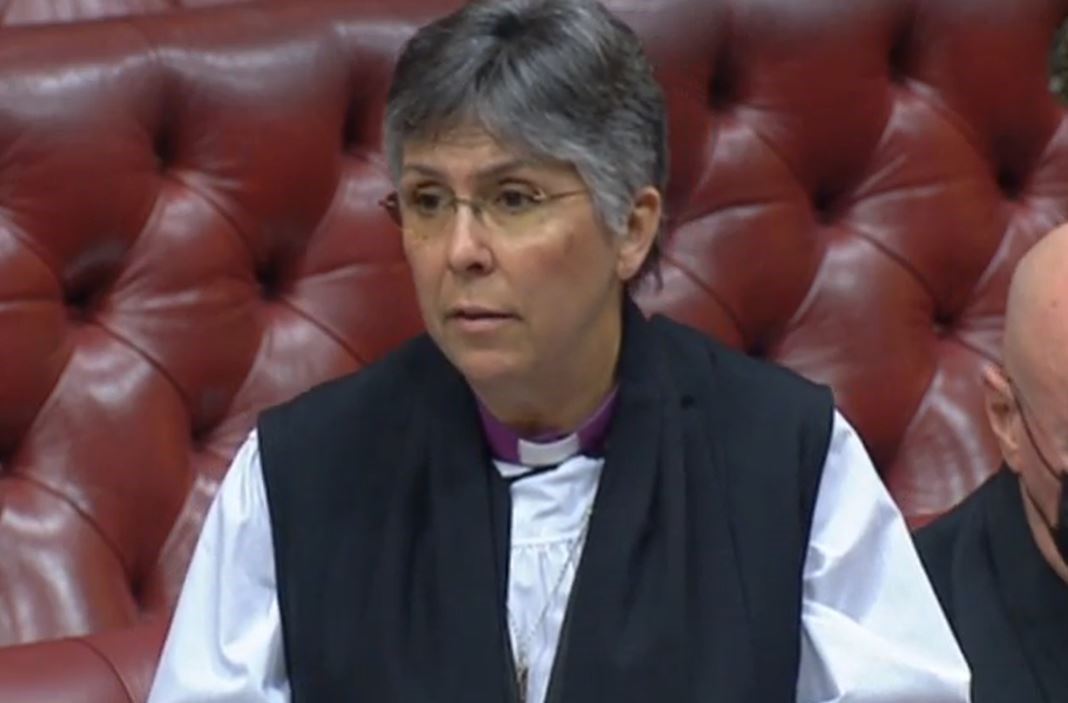
The Lord Bishop of Chelmsford: My Lords, I give my strong support to Amendment 30 in the name of the noble Baroness, Lady Stroud. She has eloquently made the case for this amendment, so I do not intend to take a great deal of the House’s time, but I wish to add a few brief remarks in support.
At Second Reading, I raised the question of how different our migration policy might be if we stopped looking at asylum seekers as either victims without agency or criminals seeking to exploit us and instead as future citizens and neighbours. In this light, the right to work for asylum seekers who have waited six months or more for a decision represents an excellent opportunity. It would be good for asylum seekers and for the soul of this nation. Such people are often left without agency or dignity. Their identity becomes limited to a sort of victim status. Being unable to work leaves them dependent on the state or at risk of falling in with illegal labour exportation.
Continue reading “Nationality and Borders Bill: Bishop of Chelmsford supports right to work for asylum seekers”On 28th February 2022, during a debate on the Nationality and Borders Bill, the Bishop of Durham spoke in support of an amendment to clause 11 of the bill tabled by Lord Kerr of Kinlochard, to remove the differentiation of refugees within the clause. The Bishop further expressed opposition to clause 11 in its entirety:
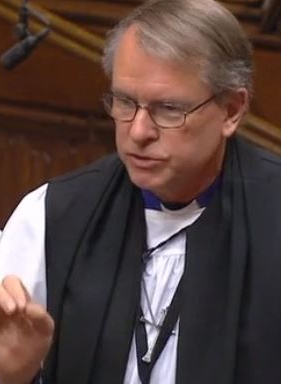
The Lord Bishop of Durham: My Lords, if the names had not been filled on Amendment 28 then I would have added my name to it. I remind the House of my interests as set out in the register, both in RAMP and Reset.
In Committee I laid out the understanding of the two groupings proposed and argued that almost no one will actually qualify as being in group 1. I had no repudiation offered to that argument. As the noble Lord, Lord Kerr, said, Ukraine is currently illustrating the problem precisely. I was also concerned in the response to the debate in Committee by some of the language of discretion within the two groupings.
We need a simpler, more efficient asylum system, and I continue to be convinced that what is proposed will provide a more complex, slower process. Fundamentally, I am with all those who oppose the two-group system, as it creates a fundamental injustice for fair treatment of all refugees, regardless of how they arrive.
Today, a letter signed by over 1,000 leaders from all the major faith communities of this country was delivered to the Prime Minister. I quote from that letter:
Continue reading “Nationality and Borders Bill: Bishop of Durham opposes differential treatment of refugees”On 28th February 2022, the Bishop of Durham asked a question about the UK’s plans to support Ukrainian refugees fleeing conflict, and to assist other European countries in providing that support:
The Lord Bishop of Durham: My Lords, I have every sympathy for the Minister trying to defend the indefensible. He has to do that; that is his job. However, what are we going to say to Poland and Moldova and all the other neighbouring countries about how we will take our share of those who will arrive in the first instance into their country but who they cannot support entirely on their own because they will need the support of other countries to the west, including ourselves?
Lord Sharpe of Epsom (Con): I thank the right reverend Prelate for his sympathy. I do not know, unfortunately, what conversations will be had with those neighbouring countries, but they must, by definition, be ongoing.
The Bishop of Durham asked a question regarding alternative interpretations of the Refugee Convention on 28th February 2022, in response to a debate on the government’s policy on migration and asylum:
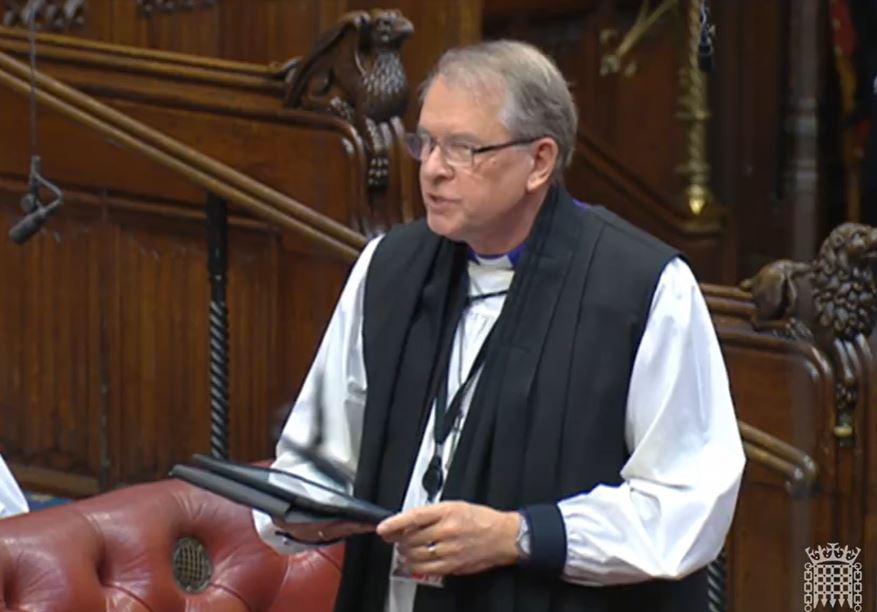
The Lord Bishop of Durham: Can the noble Baroness offer us any other examples of alternative interpretations of the refugee convention worldwide? If not, on what basis does she believe the Government are entitled to do so in reference to Clause 11 of the Bill we will discuss later?
Continue reading “Bishop of Durham asks about government’s interpretation of the refugee convention”The Bishop of Coventry echoed calls from the Pope and Archbishop of Canterbury to pray for peace, and highlighted the need to coordinate in support of refugees, following a government statement on Russia’s invasion of Ukraine on 24th February 2022:
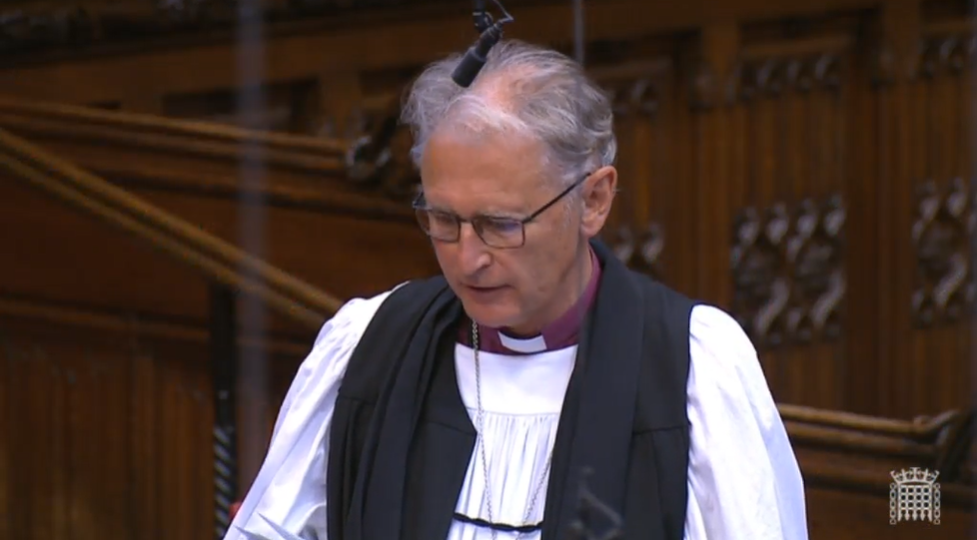
The Lord Bishop of Coventry: My Lords, while weapons of war reduce people and property to ash, will the Leader join me in commending the Pope on calling for a day of prayer and fasting for peace next Wednesday, which is Ash Wednesday, and in commending the most reverend Primate the Archbishop of Canterbury on calling us all to join in that world movement of prayer and calling all churches of this land to set aside Sunday as a day of prayer for peace? Also, would she care to expand on her answer to the noble Baroness, Lady Smith, on the humanitarian response, especially in terms of how we are co-ordinating our response with European partners to the predicted refugee crisis? The Leader may be glad to know that Coventry City Council has assured me that it stands ready to do its part should that be needed, as it has been in the past.
Continue reading “Bishop of Coventry echoes calls for peace following Russian invasion of Ukraine”The Bishop of Durham asked a question on refugees fleeing the country during a debate on the ongoing humanitarian situation in Afghanistan on 9th February 2022:
The Lord Bishop of Durham: My Lords, it is very good how much is being given. Operation Herrick cost us at least £22 billion and we managed to find that, so I hope we can release more generous aid rapidly. There is also a humanitarian issue for Afghans who have been freed and are now here but whose families are still in hiding for fear in Afghanistan. Can the Minister update us on how those people are going to be got out of Afghanistan?
Continue reading “Bishop of Durham asks about humanitarian crisis in Afghanistan”On 8th February 2022, the House of Lords debated the Nationality and Borders Bill in the fourth day of the Committee stage. The Bishop of Gloucester spoke in favour of amendment 105, tabled by Baroness Lister, which would remove restrictive wording in clause 32 of the bill, especially with regards to victims of trafficking:
“The amendment would remove the narrow restrictive and requirement in Clause 32 that, in order to qualify under the “particular social group” grounds of persecution for recognition as a refugee under the convention, two conditions must be met. The amendment would replace this with an either/or condition.” Hansard
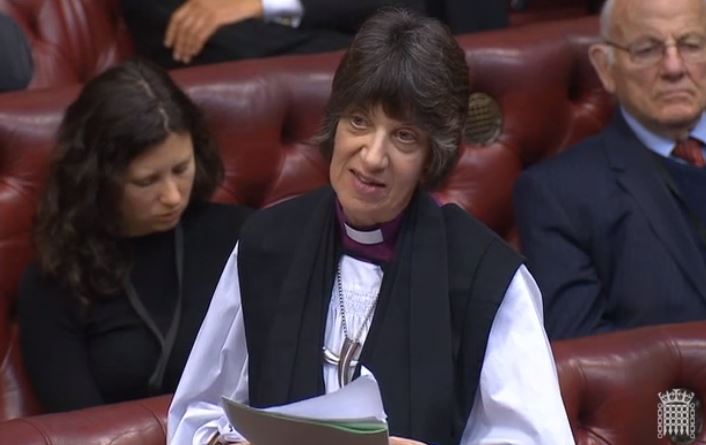
The Lord Bishop of Gloucester: My Lords, I have added my name to Amendment 105 and the intention to oppose Clause 31 standing part of the Bill. I too am grateful to Women for Refugee Women and others for their briefings and support.
In the New Plan for Immigration and the briefings for the Bill, the Government have argued repeatedly that the existing asylum and refugee system is weighted against vulnerable women. The Home Secretary has repeatedly made the point that the large majority of channel crossings are by men aged under 40, for example. Given this, there might be some expectation that the Bill would contain some good news or ambitions on the part of the Government for better reaching and helping the women and girls who make up 50% of the world’s refugees and displaced people. Unfortunately, I do not see any such commitments. As a sting in the tail, in Clauses 31 and 32 we find proposals that seem to significantly disadvantage women further.
Continue reading “Nationality and Borders Bill: Bishop of Gloucester supports amendment on women’s safety and human trafficking” The Church of England in Parliament
You must be logged in to post a comment.