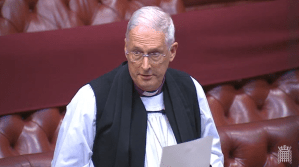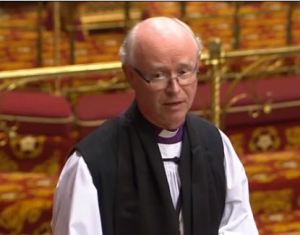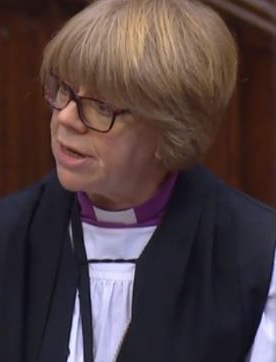
Border Security, Asylum and Immigration Bill: Bishop of London supports amendments on freedom of religion and modern slavery

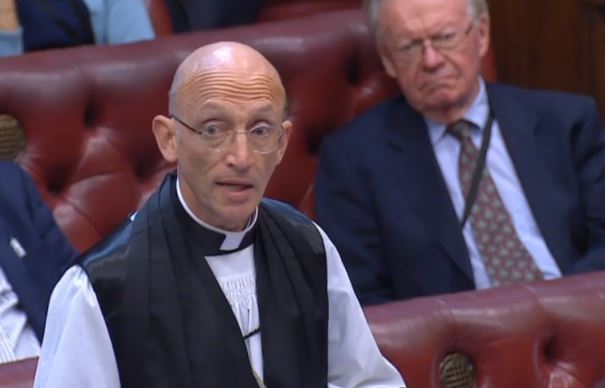
During a debate on the Border Security, Asylum and Immigration Bill on 11th November 2025, the Bishop of London spoke in opposition to two amendments aimed at potentially restricting claims of asylum for reasons of freedom of religion and modern slavery, pointing out the lack of evidence of any abuse of the baptism process by asylum seekers and the need to protect the safety of those under threat from religious discrimination:

The Lord Bishop of London: My Lords, I resist Amendment 79D. This amendment and Amendment 79E in the next group are both motivated by reports that asylum seekers are choosing to convert to Christianity upon arrival in the UK in order to support their claim for asylum on the grounds of religious persecution. Amendment 79E is of deep concern. I will address this in the next group.

Continue reading “Border Security, Asylum and Immigration Bill: Bishop of London supports amendments on freedom of religion and modern slavery”
Bishop of St Albans asks about tackling religious hate-crime

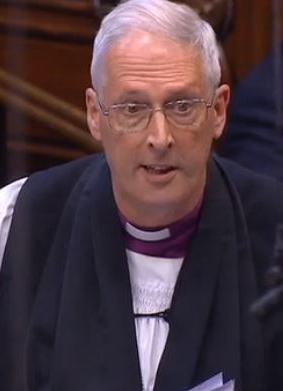
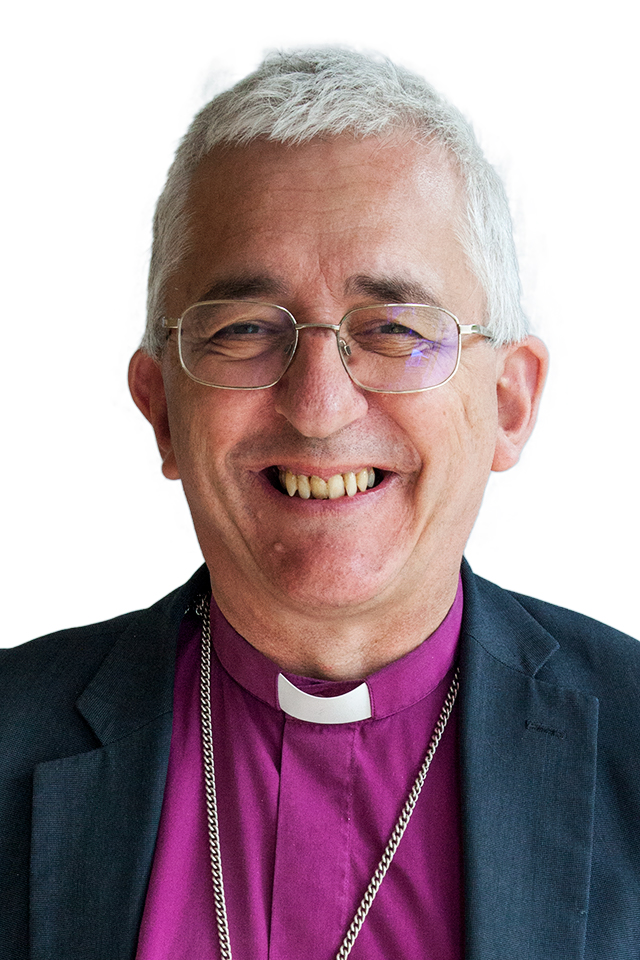
On 15th October 2024, the Bishop of St Albans tabled a question on the rise in religious hate-crimes:

The Lord Bishop of St Albans: To ask His Majesty’s Government, further to reports that religious hate crime has increased, what steps they are taking to tackle religious hate crime and strengthen community cohesion in the UK.

Continue reading “Bishop of St Albans asks about tackling religious hate-crime”

Bishop of Lichfield asks about faith literacy in public institutions

The Bishop of Lichfield received the following written answer on 24th May 2024:

The Lord Bishop of Lichfield asked His Majesty’s Government what steps they are taking to improve the faith literacy of those on the public payroll, including (1) civil servants, (2) the police, (3) NHS staff, and (4) HM Prison and Probation Service staff.

Continue reading “Bishop of Lichfield asks about faith literacy in public institutions”

Bishop of Chichester asks about closure of the UK Inter-Faith Network

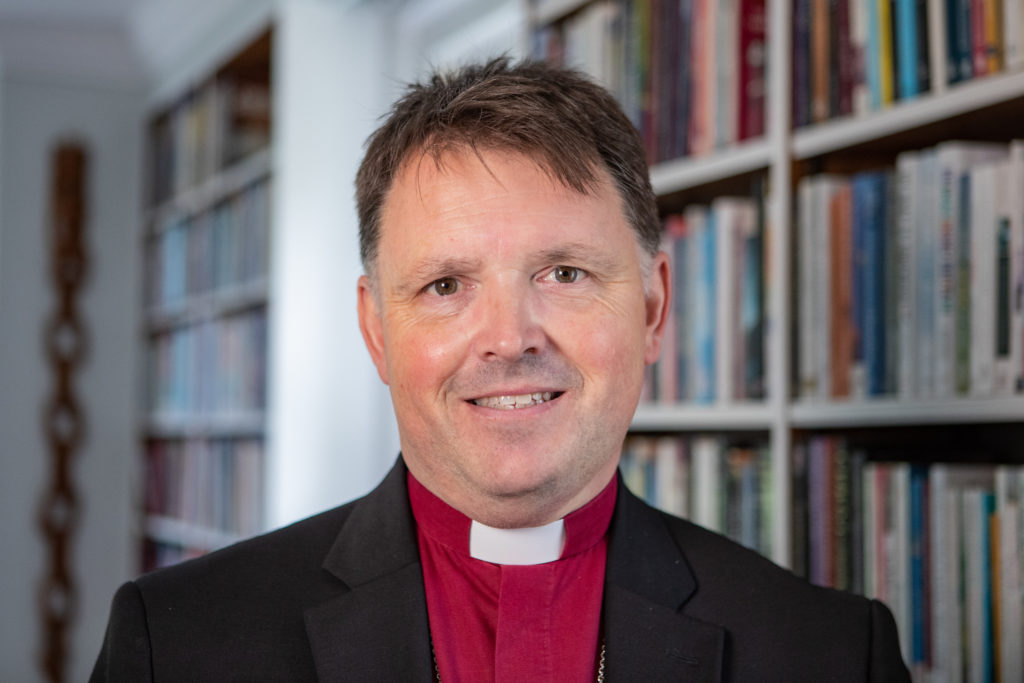
The Bishop of Chichester asked a question on the impact of the closure of the UK Inter-Faith Network on 21st February 2024, following the withdrawal of funding from the network by the Department for Levelling Up, Housing, and Communities:

The Lord Bishop of Chichester: My Lords, this is an extremely difficult time, in which we hear profoundly disturbing reports of the rise in race and faith-based hate crimes. Tomorrow, the board of the UK’s Inter Faith Network will meet to confirm its closure following the withdrawal of funding by the Department for Levelling Up, Housing and Communities. This comes at a time when we urgently need to promote interfaith dialogue and the expansion of religious literacy in schools, as has been mentioned, and elsewhere. What assessment have His Majesty’s Government made of the impact of the closure of the Inter Faith Network, and what will replace it?

Continue reading “Bishop of Chichester asks about closure of the UK Inter-Faith Network”

Bishop of Norwich asks about effects of new visa regulations on ministers of religion

The Bishop of Norwich received the following written answer on 10th January 2024:

The Lord Bishop of Norwich asked His Majesty’s Government further to the Statement by the Secretary of State for Home Affairs on legal migration on 4 December (HC Deb cols 41–43):

  •  what changes, if any, will be made to the existing Tier 2 Minister of Religion visa category.
  • whether raising the minimum income for family visas to £38,700 will apply to ministers of religion with qualifying family dependants, including spouses and fiancées, who are foreign nationals residing overseas.
Continue reading “Bishop of Norwich asks about effects of new visa regulations on ministers of religion”

Education (Non-Religious Philosophical Convictions) Bill: Bishop of Southwark speaks on importance of religious education in schools

On Friday 3rd February, the House of Lords debated the Education (Non Religious Philosophical Convictions) Bill in its second reading. The bill would introduce provision for “religious worldviews” to replace religious education in some schools. The Bishop of Southwark spoke in the debate, arguing that religious education fills a key place in the curriculum:

The Lord Bishop of Southwark: My Lords, I speak in this debate feeling somewhat like an officer of the Salvation Army commending temperance to a conference of brewers. None the less, while I believe that the noble Baroness, Lady Burt of Solihull, has made some important points introducing this Bill and I am grateful for them, I want to make some general points to gently demonstrate why this proposed measure for RE in schools without a religious character is unnecessary. I am glad to follow the noble Lord, Lord Griffiths of Burry Port, although my view is somewhat different on this occasion from his wisdom and I have no immediate plans to join the British Humanist Association.

First, I stress the value of what remains of religious education within our schools. While the outcomes of education remain a contested area of debate in society, the purpose of education and what it does to us receives much less attention. Too much is assumed in that regard, and that partly informs this Bill. My belief is that human flourishing happens in body, mind and spirit and that education engages us in each of these aspects, which need to be held together holistically.

Continue reading “Education (Non-Religious Philosophical Convictions) Bill: Bishop of Southwark speaks on importance of religious education in schools”

Bishop of Leeds asks about the role of religion in addressing the Russian invasion of Ukraine

The Bishop of Leeds asked a question regarding the government’s assessment of the role of religion in the conflict in Ukraine, following a statement giving an update on the conflict on 2nd March 2022:

The Lord Bishop of Leeds: My Lords, I very much appreciate what the Government are doing and the Statement that was given. One of the elements that is lacking from it, however, is any reference to religion. One cannot understand the politics of Russia or Ukraine without understanding the history of the past 1,200 years, what is intended to be part of the reunification of the original Rus—I speak as a Russian linguist and former Soviet specialist at GCHQ. If we do not understand the role of religion, we are in danger of short-term, reactive, tactical activities in relation to the current conflict, whereas the Russians, certainly, have been running a long-term strategy under Putin, in which he has been extremely successful thus far. What role is religion playing in the Government’s assessment of how to care for refugees, which we have talked about, and in establishing back channels with the Moscow patriarchate and the Ukrainian patriarchate?

Continue reading “Bishop of Leeds asks about the role of religion in addressing the Russian invasion of Ukraine”

Bishops of Southwark and Bristol highlight concerns with Government’s Immigration Bill

On 22nd July the Government’s Immigration and Social Security (EU Withdrawal) Bill was debated at Sec0nd Reading in the House of Lords. The Rt Revd Christopher Chessun, Bishop of Southwark, and the Rt Revd Vivienne Faull, Bishop of Bristol, spoke in the debate, highlighting modern slavery, work eligibility, EU citizens, visas for ministers of religion, tariffs, and children’s welfare.

The Lord Bishop of Southwark: My Lords, the introduction of this Bill in another place is a signal opportunity for Her Majesty’s Government comprehensively to reset the legislative basis for immigration control in this country, to set out a vision for doing so, and to rationalise and streamline the more than 1,000 pages of immigration legislation under which we labour. It is surprising, therefore, that, as other speakers have pointed out, this Bill is so narrow in scope. Continue reading “Bishops of Southwark and Bristol highlight concerns with Government’s Immigration Bill”

Bishop of Rochester welcomes protective security funding for places of worship

17.10 RochesterOn 7th May 2019 Baroness Williams of Trafford repeated a Statement by the Home Secretary on protective security funding for places of worship. The Bishop of Rochester, Rt Revd James Langstaff, responded to the statement: 
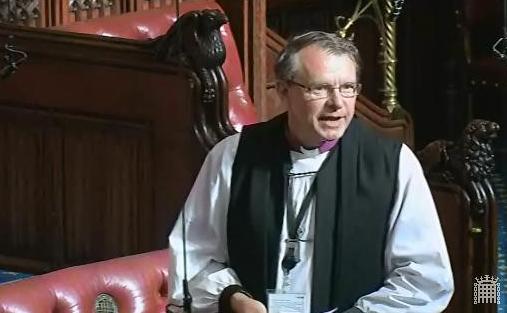
The Lord Bishop of Rochester: My Lords, I too am very grateful to the Minister for repeating the Statement from the other place. From these Benches, I welcome it and echo some of the things that have already been said by the noble Lord, Lord Rosser, and the noble Baroness, Lady Hamwee, not least about the wider context, although I recognise that this Statement has a limited focus.

The Minister has already observed the tragic events in Christchurch, Sri Lanka and San Diego. It seems to me that one of the learnings from those events is the impossibility of predicting where, or even when, a dreadful event might occur. With that in mind, I am particularly grateful for the broadening of the eligibility criteria in relation to potential grants from the fund, whereby it is now not necessary for places of worship to have experienced an incident of hate crime in order to make an application. That is an important loosening around the unpredictability of where things might occur.

Continue reading “Bishop of Rochester welcomes protective security funding for places of worship”

Bishop of Durham highlights the importance of religious literacy at all levels of government

14.06.10 Bishop of Durham 5On the 18th January 2016 Baroness Butler-Sloss asked the Government, on behalf of Lord Harries of Pentregarth, “what is their response to the report of the Commission on Religion and Belief in British Public Life Living with Difference published on 7 December”. Rt Revd Paul Butler, Bishop of Durham, asked a supplementary question.  Continue reading “Bishop of Durham highlights the importance of religious literacy at all levels of government”