Bishop of Carlisle calls for Government action to tackle religious persecution in Republic of Sudan

“…the local Christian diocese has to shoulder most of the burden of caring for people who are in desperate need, and of attempting to feed them when its own resources are pitifully small. Have Her Majesty’s Government given any consideration to providing aid, and so helping to meet people’s basic human rights to food and drink, through the church in that part of Sudan? Heroic efforts are being made to alleviate desperate need, but funding is urgently required” – Bishop of Carlisle, 14.7.14

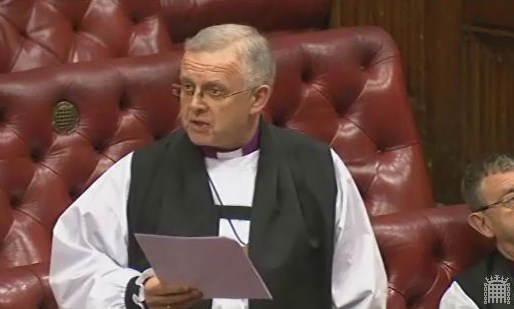
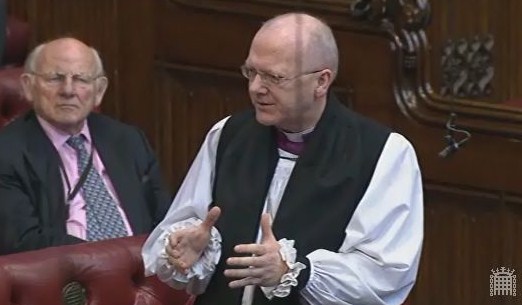
CarlisleOn 14th July 2014, Baroness Cox led a short debate in the House of Lords to ask Her Majesty’s Government what is their assessment of human rights in the Republic of Sudan. The Bishop of Carlisle, the Rt Revd James Newcome, took part in the debate. He spoke about the dire humanitarian situation in the country and the increasing role being played by the church; and also highlighted a number of instances of persecution on the grounds of religious beliefs, urging the Government to put pressure on the Republic of Sudan to respect and promote Article 18 of the UN Declaration of Human Rights.

The Lord Bishop of Carlisle: My Lords, I, too, am most grateful to the noble Baroness, Lady Cox. Unlike her, I cannot claim to be an expert on Sudan, but some of my colleagues who would normally speak on this issue have been unavoidably detained today in another debate of some importance to the church at the General Synod in York. I am very grateful for this opportunity to contribute to this debate because the human rights issues it raises are of such enormous significance, not only for the individuals directly concerned but for the way in which we direct our foreign aid and conduct our foreign policy. Continue reading “Bishop of Carlisle calls for Government action to tackle religious persecution in Republic of Sudan”

Bishop of Coventry leads House of Lords debate on the human rights situation in Egypt

“Instances of violence and physical intimidation against Coptic Christians remain disturbingly high. Police investigations are haphazard and prosecutions rare. In addition to the targeted attacks against Christians, we are, sadly, witnessing a predictable return to the subtler, pernicious problems of the Sadat-Mubarak era” – Bishop of Coventry, 26.6.14

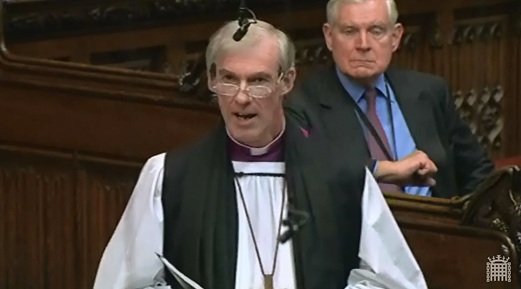
On 26th June 2014, the Bishop of Coventry, the Rt Revd Christopher Cocksworth, led a short debate to ask Her Majesty’s Government what is their assessment of the human rights situation in Egypt. In his opening speech, the spoke of the need for the Government to assist Egypt to significantly improve its human rights record, and how the current situation in Egypt has left the liberties of its people severely restricted. He cautioned against a focus of diplomatic efforts on political stability to the detriment of issues of human rights and dignity and the freedom of religious expression.

13.10 Bishop of CoventryThe Lord Bishop of Coventry: My Lords, the recent presidential election in Egypt and the subsequent inauguration of former Field Marshal Sisi as president make this a very timely debate. This week’s visit of the United States Secretary of State to Cairo, as well as the conviction of the three Al-Jazeera journalists, casts a spotlight on the human rights situation in Egypt. The return of the strongman to Egypt once again brings to centre stage the classic dilemma of how we navigate between interests and values in our foreign policy. Continue reading “Bishop of Coventry leads House of Lords debate on the human rights situation in Egypt”

Bishop of Coventry focuses on sexual violence, religious persecution and Syria in Lords response to Queen’s Speech

“Notable cases have caught public attention, but they are the tip of a dark and deadly iceberg of often hidden harm to women, part and parcel of a wider picture of human rights abuse, societal vulnerability and underdevelopment that needs our persistent attention”- Bishop of Coventry, 11/6/14.

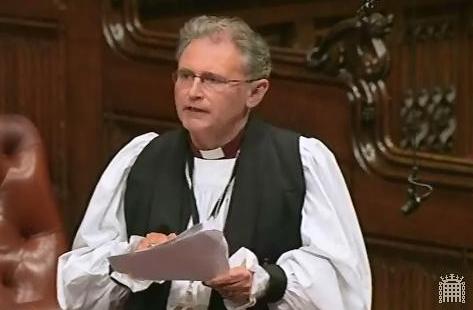
On 11th June 2014 in the ninth and final contribution to the debate on the Queen’s Speech from the Lords Spiritual, the Bishop of Coventry, Rt Rev Christopher Cocksworth, spoke on foreign affairs. He focused on n violence and those suffering persecution for their religious beliefs. The Bishop commended the Government for its efforts to combat sexual violence, but questioned the Government’s focus on the OIC-led defamation of religion initiative. He also pressed the Government to help resolve the problem of political factionalism within the Syrian opposition.

13.10 Bishop of Coventry

The Lord Bishop of Coventry: My Lords, I should like to comment on four themes of the Minister’s inspiring opening speech. First, on gender-based violence, I join the noble Lord, Lord Collins, and other noble Lords in commending the Government’s excellent work, in particular that of the Foreign Secretary. As we have heard, gender-based violence is pervasive, not only in the extreme evil of wartime rape but in other appalling examples of oppression that have been mentioned, including recent incidents in Nigeria, Pakistan, Sudan, Somalia and, if I may add, the recent gang rape and subsequent hanging of three young girls in India. Continue reading “Bishop of Coventry focuses on sexual violence, religious persecution and Syria in Lords response to Queen’s Speech”

Religious Freedom- Written Questions from Bishop of Coventry

13.10 Bishop of CoventryOn 10th June 2014 the Bishop of Coventry, Rt Revd Dr Christopher Cocksworth, received a response to  three written questions on religious freedom:

Continue reading “Religious Freedom- Written Questions from Bishop of Coventry”

Sudan and Meriam Ibrahim: Bishop of Norwich asks Government about action at European level

On 10th June 2014 Lord Alton put a question in the House of Lords “to ask Her Majesty’s Government what actions they have taken to secure the release of Meriam Ibrahim, sentenced to death for apostasy in Sudan, and to promote the terms of Article 18 of the Universal Declaration of Human Rights.” The Bishop of Norwich, Rt Rev Graham James, asked a supplementary question:

The Lord Bishop of Norwich: My Lords, can the Minister inform the House what conversations Her Majesty’s Government have had with Mr Barroso and Mr Van Rompuy, who are meeting international faith leaders in Brussels tomorrow to press for united action in this case?

Baroness Northover: I will have to write to the right reverend Prelate in this regard to fill him in on that. However, I can tell him that we are keeping this case under close review and working with a number of different people.

(via Parliament.uk)

Iran – Written Question

On 13th May 2014, the Rt Revd Christopher Cocksworth, Bishop of Coventry, received an answer to a written question on Iran.

13.10 Bishop of CoventryThe Lord Bishop of Coventry: To ask Her Majesty’s Government whether the question of human rights and freedom of religion and belief was amongst the range of international issues discussed by the Foreign Office’s Political Director, Sir Simon Gass, when he met senior Iranian officials whilst visiting Iran in April.

Baroness Warsi: Human rights were not amongst the issues discussed by Sir Simon Gass on his visit to Iran in April: his interlocutors did not have responsibilities in this area. However, the UK’s non-resident Chargé d’Affaires discussed human rights with a range of Iranian government officials during his visit to Iran on 12 March 2014. He raised the use of the death penalty, freedom of religion and the workings of the criminal justice system. Prior to that, the Secretary of State for Foreign and Commonwealth Affairs, my Rt. Hon. Friend the Member for Richmond (Yorks) (Mr Hague), raised Iran’s human rights records with Iranian foreign minister Zarif at the UN General Assembly on 23 September 2013.

(via Parliament.uk)

MPs debate freedom of thought, conscience and religion

“The ability to pray and worship as one wishes is a fundamental human right, and one that we, as elected democrats, should always seek to defend.” – Rt Hon Sir Tony Baldry MP, 1/5/14

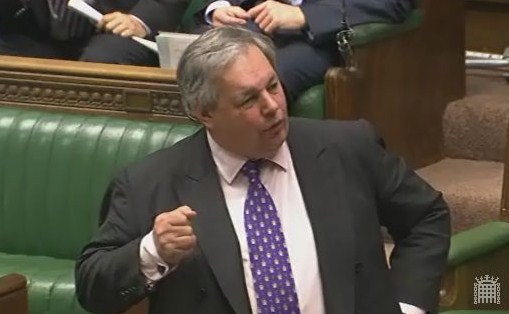
14.01 CCQ Baldry

On 1st May 2014 a debate was held in the House of Commons on ‘Freedom of Thought, Conscience and Religion’. The debate was led by the Alliance MP for Belfast East, Naomi Long. Rt Hon Sir Tony Baldry MP, who is the Second Church Estates Commissioner, took part in the debate and his speech is below. The full debate can be read on the UK Hansard website here. Continue reading “MPs debate freedom of thought, conscience and religion”

Somalia: Religious Freedom

Written Question, answered on 25th March, 2014:

13.10 Bishop of CoventryThe Lord Bishop of Coventry: To ask Her Majesty’s Government what is their assessment of freedom of religion and belief in Somalia.

The Senior Minister of State, Department for Communities and Local Government & Foreign and Commonwealth Office (Baroness Warsi): The vast majority of people in Somalia are Muslim (around 99.8%) and Islam is recognised as the official state religion in Somalia’s provisional constitution. The majority of reports of restriction of religious freedom relate to human rights abuses by Al Shabaab.

(via Parliament.uk)

Iran: Human Rights

Written Question, answered on  20th March, 2014:

14.03 Bishop of St Albans

The Lord Bishop of St Albans:

To ask Her Majesty’s Government what representations they have made to the government of Iran regarding that country’s human rights record.[HL6021]

The Senior Minister of State, Department for Communities and Local Government & Foreign and Commonwealth Office (Baroness Warsi) (Con): The UK’s non-resident Chargé d’Affaires discussed human rights with a range of Iranian government officials during his most recent visit to Iran on 12 March 2014. He raised the use of the death penalty, freedom of religion and the workings of the criminal justice system. Prior to that, the Secretary of State for Foreign and Commonwealth Affairs, my Rt. Hon. Friend the Member for Richmond (Yorks) (Mr Hague), raised Iran’s human rights records with Iranian foreign minister Zarif at the UN General Assembly on 23 September 2013.

(via Parliament.uk)

Egypt: Written Questions from Bishop of Coventry

On March 19th 2014 the Bishop of Coventry, Rt Rev Christopher Cocksworth, received answers to two written questions about Egypt: on political and religious freedom in the country.

13.10 Bishop of CoventryThe Lord Bishop of Coventry: To ask Her Majesty’s Government what is their assessment of the current state of political freedom in Egypt and of the prospects for free and fair Presidential elections later this year.

The Senior Minister of State, Department for Communities and Local Government & Foreign and Commonwealth Office (Baroness Warsi): The January 2014 constitutional referendum was an important moment for millions of Egyptians who expressed their opinion through the ballot box. We welcome the fact that the new constitution includes better provisions for the protection of the rights of minorities, including Christians, and women. However, we are concerned by restrictions on freedom of expression for opposition groups and the press, both in the run-up to the referendum and since. We encourage Egypt’s interim authorities to ensure that Egypt’s democratic transition leads to free and fair presidential elections in a genuinely inclusive process. We are pleased to hear that the EU European External Action Service is discussing with Egyptian authorities its intention to send an Electoral Observation Mission to Egypt for the presidential elections.

The Lord Bishop of Coventry: To ask Her Majesty’s Government what is their assessment of the state of freedom of religion and belief in Egypt following the removal of President Morsi from office in July 2013.

Baroness Warsi: Sectarian violence increased under President Morsi and has continued since. Amnesty report that 200 Christian-owned properties have been attacked and 43 churches burned down or damaged since July 2013. In September, the Secretary of State for Foreign and Commonwealth Affairs, my Rt. Hon. Friend the Member for Richmond (Yorks) (Mr Hague), made a statement in Parliament condemning the violence against Christian churches. Article 64 of the 2014 constitution states that freedom of belief is absolute. The key test will be how the constitution is implemented, as many articles require additional legislation. We have continued to raise the importance of respect for different religions and beliefs and the protection of religious minorities with the Egyptian authorities. The Minister for the Middle East and North Africa, my Rt. Hon. Friend the Member for Faversham and Mid Kent (Mr Robertson), discussed the situation faced by Coptic Christians and implications of the new constitution in a meeting with Bishop Yulios during his visit to Cairo in December 2013. The Bishop was optimistic about the new Constitution provisions for religious minorities.

(Via parliament.uk)