On 22nd October 2019 the Bishop of St Albans, Rt Revd Alan Smith, asked the Government “what assessment they have made of the impact on rural communities of the decision by Barclays Bank to end cash withdrawal services from the Post Office”. The bishop then asked a follow-up question:
Lord Bishop of St Albans: I beg leave to ask the Question in my name on the Order Paper and declare my interest as president of the Rural Coalition.
The Parliamentary Under-Secretary of State, Department for Business, Energy and Industrial Strategy and Northern Ireland Office (Lord Duncan of Springbank): My Lords, the Government are disappointed by the withdrawal of Barclays from the renegotiated banking framework. None the less, the new banking framework will enable customers to access their cash from 27 high street banks. The Government will continue to ensure that communities receive support and have choice about how they manage their finances.
Lord Bishop of St Albans: I thank the Minister for his reply. Rural communities rely on access to finance, but in many rural areas where there is poor broadband or weak mobile signal, online banking is impossible. This is a fundamental issue for our rural areas. What representations have Her Majesty’s Government made to Barclays Bank, and what will we do if other banks decide to follow its lead? Continue reading “Bishop of St Albans asks Government about access to cash withdrawal services in rural areas”
 On 8th October 2019 Lord Foster of Bath (LD) moved a motion “that this House takes note of the Report from the Select Committee on the Rural Economy Time for a strategy for the rural economy (HL Paper 330)”. The Bishop of London, Rt Revd Sarah Mullally, contributed to the debate:
 On 23rd July 2019 the Bishop of St Albans, Rt Revd Alan Smith, received a written answer, from Baroness Williams of Trafford, regarding domestic abuse in rural areas:
 The Lord Bishop of Leeds: My Lords, can the Minister expand on what she said about rural access? There is no point trying to encourage people to use buses where there are none. In parts of my diocese in the north of Yorkshire, to suggest that there may be increased funding or increased conversations does not change the fact that many people are isolated. Buses and transport need to be part of a holistic, integrated rural strategy that sees the various matters interconnected.
 Question
 The Lord Bishop of St Albans: (
 The Lord Bishop of St Albans: To ask Her Majesty’s Government what assessment they have made of the report State of Rural Services 2018, published by Rural England in February, and in particular of the impact of the closure of youth centres on young people; and what impact access to services has on young people’s engagement in risky behaviour compared to those living in urban areas.
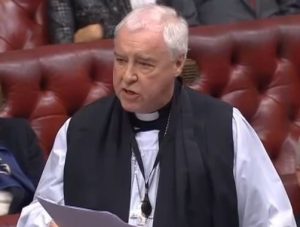 On 4th February 2019 Baroness Wheeler asked the Government “how they will ensure that there are sufficient nurses, doctors and community specialist care staff to deliver the National Health Service long-term plan, published on 7 January 2019.” The Bishop of Lincoln, Rt Revd Christopher Lowson, asked a follow-up question:


You must be logged in to post a comment.