Bishop of St Albans – Milk (Written Answer)

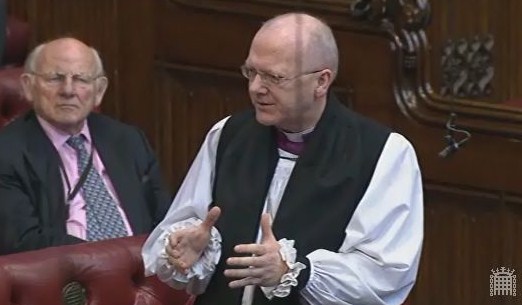
On 19th January 2015, the Bishop of St Albans, the Rt Revd Alan Smith, received an answer to a written question on the subject of milk sustainability.

Bishop of St AlbansThe Lord Bishop of St Albans: To ask Her Majesty’s Government what action they are taking to strengthen United Kingdom food security through ensuring that the supply of liquid milk produced in the United Kingdom is sufficient to meet United Kingdom consumer demand, in order to reduce reliance on imported milk. [HL3996]

The Parliamentary Under-Secretary of State, Department for Environment, Food and Rural Affairs (Lord De Mauley): Milk commodity price increases during 2013 stimulated milk production in the UK (also in the EU and across the world). UK milk production for January to November 2014 was 9% up on the previous year and 7% higher than the average seen over the past 10 years. Liquid milk is expensive to transport and has a short lifespan in its raw state. UK imports are at very low levels: around 1% of total UK production. In 2013, the UK imported 132 million litres of raw milk, predominantly intra-trade between the Republic of Ireland and Northern Ireland. Domestic production of liquid milk in the same period was 13.2 billion litres.

(via Parliament.uk)

Bishop of St Albans raises concerns about sustainability of UK milk production

On 15th January 2015, the Bishop of St Albans, the Rt Revd Alan Smith, asked an oral question during question time in the House of Loreds on the long-term sustainability of milk production in the United Kingdom.

Bishop of St AlbansThe Lord Bishop of St Albans: To ask Her Majesty’s Government what steps they are taking to ensure the long-term sustainability of milk production in the United Kingdom.

The Parliamentary Under-Secretary of State, Department for Environment, Food and Rural Affairs (Lord De Mauley): My Lords, we share farmers’ concerns over the pressures on milk prices caused by the volatility of the global market and we are working closely with industry. It is important to remember that the long-term prospects are good, with exports at record levels. We are helping the dairy industry take advantage of opportunities such as opening new export markets and pushing for better country of origin labelling for British dairy products. Continue reading “Bishop of St Albans raises concerns about sustainability of UK milk production”

Bishop of Rochester calls for action on affordable housing in rural communities

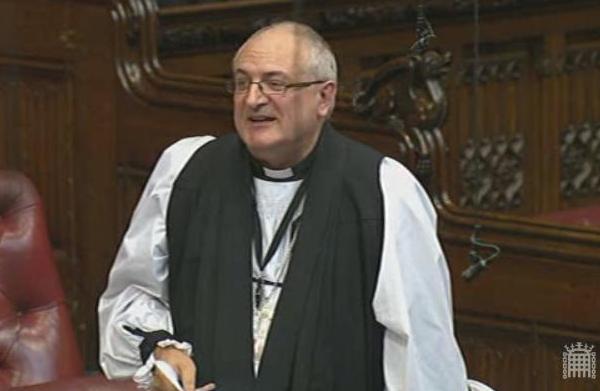
On 12th January 2015, Lord Roberts of Llandudno asked Her Majesty’s Government what steps they are taking to safeguard village life. The Bishop of Rochester, the Rt Revd James Langstaff, asked a supplementary question:

Bishop of RochesterThe Lord Bishop of Rochester: My Lords, reference has been made at various points to housing. The Minister will be well aware of the importance for the sustainability and vitality of rural communities of a good mix of housing, housing tenure and so forth. Does he agree that community land trusts are a valuable and perhaps essential way of ensuring a continuing and permanent supply of affordable housing in rural communities? If so, what commitment have the Government made to increasing the number of such trusts? Continue reading “Bishop of Rochester calls for action on affordable housing in rural communities”

Maiden speech by the Bishop of Ely – Government strategy on social justice

The legitimacy of any legislature is judged by the sure access to justice for all citizens, regardless of age or estate. For that justice to be social it requires the active participation of all communities. I believe that this justice is rooted in the invitation of God to be generous and visible with and for others” – Bishop of Ely, 16/10/14

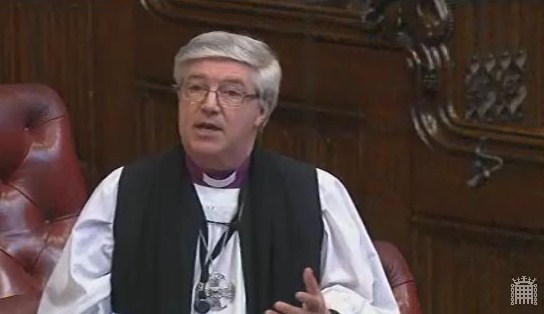
14.10.16 Bishop of Ely 1On 16th October 2014, the House of Lords debated a motion in the name of Baroness Tyler of Enfield, “that this House takes note of Her Majesty’s Government’s Social Justice strategy.” The Bishop of Ely, Rt Rev Stephen Conway, gave his maiden speech in the debate:

The Lord Bishop of Ely (Maiden Speech):My Lords, I begin by expressing my gratitude for the welcome I have received since I was introduced into your Lordships’ House. My theological sense of direction is rather more developed than my physical sense, and I have been touched by the noble Lords who have accompanied me around bewildering corridors. Your Lordships may yet see me, like Theseus, unwinding a ball of twine to get me back to the Bishops’ Robing Room. Continue reading “Maiden speech by the Bishop of Ely – Government strategy on social justice”

Bishop of St Albans – Public Forests Estate (Written Answer)

On Friday 26 September 2014, the Bishop of St Albans, the Rt Revd Alan Smith, received an answer to a written question on the accountability of the Public Forest Estate.

Bishop of St AlbansThe Lord Bishop of St Albans: To ask Her Majesty’s Government when they intend to bring forward legislation to establish a new public body to hold the Public Forest Estate to account.

The Parliamentary Under-Secretary of State, Department for Environment, Food and Rural Affairs (Lord De Mauley): The Government’s policy on the future of the Public Forest Estate is set out in its Forestry and Woodlands Policy Statement of January 2013. The Government is committed to maintaining the Public Forest Estate in public ownership and to establishing a new operationally independent public body to manage the estate for the long-term benefit of people, nature and the economy.

There were many proposals competing for the limited space within the Fourth Session programme and the proposed forestry measures could not be accommodated. However, the Government stands by its commitment to establish the new public body as soon as parliamentary time allows.

(via Parliament.uk)

Bishop of St Albans – Public Forest Estate oversight (Written Answer)

On 4th August 2014 the Bishop of St Albans, the Rt Revd Alan Smith, received an answer to a written question on the oversight of the Public Forest Estate.

Bishop of St AlbansThe Lord Bishop of St Albans: To ask Her Majesty’s Government when they intend to bring forward legislation to establish a new public body to hold the Public Forest Estate to account.

The Parliamentary Under-Secretary of State, Department for Environment, Food and Rural Affairs (Lord De Mauley): The Government’s policy on the future of the Public Forest Estate is set out in its Forestry and Woodlands Policy Statement of January 2013. The Government is committed to maintaining the Public Forest Estate in public ownership and to establishing a new operationally independent public body to manage the estate for the long-term benefit of people, nature and the economy.

There were many proposals competing for the limited space within the Fourth Session programme and the proposed forestry measures could not be accommodated. However, the Government stands by its commitment to establish the new public body as soon as parliamentary time allows.

(via Parliament.uk)

Bishop of Oxford calls for more intentional support for the rural economy and rural schools

“I very much hope that the Department for Education will not resort to a philosophy of “the weakest to the wall” with these small schools because small rural schools are so often worth their weight in gold, as the heart and hub of our rural communities. The Church of England will publish a report very soon on how to support our rural schools effectively” – Bishop of Oxford, 3/7/14.

On 3rd July, the Bishop of Oxford, the Rt Revd John Pritchard, took part in a debate on the rural economy, lead by the Earl of Shrewsbury. The Bishop spoke about the need for intentional support for the many micro-businesses that make up the rural economy, and also for greater personal investment in rural schools, particularly through an increase in the number of foundation govenors supporting rural schools.
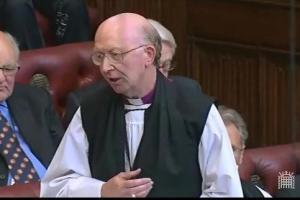
Bishop of OxfordThe Lord Bishop of Oxford: My Lords, I, too, am grateful to the noble Earl, Lord Shrewsbury, for giving us this opportunity to debate this matter. We all approach this important subject from different angles. I want to emphasise one that is economic and the other that is personal in the sense of our own personal investment and commitment. I serve a diocese which is largely rural although it has large centres of population such as Oxford, Reading, Milton Keynes and Slough. However, the rural expanses of Oxfordshire, Buckinghamshire and Berkshire are considerable, with 815 churches and 650 clergy, all of whom are strongly connected to the all-round flourishing of our diverse communities. Continue reading “Bishop of Oxford calls for more intentional support for the rural economy and rural schools”

Bishop of Norwich presses Government on lack of affordable new homes in rural areas

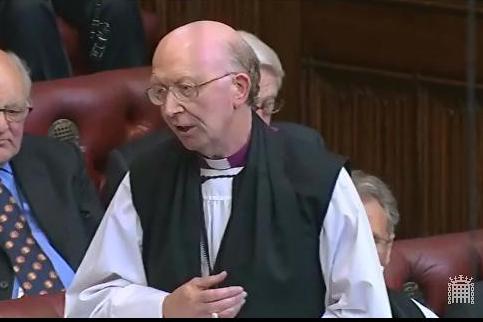
On 12th June 2014 Lord Dubs asked Her Majesty’s Government ‘what action they are taking to increase the supply of affordable housing.’ The Bishop of Norwich, Rt Rev Graham James, asked a supplementary question:14.06.12 Bishop of Norwich

The Lord Bishop of Norwich: My Lords, eight years ago the Affordable Rural Housing Commission estimated that we needed at least 11,000 affordable new homes every year in rural areas. We have scarcely ever managed more than a third of that number, and the proportion is falling. That means that those who need such homes in rural areas move to urban areas, adding to the numbers of the urban homeless and further obscuring the rural problem. What remedy does the Minister have for this state of affairs? Continue reading “Bishop of Norwich presses Government on lack of affordable new homes in rural areas”

Queen’s Speech 2014: Bishop of St Albans on the rural economy

“Subsidiarity must be a key principle in any reforms—working towards a more participatory democracy, in which all people feel that they have a stake in a shared society and want to engage in the democratic process….We have to insist that people do not retreat into an unthinking, uncaring nimbyism that refuses to address the real problems facing us”- Bishop of St Albans 05/06/14

On 5th June 2014 in the third contribution from the Bishop’s Benches in response to the Queen’s Speech, the Bishop of St Albans, the Rt Revd Alan Smith, spoke about the rural economy and the impact that a wide range of issues, including housing, energy security and the Government’s plans for forestry, would have on its future. 

Bishop of St Albans

The Lord Bishop of St Albans: My Lords, I, too, congratulate my colleague the right reverend Prelate the Bishop of Rochester on his maiden speech. From these Benches, I can say that we are delighted that he will bring a great deal of insight and experience, not least into housing and prisons, into our debates. Continue reading “Queen’s Speech 2014: Bishop of St Albans on the rural economy”

Energy, Consumer Credit Advertising and Iran – Written Questions

On 13th May 2014, the Rt Revd Alan Smith, Bishop of St Albans, received answers to written questions on petroleum gas and oil, consumer credit advertising, and Iran.


14.03 Bishop of St AlbansEnergy: Petroleum Gas and Oil

The Lord Bishop of St Albans: To ask Her Majesty’s Government how they intend to ensure the continuing affordability of liquid petroleum gas and oil for those households which are not on mains gas supply.

The Parliamentary Under-Secretary of State, Department of Energy and Climate Change (Baroness Verma): Her Majesty’s Government is acutely aware of the difficulties people have experienced with the price of liquid petroleum gas and heating oil. The price of LPG and oil is influenced by a range of factors, including crude oil prices (the major factor), refinery capacity, stock levels, distribution costs and retail margins.

Continue reading “Energy, Consumer Credit Advertising and Iran – Written Questions”