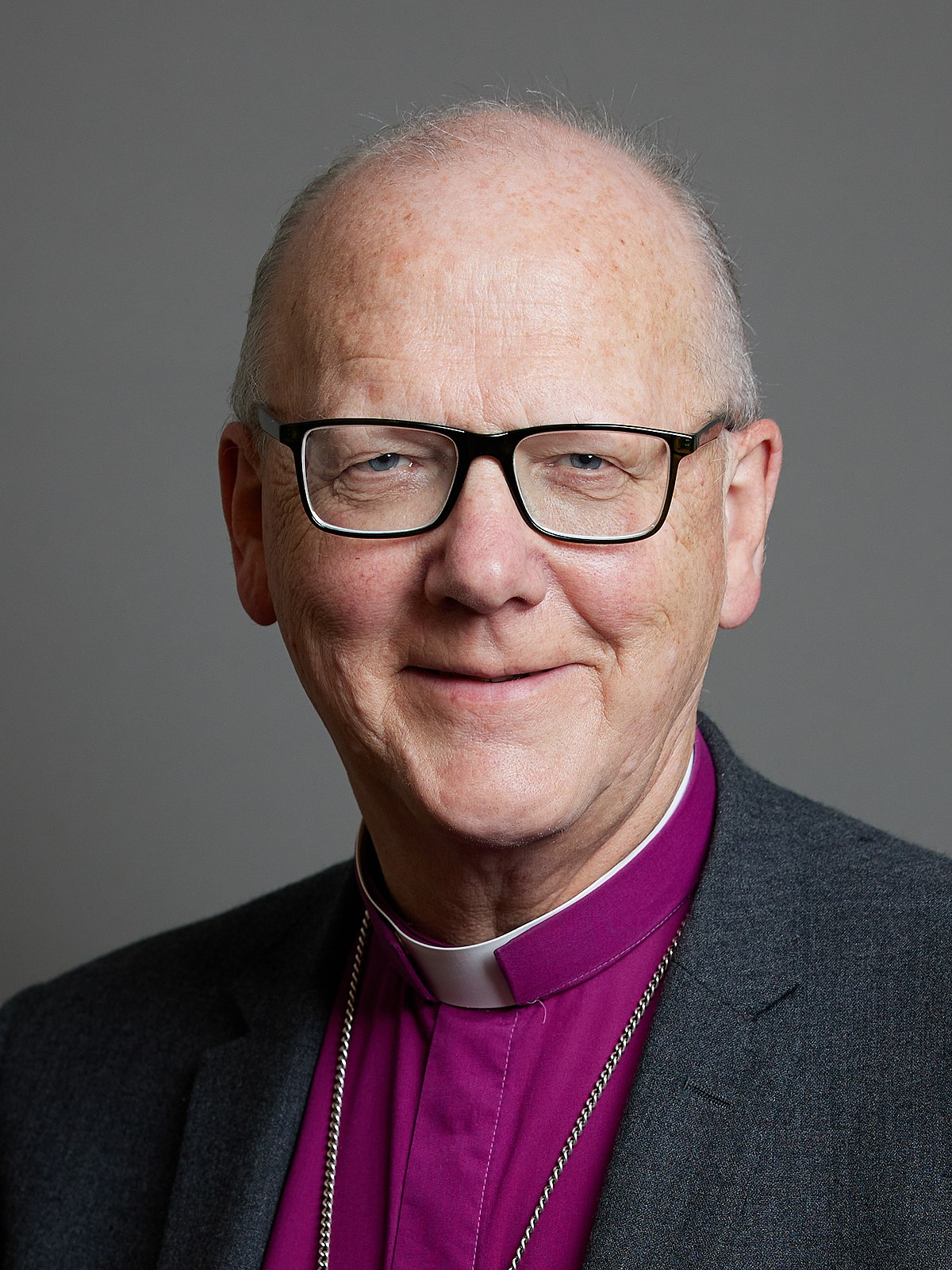
Bishop of Gloucester asks about issues around the ongoing conflict in Israel and Palestine

The Bishop of Gloucester received the following written answers on 18th June 2025:

The Lord Bishop of Gloucester asked His Majesty’s Government what plans they have to review the guidance to businesses trading in produce originating from Israeli settlements in the Occupied Palestinian Territories.

Continue reading “Bishop of Gloucester asks about issues around the ongoing conflict in Israel and Palestine”

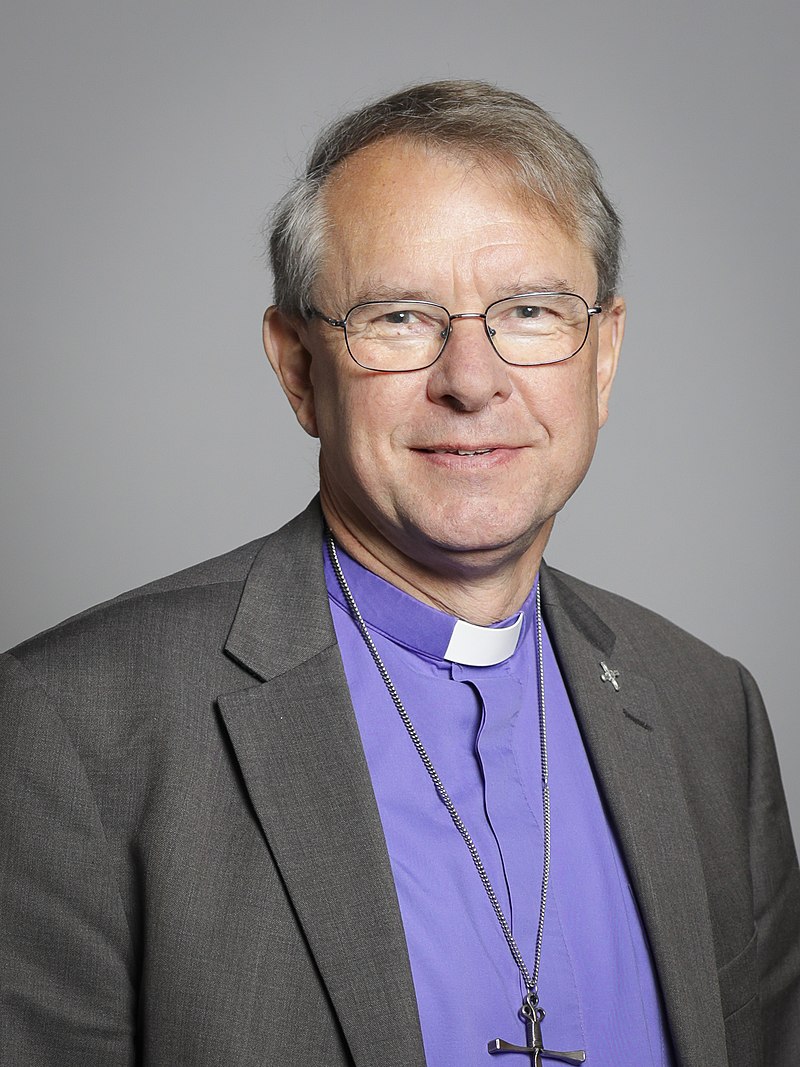
Bishop of St Albans asks about unauthorised tankers in the English Channel

The Bishop of St Albans received the following written answers on 14 February 2024:

The Lord Bishop of St Albans asked His Majesty’s Government what assessment they have made of the number of ships in the ‘dark fleet’ passing through the English Channel carrying Russian oil and oil products in (1) 2020, (2) 2021, (3) 2022, and (4) 2023.

Lord Davies of Gower (Con, DfT): Definitions of the ‘shadow fleet’ or ‘dark fleet’ vary and so it is not possible to provide accurate figures in relation to the English Channel. This practice has emerged since the introduction of the Russian Oil Services ban and Oil Price Cap Exception by the Price Cap Coalition of the G7, the European Union and Australia in December 2022.

Continue reading “Bishop of St Albans asks about unauthorised tankers in the English Channel”

Bishop of St Albans asks about humanitarian conditions in China

The Bishop of St Albans received the following written answers on 19th September 2023:

The Lord Bishop of St Albans asked His Majesty’s Government how many (1) asylum, or (2) humanitarian protection, visas were granted to people from China in (a) 2019, (b) 2020, (c) 2021, and (d) 2022.

Continue reading “Bishop of St Albans asks about humanitarian conditions in China”

Bishop of Leeds asks about effects of sanctions on Russia

On 11th September 2023, Bishop of Leeds tabled a question on the effectiveness of sanctions placed upon Russia following their invasion of Ukraine:

The Lord Bishop of Leeds: To ask His Majesty’s Government what assessment they have made of the impact of sanctions against Russia in the wake of its invasion of Ukraine.

Lord Ahmad of Wimbledon (Con, Foreign Office): My Lords, sanctions by the United Kingdom and its international partners have starved Russia of key western goods and technology, degrading Russia’s military and restricting its capacity to fight a 21st-century war. UK exports of machinery and transport equipment have decreased by 98%. Sanctions also limit Russia’s financial resources. The UK has sanctioned 29 Russian banks, accounting for over 90% of the Russian banking sector. We have also frozen over £18 billion-worth of Russian assets in the UK. Without sanctions, we estimate that Russia would have over $400 billion more to fund its war machine.

Continue reading “Bishop of Leeds asks about effects of sanctions on Russia”

Bishop of St Albans asks about sanctions on Patriach Kirill of the Russian Orthodox Church

The Bishop of St Albans asked a question on 16th June 2022, during a debate on Ukraine:

The Lord Bishop of St Albans: My Lords, it has come to a very sad state of affairs when I feel that I have to welcome the sanctions on Patriarch Kirill, given his role in leading the Orthodox Church. Having said that, it is important to keep back channels open when these things are going on, and the Church of England has close contact with the Russian Orthodox Church. Will Her Majesty’s Government work with the Church of England, through our diplomatic and other links, so that we can at least try to keep some conversations open, at the same time as rightly imposing these strong sanctions?

Continue reading “Bishop of St Albans asks about sanctions on Patriach Kirill of the Russian Orthodox Church”

Bishop of St Albans asks about China and Hong Kong

The Bishop of St Albans received the following written answers on 25th April 2022:

The Lord Bishop of St Albans asked Her Majesty’s Government what assessment they have made of the impact of extradition treaties between EU Member States and the People’s Republic of China on freedom of movement for UK citizens in Europe; and what discussions they have had with European counterparts on this matter.

Continue reading “Bishop of St Albans asks about China and Hong Kong”

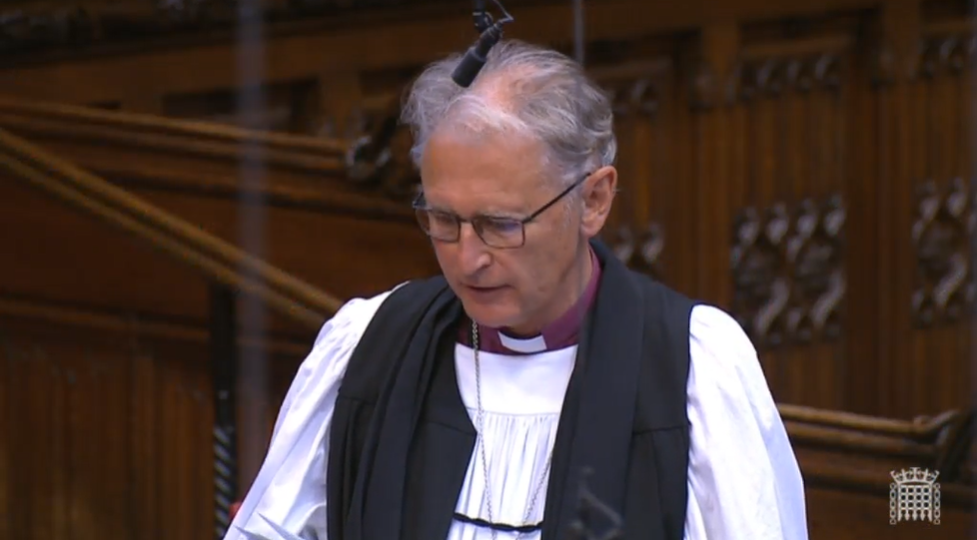
Bishop of Durham asks about sanctions imposed on Burundi

The Bishop of Durham received the following written answer to a question on 7th March 2022:

The Lord Bishop of Durham asked Her Majesty’s Government what plans they have, if any, to revisit the sanctions imposed on Burundi after the lifting of sanctions by the EU and United States of America.

Lord Goldsmith of Richmond Park (Con): We note that the US Government revoked its Burundi sanctions regime in November 2021 and that in February 2022 the EU lifted its suspension on direct financial assistance to the Government of Burundi.

Continue reading “Bishop of Durham asks about sanctions imposed on Burundi”

Bishop of Coventry asks about sanctions against Russia

Following an update on the unfolding situation in Ukraine on 22nd February 2022, the Bishop of Coventry asked a question on combining diplomacy with sanctions:

The Lord Bishop of Coventry: My Lords, these are dark days indeed for Europe, but unlike the noble Lord, Lord Newby, I welcome the commitment in the Statement to unrelenting diplomacy. Does the Leader agree that the stronger the sanctions, the better placed that diplomatic work will be? Is there a particular contribution that Britain can make in the diplomatic engagement even now?

Continue reading “Bishop of Coventry asks about sanctions against Russia”

Bishop of Durham speaks on impact of sanctions on Burundi

The Bishop of Durham spoke in a debate on the imposition of sanctions on Burundi on 19th January 2022, asking that the government consider the impact of sanctions on the poor and keep existing regulations under review:

The Lord Bishop of Durham: My Lords, I rise to make some comments—I should probably explain why a bishop is doing so. I have been a regular visitor to Burundi since 2000. I have made a number of visits, which have largely been to church leaders, but one occasion included meeting President Nkurunziza when he was in power. I have therefore experienced the deep poverty of Burundi first hand—and it is very deep. It is one of the five poorest nations on earth. My visits are not confined to staying in the capital city—it was Bujumbura but is now Gitega—but include going out meeting ordinary people in villages around the nation.

Continue reading “Bishop of Durham speaks on impact of sanctions on Burundi”

Bishop of St Albans warns against increased use of Magnitsky sanctions

The Bishop of St Albans spoke in a Grand Commitee debate on the effectiveness of the Magnitsky sanctions on 24th June 2021, arguing for better cooperation with international partners and support for international law, and warning of the danger of overreliance on sanctions in global affairs:

The Lord Bishop of St Albans: My Lords, I too agree that there are occasions when these Magnitsky sanctions may be the best available option to us. However, the increased use of such sanctions is a worrying sign that the organs of international arbitration such as the UN or the ICJ may be losing their effectiveness. These were the very institutions established in response to the tit-for-tat foreign policy that defined the 19th and early 20th centuries, with all their resulting catastrophes.

Our Government are a big advocate of the concept of “Global Britain”, an ambiguous phrase that sometimes means leading as a force for good in the world but at other times is simply a declaration that Britain is open for international business. My concern is that these conflicting visions of global Britain are sometimes mutually exclusive, and that when dealing with human rights abuses there may be a tendency to take the route of least domestic economic disruption.

Continue reading “Bishop of St Albans warns against increased use of Magnitsky sanctions”