Bishop of Newcastle raises concerns around mental health in schools

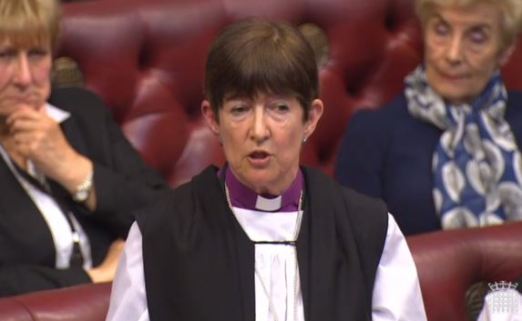
On 17th July 2017, Baroness Lawrence of Clarendon asked “Her Majesty’s Government when they intend to bring forward proposals to reform Child and Adolescent Mental Health Services as outlined in their 2017 manifesto.” The Bishop of Newcastle, the Rt Rev Christine Hardman followed up with a question on mental health in schools. 

Newcastle 8

Continue reading “Bishop of Newcastle raises concerns around mental health in schools”

Bishop of Ely highlights work of Church in promoting educational leadership

ElyOn the 30th January 2017, Baroness Donaghy asked the government “in the light of figures showing that nearly one-third of newly qualified teachers leave the profession within five years of qualifying, what steps they are taking, including continuing professional development entitlement, to retain them.” The Bishop of Ely, the Rt Revd Stephen Conway, asked a follow-up question.

The Lord Bishop of Ely: My Lords, does the Minister agree that the working environment for teachers is so often determined by the quality and effectiveness of school leaders, and therefore it is essential to equip school leaders to ensure the flourishing of their staff as well as their pupils? Will he be pleased to note with me the launch this weekend of the Church’s Foundation for Educational Leadership to work in this field? Continue reading “Bishop of Ely highlights work of Church in promoting educational leadership”

Caroline Spelman MP highlights the role of church schools in promoting excellence and social integration

On 8th November 2016 the House of Commons debated a motion from Labour’s Lisa Nandy MP “That this House notes recent proposals by the Government to expand the role of grammar and faith schools; and calls on the Government to conduct a full assessment of the evidence relating to the effect of grammar schools and faith schools on children’s learning.” The Second Church Estates Commissioner, Rt Hon Dame Caroline Spelman MP, spoke in the debate about the important role of Church of England schools:

Caroline SpelmanThe Second Church Estates Commissioner (Dame Caroline Spelman): I rise to speak on behalf of the Church of England in this important Back-Bench debate. The Church has a long and successful history of educating children in our country. It provided education before the state did. In fact, it is still the largest provider of education besides the state. It has 4,700 schools, most of which are primaries, with 200 secondary schools. Some 84% of its primary and 74% of its secondary schools are good or outstanding.

Many of the remaining schools are in remote rural locations, although I should point out that there are some excellent rural schools. The challenge of trying to sustain a class for each year group in a remote rural area and the difficulty in attracting teachers there make it hard to achieve higher standards in those schools. The Church is committed to raising standards, and with the help of digital means and remote learning methods, it is possible to bring the best teaching to such schools. The Church has fought to sustain these schools for the sake of social cohesion, where other institutions might by now have given up. I am sure that hon. Members with rural constituencies will immediately identify with the importance of the village school, which, with the parish church, may be the only institutional hub for such communities. That underlines the importance of keeping them sustainable.

I want to scotch the myth that Church schools are forces for segregation. That could not be further from the truth. Continue reading “Caroline Spelman MP highlights the role of church schools in promoting excellence and social integration”

Bishop of Norwich speaks on educational selection and grammar schools

norwich121016bOn 13th October 2016 Baroness Andrews led a debate in the House of Lords “that this House takes note of the Government’s proposals for the extension of grammar schools and selection in education”. The Bishop of Norwich, the Rt Revd Graham James spoke in the debate:

The Lord Bishop of Norwich: My Lords, I am grateful to the noble Baroness, Lady Andrews, for securing this debate. The right reverend Prelate the Bishop of Ely, our lead bishop on education, cannot be in his place today, but I am glad to contribute from these Benches and to hear an excellent maiden speech from the noble Baroness, Lady Vere.

Like many others in your Lordships’ House, I attended a grammar school. I was also the first in my family to receive a university education. At Northampton Grammar School for Boys, as it then was, you imbibed an ethos and culture which simply assumed you would seek university entrance. My grammar school was hierarchical, full of petty rules and almost entirely male—the perfect preparation for a career in the Church of England. Continue reading “Bishop of Norwich speaks on educational selection and grammar schools”

Church Commissioner Questions – October 2016

On 13th October 2016 the Second Church Estates Commissioner, Rt Hon Dame Caroline Spelman MP, answered questions from MPs on school admissions, ecumenical relations, community cohesion, refugees, LGBT pastoral care, Scrooby parish, same sex marriage and cathedral repairs.

Caroline Spelman 1Church Commissioners Continue reading “Church Commissioner Questions – October 2016”

Bishop of St Albans speaks in debate on school admissions

On 8th September 2016, Lord Lucas led a short debate on the question to Her Majesty’s Government: “what plans they have to support parents in navigating schools’ admissions arrangements”. The Rt Revd Dr Alan Smith, Bishop of St Albans, contributed to the debate. 

StAlbans171115The Lord Bishop of St Albans: My Lords, I am also grateful to the noble Lord, Lord Lucas, for bringing this Question to the House for debate. The right reverend Prelate the Bishop of Ely normally takes the lead on these matters but he is unable to be here today, so I want to make just a few comments. The subject of admissions is a complex one. As a child’s education is so vital and important, not surprisingly it often leads to impassioned responses. That can be true of the subject of admission to church schools, on which I know that several Members of this House have expressed opinions in the past. Before I turn directly to the topic of faith-based admissions, which your Lordships will not be surprised I wish to address, I would like briefly to set out some points by way of context. Continue reading “Bishop of St Albans speaks in debate on school admissions”

Church Commissioner questions: Out of school settings, human trafficking, women bishops, House of Lords, poverty, church toilets

On 7th July 2016 Rt Hon Caroline Spelman MP answered questions from MPs in the House of Commons, in her capacity as Second Church Estates Commissioner. Questions were asked on out of school settings, human trafficking, women bishops, bishops in the House of Lords, poverty and church toilets.

Mr Speaker: Order. We come now to questions to the Second Church Estates Commissioner, the right hon. Member for Meriden (Mrs Spelman), representing the Church Commissioners, and to the right hon. Member for South West Devon—[Interruption.] I mean the hon. Member for South West Devon (Mr Streeter)—it is only a matter of time—representing the Speaker’s Committee on the Electoral Commission.


Spelman CCQs June 2015 4Church Commissioners

The right hon. Member for Meriden, representing the Church Commissioners was asked— Continue reading “Church Commissioner questions: Out of school settings, human trafficking, women bishops, House of Lords, poverty, church toilets”

Queen’s Speech 2016: Bishop of Ely responds on academies, RE, universities and skills

Research done already on the implications of what has been said by Ministers is that academisation will proceed very fully. The think tank CentreForum suggests that only about 3,000 free-standing schools might be left that are not academised in the future. I am concerned that we do not end up with thousands of outstanding schools going it alone. We need to ensure that all strong schools, in MATs or otherwise, support schools that are struggling. There is no way of flourishing that does not take in support for others.

Continue reading “Queen’s Speech 2016: Bishop of Ely responds on academies, RE, universities and skills”

Bishop of St Albans asks Government about challenges for rural areas when small schools become academies

On 28th April 2016 the Bishop of St Albans, Rt Revd Alan Smith, asked an oral question in the House of Lords on the challenges facing rural schools in conversion to academy status. The transcript of the answer, his follow-up question and those of other members is below.

The Lord Bishop of St Albans: To ask Her Majesty’s Government what assessment they have made of the challenges to be faced by small rural schools in the conversion to academy status.

Bishop of St AlbansThe Parliamentary Under-Secretary of State, Department for Education (Lord Nash) (Con): My Lords, we fully recognise the challenges faced by small rural schools and are committed to supporting them; for instance, they will each have a named adviser in the conversion process. Many rural schools have been underfunded through an unfair system. Our new national funding formula will match funding to need and reflect their unique circumstances, ensuring that they remain at the heart of their communities.

The Lord Bishop of St Albans: I thank the Minister for his response and for those details. However, does he recognise that this is about not just the viability of rural schools but the viability and sustainability of whole rural communities, given the important role that schools play in attracting and retaining workers in rural areas? Many people are concerned that, if rural schools are put into multi-academy trusts, those trusts will not have the same obligation to take into account the wider issues of rural sustainability; indeed, there may be huge pressure for mergers and closures based simply on finance and nothing else. In the light of that, can the Minister tell us what the Government intend to do to prevent that happening? Continue reading “Bishop of St Albans asks Government about challenges for rural areas when small schools become academies”

Bishop of Coventry questions Government about Regional Schools Commissioners

Bp Coventry May 2015

On the 14th April 2016 the Lord Shipley asked the Government what plans they have to make Regional Schools Commissioners democratically accountable. The Bishop of Coventry the Rt Revd Christopher Cocksworth asked a supplementary question about the factors Regional Schools Commissioners take into account when locating sponsors for a new school. 

Continue reading “Bishop of Coventry questions Government about Regional Schools Commissioners”