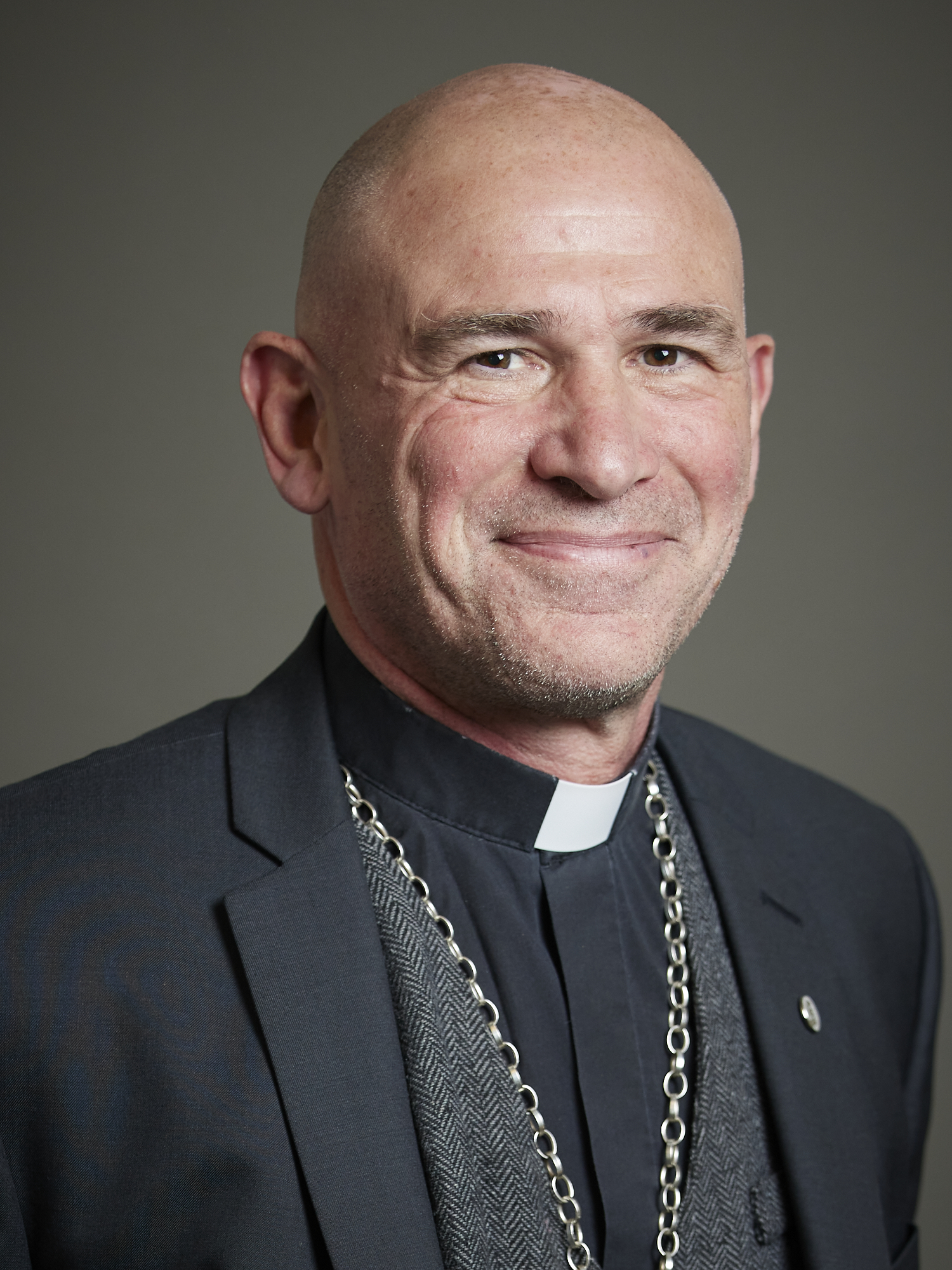
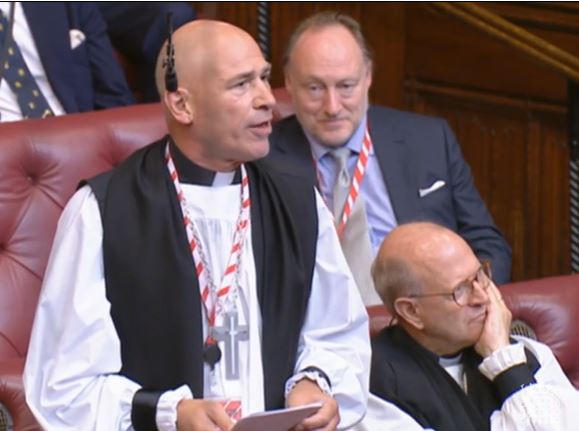
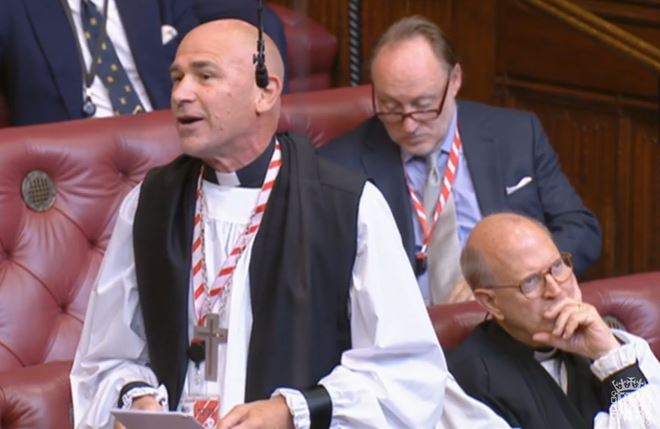
Bishop of Sheffield highlights importance of higher and further education

The Bishop of Sheffield spoke in a debate on recommendations from a report from Universities UK on 14th November 2024, stressing the importance of access to education in combatting inequality and kick-starting economic growth:

The Lord Bishop of Sheffield: My Lords, I too thank the noble Baroness, Lady Warwick, for securing this debate of a vital report. It is a privilege to follow the noble Baroness, Lady Grey-Thompson—as it happens, for the second time this week. I celebrate the contribution of all the commissioners and advisory group members to the report, and I welcome its recommendations for a bold new strategic vision for the sector.

I am tremendously proud of all the phenomenal HE providers in my diocese: Sheffield Hallam University, the University of Sheffield, the Sheffield Teaching Hospital NHS Foundation Trust, and the colleges of Sheffield, Barnsley, the Dearne Valley, Doncaster and Rotherham. For the next few minutes, I just want to comment briefly on maintenance grants and financial support, and on the challenges facing FE colleges in particular.

Continue reading “Bishop of Sheffield highlights importance of higher and further education”

Football Governance Bill: Bishop of Sheffield welcomes legislation

The Bishop of Sheffield spoke at the second reading of the Football Governance Bill on 13th November 2024, welcoming the legislation and the strengthening of regulation and protections for football governance:

The Lord Bishop of Sheffield: My Lords, I congratulate the Department for Culture, Media and Sport and the Minister for securing this debate, and thank the previous Government for their efforts to ensure that the sport of football—a national treasure beloved of so many—is more effectively regulated.

I realise that I cannot claim that football was made in Sheffield but, in addition to the codification referred to by the noble Lord, Lord Parkinson, in London in 1863, a second codification of the beautiful game took place in Sheffield in 1867—another early governance document for the sport that was influential for decades across the north. The city is home to the oldest football club in the world, Hallam FC, as well as to the two much better-known professional football clubs, Sheffield United and Sheffield Wednesday.

As Bishop of Sheffield, it gives me great pleasure to contribute to this important debate. It is a particular privilege to follow the noble Baroness, Lady Grey-Thompson. I want to say, first, something about the relationship between football clubs and their communities; secondly, something about financial stability; and thirdly, something about the responsibility of football clubs in relation to the climate emergency.

Continue reading “Football Governance Bill: Bishop of Sheffield welcomes legislation”

Bishop of Sheffield urges consideration of civil society role of the House of Lords

The Bishop of Sheffield spoke in a debate on House of Lords reform on 12th November 2024, supporting the principle of reform and outlining the role of the House of Lords in providing independence, expertise and a voice from civil society:

The Lord Bishop of Sheffield: My Lords, I welcome the opportunity for a meaningful debate on this matter. The Lords spiritual have a long history of constructive engagement on the question of reform. I pay tribute especially to the noble and right reverend Lord, Lord Harries of Pentregarth, who served on the Royal Commission on the Reform of the House of Lords, which produced the Wakeham report in 2000. That commission encouraged

“a broadening and deepening of religious representation in the second chamber”

to reflect the diversity of our multifaith society, a principle that these Benches have supported before and since. We stand ready to assist any future appointments commission in that task.

Continue reading “Bishop of Sheffield urges consideration of civil society role of the House of Lords”

Bishop of Sheffield asks about transport infrastructure in the north of England

On 12th November 2024, the Bishop of Sheffield tabled a question on support for transport infrastructure across cities in the north of England:

The Lord Bishop of Sheffield: To ask His Majesty’s Government, following the announcement that Doncaster Sheffield Airport may reopen in 2026, what steps they are taking to support transport infrastructure across cities in the north of England.

Continue reading “Bishop of Sheffield asks about transport infrastructure in the north of England”

Bishop of Sheffield asks about challenges faced by further education colleges

The Bishop of Sheffield received the following written answer on 11th November 2024:

The Lord Bishop of Sheffield asked His Majesty’s Government whether they intend to include an assessment of the unique challenges facing further education colleges and institutions in their ongoing curriculum and assessment review.

Continue reading “Bishop of Sheffield asks about challenges faced by further education colleges”

Refugees (Family Reunion) Bill: Bishop of Sheffield welcomes new routes for refugees

The Bishop of Sheffield spoke in support of the Refugees (Family Reunion) Bill, a private members bill tabled by Baroness Hamwee, at its second reading on 18th October:

The Lord Bishop of Sheffield: My Lords, I commend the noble Baroness, Lady Hamwee, for bringing forward this important Bill, and I acknowledge the work of other noble Lords on similar Bills.

The sustained interest in a Bill of this kind should tell us something: that the current route to family reunion is unduly restrictive and prohibitive. Government data shows that in 2023 there were over 7,000 unaccompanied asylum-seeking children in the care of local authorities in the UK, 141 of those in the communities that I serve as bishop in Doncaster, Rotherham and Sheffield.

Continue reading “Refugees (Family Reunion) Bill: Bishop of Sheffield welcomes new routes for refugees”

Education (Values of British Citizenship) Bill: Bishop of Sheffield speaks in support of legislation

On 18th October 2024, the Bishop of Sheffield spoke at the second reading of the Education (Values of British Citizenship) Bill, a private members bill tabled by Lord Harries of Pentregarth, supporting the bill and welcoming provision to improve provision for education on religion and the environment:

The Lord Bishop of Sheffield: My Lords, I too congratulate the noble and right reverend Lord, Lord Harries, on bringing forward this Private Member’s Bill, and indeed on the many years of thinking and hard work which have brought the Bill to this point. I welcome the Bill, support its aims and heartily welcome the five specific headings, which together give some definition of what is meant by “British values” in an educational context.

Especially in an educational context, it will be vital to foster a culture in which these headline categories are inhabited in a meaningful way. This kind of culture is capable of being fostered as much in the teaching of maths and science as through the teaching of citizenship, PSHE or RE, but these latter subjects provide an opportunity for values to be addressed directly and explicitly. I shall say something further about RE in particular, but the list of values identified in the Bill includes respect for the environment, and I would also like to say something about the potential for a natural history GSCE.

Continue reading “Education (Values of British Citizenship) Bill: Bishop of Sheffield speaks in support of legislation”

Bishop of Sheffield speaks in debate on 40th anniversary of famine in Ethiopia

The Bishop of Sheffield spoke in a debate commemorating the 40th anniversary of the 1984 famine in Ethiopia, stressing the need to act to prevent famines and similar crises before they occur:

The Lord Bishop of Sheffield: My Lords, I too am grateful to the noble Baroness, Lady Featherstone, for securing this important debate and for the opportunity to contribute to it.

I remember 1984 very vividly. That summer, I graduated from university and got married, and early that autumn, I began training for ordained ministry. I have clear memories of the powerful BBC news coverage of the Ethiopian famine—which, as the noble Baroness reminded us, was broadcast exactly 40 years ago this month—and of the Band Aid Christmas single that year and the Live Aid concerts of 1985. Those events were all quite formative for me.

In retrospect, our crowd-sourced responses to the famine in 1984 were naive, not least in treating the famine as simply a natural disaster and in failing to take into account the human factors that contributed to it, including both the global climate emergency, or global warming as we were just beginning to call it then, and the more local political and military practices. Although we may have learned a good deal in the past 40 years, and although we may be significantly more sophisticated now in our analysis of the causes of famine in that part of the world, it is evident that we are barely more effective at responding to it, let alone at preventing it. Both those aims are urgent: we need to respond effectively to the current crisis, and we need to improve our capacity to anticipate and therefore to forestall future famines.

Continue reading “Bishop of Sheffield speaks in debate on 40th anniversary of famine in Ethiopia”

Bishop of Sheffield asks about tackling regional inequalities in education

The Bishop of Sheffield asked a question on government plans to tackle regional inequalities in education outcomes on 17th October 2024, during a discussion on equality of opportunity in the education sector:

The Lord Bishop of Sheffield: My Lords, according to data published by the Education Policy Institute, disadvantaged learners in Yorkshire and the Humber are typically 21.4 months behind their more advantaged learners by the end of secondary school. This is opposed to a disadvantage gap of half that size, at just 10.4 months, in London. What steps will the Government take to reduce such perniciously stubborn regional inequalities in educational outcomes?

Continue reading “Bishop of Sheffield asks about tackling regional inequalities in education”

Bishop of Sheffield asks about risks of changes to marriage celebrant legislation

On 16th October 2024, the Bishop of Sheffield asked a question on the potential risks of changes to laws around marriage celebrants undermining the solemn nature of marriage:

The Lord Bishop of Sheffield: My Lords, on these Benches we would welcome humanist wedding ceremonies being given legal status, but the recommendations of the Law Commission go beyond that and would create a free market celebrant-based approach to the wedding industry. I gather that Humanists UK shares our concern that such a move could undermine the solemn nature of marriage, which is never a trivial transaction. Given this unlikely alliance between the Lords spiritual and Humanists UK, can the Minister confirm that the Government will not enact the recommendations of the Law Commission without considering carefully the impact of a further commercialisation of weddings?

Continue reading “Bishop of Sheffield asks about risks of changes to marriage celebrant legislation”