On 2nd March 2016 the Bishop of Southwark, Rt Revd Christopher Chessun, received answers to three written questions on the plight of Iraqi refugees in Jordan.
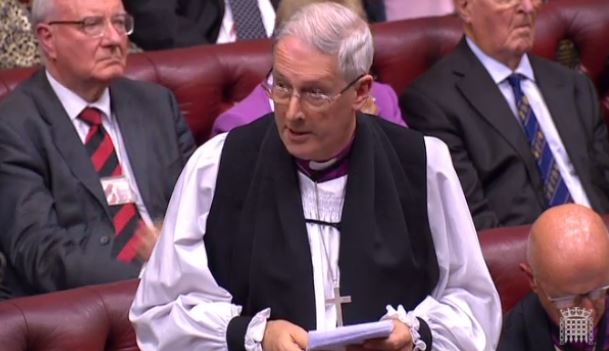
The Lord Bishop of Southwark: To ask Her Majesty’s Government what assessment they have made of the conditions facing Iraqi refugees in Jordan. [HL6275]
Baroness Verma: The situation for many refugees in Jordan is challenging, irrespective of nationality. Services are provided by the international community and the Government of Jordan based on a system of prioritisation of the most vulnerable and Iraqi refugees are included in this system. Like all refugees, Iraqis are registered by the Office of the United Nations High Commissioner for Refugees (UNHCR) and access assistance from UN agencies, international NGOs and national NGOs. Partners assess vulnerability in Jordan at individual, community and household levels. These vulnerability assessments take into account positive coping strategies and support networks, which are understood to be better established among the Iraqi community, including through religious institutions such as mosques and churches. Continue reading “Bishop of Southwark asks Government about help for Iraqi refugees in Jordan”
 The Lord Bishop of Southwark: My Lords, I share some of the concerns of the noble Baroness, Lady Lawrence, who sketched out the problems with enacting this clause. As the Government rightly tell us, reasonable suspicion is a well-established precept in English law and policing practice. However, this does not mean that it is infinitely elastic in its application. A prior question needs to be asked when legislating: is it applicable in this circumstance, and with what effect?
 The Lord Bishop of Southwark: My Lords, Amendment 134, which I wish to support, is simple, just and proportionate in its aims. I accept that Home Office officials must, in the discharge of their duties in this area, deal with barriers of language, emotional distress, the fear of authority, the complexity of people’s lives and, on occasion, deceit. All this takes time. However, it is far from unknown for applicants for asylum to wait months or even years for a substantive decision in their case. This subjects them to a fearful limbo, with limited means of support and the background anxiety of not knowing for a very prolonged period what the outcome will be. Furthermore, we know from the experience of our own citizens the deleterious effects of prolonged inactivity on their emotional and physical well-being, and how this can erode an individual’s skill base
 The Lord Bishop of Southwark: My Lords, the Bill is the latest in a list of substantive immigration legislation that this House has considered in recent years. Since the Nationality, Immigration and Asylum Act 2002 we have had five further pieces of primary legislation in this area, yet Her Majesty’s Government have published no White Paper on immigration since 2002—no considered, detailed overview and proposals through which we might consider all aspects relating to immigration before embarking on major legislation. The Explanatory Notes are helpful but they are no substitute for a White Paper.


You must be logged in to post a comment.