Votes: Universal Credit (Transitional Provisions) (Claimants previously entitled to a severe disability premium) Amendment Regulations 2021

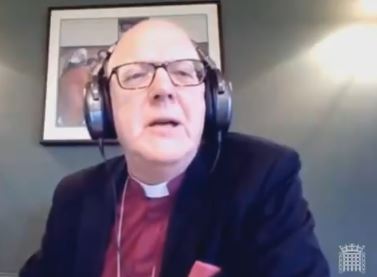
On 11th February 2021, the House of Lords debated the Universal Credit (Transitional Provisions) (Claimants previously entitled to a severe disability premium) Amendment Regulations 2021. A vote was held on a regret motion to the regulations, in which Bishops took part.

Continue reading “Votes: Universal Credit (Transitional Provisions) (Claimants previously entitled to a severe disability premium) Amendment Regulations 2021”

Bishop of St Albans asks about actions of companies supporting the Beijing Winter Olympics

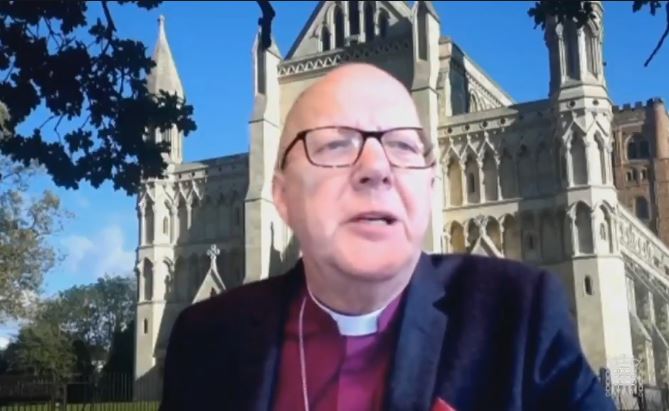
The Bishop of St Albans asked a question on possible sanctions or boycotts against companies supporting the Beijing Winter Olympics in light of human rights abuses by China on 10th February:

The Lord Bishop of St Albans [V]: My Lords, I am sure none of us wants to see a boycott of the Winter Olympics, yet we are seeing unprecedented human rights abuses and we will be judged by future generations on how we respond. Have Her Majesty’s Government considered what actions they might take against companies that are either official sponsors, suppliers or partners of these Games and that are bidding for public contracts?

Continue reading “Bishop of St Albans asks about actions of companies supporting the Beijing Winter Olympics”

Bishop of St Albans asks about use of surplus COVID-19 vaccines

The Bishop of St Albans received the following written answer on 9th February 2021:

The Lord Bishop of St Albans asked Her Majesty’s Government how many COVID-19 vaccination doses they have ordered in total; whether they intend to order more doses than the number required to vaccinate the population of the UK; and if so, what plans they have to ensure that any surplus doses are used effectively.

Continue reading “Bishop of St Albans asks about use of surplus COVID-19 vaccines”

Bishop of St Albans asks about risks posed by genetically modified food

The Bishop of St Albans tabled a question on potential risks associated with genetically modified food production in the UK on 8th February 2021:

The Lord Bishop of St Albans [V]: To ask Her Majesty’s Government what assessment they have made of the potential (1) health, and (2) environmental, risks associated with approving genetically modified food production in the United Kingdom.

Continue reading “Bishop of St Albans asks about risks posed by genetically modified food”

National Security and Investments Bill: Bishop of St Albans welcomes legislation

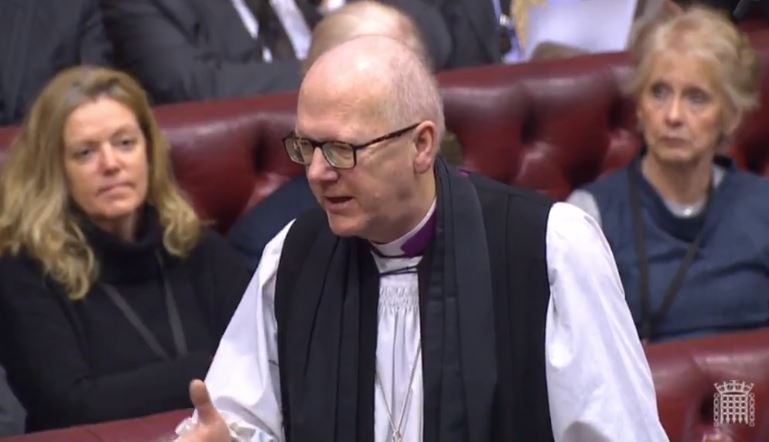
On 4th February 2021, the Bishop of St Albans spoke at the second reading of the National Security and Investments Bill, welcoming the bill while highlighting the need for clarity on issues of emerging technology and industrial engagement:

The Lord Bishop of St Albans: My Lords, I too welcome the Bill and congratulate Her Majesty’s Government on bringing it forward.

At the beginning of each day this House sits, our prayers recognise the delicate balancing act we have to perform. On the one hand, our precious democracy depends on the public wealth, peace and tranquillity of the realm. It is this social capital, this trust, this commitment to the common good, which sets people free to go about their business and allows for innovation, trade and wealth creation. This is fundamental to all we do. On the other hand, our prayers acknowledge that sometimes malign forces at work will look for opportunities to take advantage of us, and we cannot ignore, as the prayers put it, the enemies of the state, which we pray will be vanquished and overcome.

Continue reading “National Security and Investments Bill: Bishop of St Albans welcomes legislation”

Votes: Trade Bill

On 2nd February 2021, the House of Lords debated Commons Amendments to the Trade Bill. Votes were held on further amendments to the bill, in which Bishops took part:

Continue reading “Votes: Trade Bill”

Bishop of St Albans asks about treatment of Rohingya refugees in Bangladesh

The Bishop of St Albans asked a question on concerns surrounding the treatment of Rohingya refugees from Myanmar in Bangladesh on 2nd February 2021, during a discussion on the recent military coup in Burma (Myanmar):

The Lord Bishop of St Albans [V]: My Lords, many of us have spoken out over recent months for the protection of Rohingya Muslims. There is a deep worry at the moment that the Government of Bangladesh may continue their repatriation of the refugees. Are Her Majesty’s Government talking with Bangladesh? Also, what are the prospects for freedom of religion or belief, not least for the Christian minorities in the country, who are under threat at the moment?

Continue reading “Bishop of St Albans asks about treatment of Rohingya refugees in Bangladesh”

Bishop of St Albans asks about humanitarian situation in Tigray

The Bishop of St Albans received the following written answers on 1st February 2021:

The Lord Bishop of St Albans asked Her Majesty’s Government, further to the report by the UNOCHA Ethiopia—Tigray Region Humanitarian Update Situation Report, published on 6 January, what assessment they have made of reports of (1) food shortages, (2) looting, (3) sexual violence, and (3) damage to cultural heritage, in Tigray.

Continue reading “Bishop of St Albans asks about humanitarian situation in Tigray”

Bishop of St Albans asks about access to broadband in deprived areas

The Bishop of St Albans asked a question on enabling access to broadband for young people in deprived areas and the importance of education in light of the coronavirus pandemic on 28th January 2021, during following a government statement on COVID-19:

The Lord Bishop of St Albans: My Lords, the position for young people in school and education is mixed, with some students in poorer areas still not having access to online education and those in remote rural areas with not-spots simply not able to get online. Could the noble Baroness comment on the priority of trying to ensure that we move much more rapidly on the provision of broadband, particularly in those difficult areas? Secondly, we are going to have to do a big catch-up on educational standards and achievements, but it is important, at the same time, to look holistically at the spiritual, emotional and psychological work we are going to have to do with our young people. What plans are being made by Her Majesty’s Government?

Continue reading “Bishop of St Albans asks about access to broadband in deprived areas”

Bishop of St Albans raises issue of housing in debate on intergenerational unfairness

The Bishop of St Albans took part in a debate on a report from the Select Committee on Intergenerational Unfairness on 25th January 2021, focusing on access to and provision of housing:

The Lord Bishop of St Albans [V]: My Lords, the decrease in the rates of home ownership for the younger generation is a major issue and not one of their own making. As this excellent report demonstrates, it is an important factor in addressing issues of intergenerational fairness. For many years, there has been a failure to supply housing adequately—an issue exacerbated by a cycle of stagnation fuelled by low market absorption rates and stalled developments.

The Letwin report suggests that one of the most important reasons for this is that developers will build new homes only at a rate that the market can absorb and that, by diversifying housing products, rates of absorption will increase. However, when I put down Written Questions to Her Majesty’s Government on this topic, never once has it been acknowledged that it might be in the interest of developers to land bank, as increased supply is likely to reduce house prices. While I believe that this has contributed to the lack of supply, I agree that low absorption remains a real issue. However, I do not think that diversification alone will solve it.

Continue reading “Bishop of St Albans raises issue of housing in debate on intergenerational unfairness”