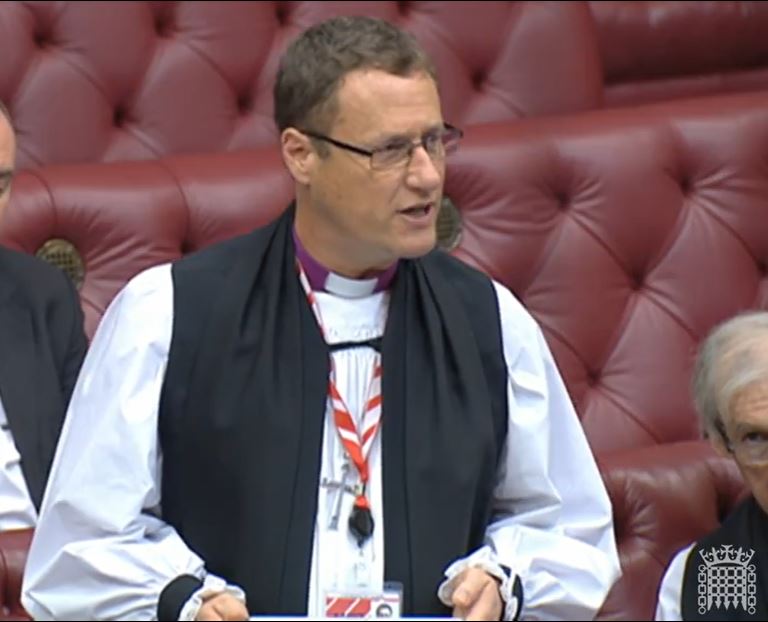
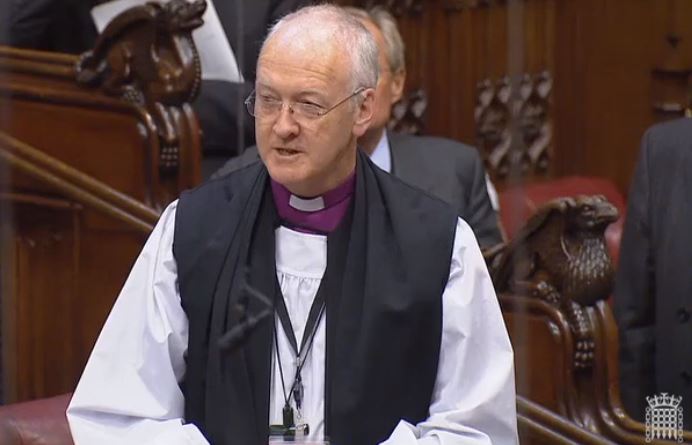
Bishop of Leicester speaks in debate on humanitarian situation in Sudan

The Bishop of Leicester spoke during the Bishop of Leeds’ debate on the humanitarian situation in Sudan on 27th November 2025, focusing on efforts to fund local partners in Sudan working to combat the crisis:

The Lord Bishop of Leicester: I am grateful to noble Lords for ignoring the request from my right reverend friend the Bishop of Leeds that this should not be a valedictory debate for him. His contribution to this House, and to the Church and nation more widely, has been immense. However, I sincerely hope that this House and His Majesty’s Government will not ignore the right reverend Prelate’s words regarding Sudan, something which is very dear to his heart.

I want to focus my comments on the funding of local partners in Sudan. The Independent Commission for Aid Impact, in its October 2025 report, found that the UK Government

“in many instances demonstrated credible political leadership and strong convening power, drawing on deep networks that are valued by stakeholders”.

Continue reading “Bishop of Leicester speaks in debate on humanitarian situation in Sudan”

Bishop of Leeds leads debate on the humanitarian situation in Sudan

On 27th November 2025, the Bishop of Leeds tabled a question for short debate on the humanitarian situation in Sudan:

The Lord Bishop of Leeds: To ask His Majesty’s Government what assessment they have made of the humanitarian situation in Sudan.

My Lords, I am very grateful to the Government for granting this debate at a very opportune time, with Lady Sandwich in the Gallery and a detailed report, Rivers of Blood, dedicated to the late Lord Sandwich, being delivered this morning to the APPG.

I thank the Minister for her commitment to addressing the urgent and long-term situation in Sudan, a country I love, where I have friends and which I have visited a number of times, most recently in June 2024. My concerns and engagement will continue after I retire from the House this afternoon, albeit in a different way. I note that the Order Paper says this is a valedictory speech, but I would be grateful if we kept our focus on Sudan.

The humanitarian situation in Sudan is so dire that “urgent” does not do justice to the need for action. I will not repeat the many reports from agencies engaged on the ground in Sudan, but they make for harrowing hearing and reading. A number have provided briefings in Parliament in the last few days. We had planned for the Archbishop of Sudan, Ezekiel Kondo, to be here today, but he had to return to Port Sudan a couple of days ago.

Continue reading “Bishop of Leeds leads debate on the humanitarian situation in Sudan”

Bishop of Leeds asks about recognising roots of global conflicts

The Bishop of Leeds asked a question on tackling the root causes of conflicts in Africa and the Middle East on 1st September 2025, following a government statement on the situation in Gaza:

The Lord Bishop of Leeds: My Lords, I totally endorse what has been said about Sudan. I was there a year ago and am in almost weekly contact with people there at the moment. But I am slightly worried about the terms in which we debate some of these matters, such as Gaza and Ukraine. The crisis in Ukraine did not begin on 24 February 2023; the crisis in Gaza and the Middle East did not begin on 7 October 2023. Our attempts to simplify the conflict, perhaps for conceptual reasons, do not always help us. It is immensely complex, it goes back a long way and 7 October cannot be the justification for everything that follows. Does the Minister agree?

Continue reading “Bishop of Leeds asks about recognising roots of global conflicts”

Bishop of St Albans asks about conflict in Sudan

The Bishop of St Albans received the following written answer on 5th June 2025:

The Lord Bishop of St Albans asked His Majesty’s Government what recent discussions they have had with (1) the Sudanese Armed Forces, and (2) the Rapid Support Forces, about the ongoing conflict in Sudan.

Continue reading “Bishop of St Albans asks about conflict in Sudan”

Bishop of Leeds asks about conflict in Sudan

The Bishop of Leeds asked a question on the government’s approach to the economic benefits to the warring parties in the conflict in Sudan on 28th April 2025:

The Lord Bishop of Leeds: My Lords, there was much mention at the conference, given the statements that came out of it, of a rejection of external interference, but there were people there who are externally interfering, such as the United Arab Emirates and Egypt. Although the focus on humanitarian access is absolutely right, there is also the problem of gold, and that the conflict is being fuelled by the economic element of ownership and extraction of gold. Do the Government have any plans to approach the economic benefits to the warring parties as a way of stopping the conflict?

Continue reading “Bishop of Leeds asks about conflict in Sudan”

Bishop of Leeds asks about role of United Arab Emirates in arming RSF in Sudan

The Bishop of Leeds asked a question on what pressure the UK and US governments could put on the United Arab Emirates, who continue to supply weapons and funding to the RSF in Sudan, on 14th January 2025:

Baroness Chapman of Darlington: […] The noble Lord talked about other countries and their activities. All I can say is that any countries with any influence of any kind, or any relationship with any side—this is a multi-sided conflict now—must use that for one purpose only. That is to de-escalate, to bring those parties to the negotiating table and to get that humanitarian support which, as the noble Lord said, is urgently needed by those communities now.

The Lord Bishop of Leeds: My Lords, that being the case, what pressure can the UK and the United States Governments put on the United Arab Emirates, which has been supplying and continue to supply funding and weapons to the RSF?

Continue reading “Bishop of Leeds asks about role of United Arab Emirates in arming RSF in Sudan”

Bishop of St Albans asks about steps to prevent escalation of the conflict in Sudan

The Bishop of St Albans received the following written answer on 6th November 2024:

The Lord Bishop of St Albans asked His Majesty’s Government what steps they intend to take in their capacity as penholder at the meeting of the UN Security Council in November to ensure regional actors are taking steps to prevent the escalation of the conflict in Sudan. [HL2082]

Continue reading “Bishop of St Albans asks about steps to prevent escalation of the conflict in Sudan”

Bishop of St Albans asks about issues facing African countries, and refugees in Myanmar

The Bishop of St Albans received the following written answers on 7th October 2024:

The Lord Bishop of St Albans asked His Majesty’s Government what assessment they have made of the risk of renewed violence in South Sudan during that country’s upcoming election.

Continue reading “Bishop of St Albans asks about issues facing African countries, and refugees in Myanmar”

Archbishop of Canterbury speaks in debate on conflict in Sudan, urging long term view towards peacebuilding

The Archbishop of Canterbury spoke in a debate on the situation in Sudan on 13th September 2024, urging the government to work towards peacebuilding and reconciliation in the region:

The Lord Archbishop of Canterbury: I too am grateful to the Minister for arranging this debate, in which we are hearing extraordinary expertise—with some exceptions. In particular, there are former Ministers for Africa. We have heard from the noble Lord, Lord Ahmad, who has had an extraordinarily distinguished career, and I look forward to hearing the speech of the noble Lord, Lord Bellingham. The speech given by the noble Lord, Lord Alton, was truly remarkable.

It is noticeable in what we have heard so far that the history of Sudan has been very present to us. I echo the words we have heard more than once: that this is not simply a conflict between two major power groups seeking power in Sudan. It is based in the fragility of a society that has seen war more than it has seen peace since Sudan became independent—both in what is now South Sudan and in Sudan itself.

Continue reading “Archbishop of Canterbury speaks in debate on conflict in Sudan, urging long term view towards peacebuilding”

Bishop of Leeds takes part in debate on the current situation in Sudan, urging international action to address humanitarian concerns

The Bishop of Leeds took part in a debate on the current conflict in Sudan on 13th September 2024, noting the escalating impact of the conflict and the need for the international community to act to save lives in the country:

The Lord Bishop of Leeds: My Lords, it is always a daunting honour to follow the noble Lord, Lord Alton, and the previous speakers. Like them, I have some considerable experience of Sudan, having been there a number of times and had dealings not just at the political level but on the ground, among very real and ordinary communities. I am grateful to the noble Lord, Lord Collins, for securing this debate.

Behind the statistics, there are human beings and stories; 25 million people going hungry could be just a number until you look individuals in the eye. Dig a little deeper and the whole situation in Sudan is much more complicated than simply two generals having a scrap. What we can say with confidence is this: military violence, including the bombing of children, women and ordinary civilians, is appalling. It is often indiscriminate, especially when unleashed by the RSF in what increasingly looks like deliberate and intentional genocide in parts of Sudan. A humanitarian catastrophe has exploded in plain sight of the world and its Governments, with food shortages; the closing down of access for humanitarian aid from neighbouring countries; famine; malnutrition; and a generation of children who are being starved, made homeless and given no medical care or education.

As the director of the World Food Programme told us at the APPG, as was referred to by the noble Lord, Lord Alton:

“Avoidable famine is no longer a threat—it is a reality now”.

Continue reading “Bishop of Leeds takes part in debate on the current situation in Sudan, urging international action to address humanitarian concerns”