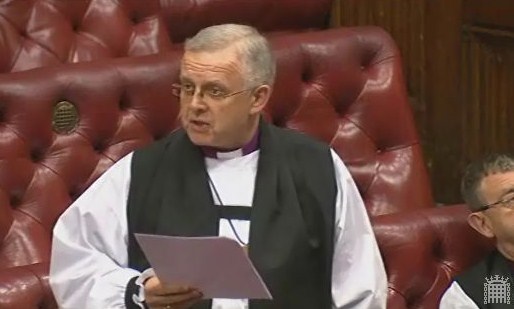
Bishop of Derby urges focus on humanitarian values in the fight against ISIL

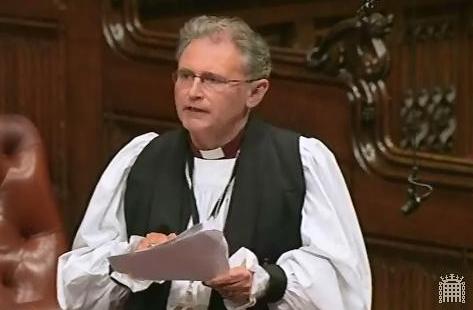
On 16th September 2015 the Bishop of Derby, the Rt Revd Alastair Redfern, spoke during a debate on the humanitarian impact of developments in the Middle East and North Africa. The Bishop welcomed much of the Government’s strategy and spoke of the need to renew our Christian-based values of the right of every person to be treated generously when in need, and as a unique and precious individual.

Bishop of DerbyThe Lord Bishop of Derby: My Lords, I shall make a couple of comments and invite the House to think a little about the humanitarian basis of this debate.

As the noble Lord, Lord Hannay, has just said, and the Minister said in her introduction, the scale is unprecedented in our times. The challenge, therefore, to be nimble is very great. I applaud the Government for the amount of investment that has been made in refugees and migrants. I also applaud the Government’s scheme to target the most vulnerable, including victims of sexual violence and torture, the elderly and the disabled. However, I agree with Lord Ashdown that because of the unprecedented scale we need to be generous in our approach and spirit. Continue reading “Bishop of Derby urges focus on humanitarian values in the fight against ISIL”

‘We cannot shirk our responsibility to be a force for good in the world’, Bishop of Worcester tells Peers

“We cannot shirk our responsibility to be a force for good in the world. The type of challenges highlighted by this debate can be managed only in partnership with others—working to win hearts and minds, as well as being involved in any defence initiatives.” – Bishop of Worcester, 2/7/15

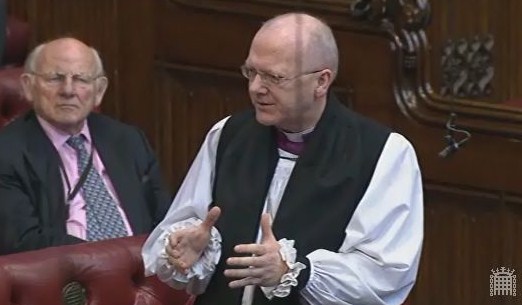
On Thursday 2nd July 2015 the Lords debated a motion moved by Lord Ashdown of Norton–sub-Hamdon ‘that this House takes note of the United Kingdom’s role in addressing global challenges posed by terrorism, conflict, climate change and mass migration’. The Bishop of Worcester, Rt Revd John Inge, spoke in the debate.

The Lord Bishop of Worcester: My Lords, I begin by expressingmy profound sadness in the wake of the recent horrific terrorist attacks. A student from the University of Worcester was killed in Tunisia, which brought home to people locally that these problems are not “out there”. It demonstrated very clearly the connectivity, of which the noble Lord, Lord WorcesterAshdown, spoke so eloquently.

What should our response be to the unprecedented times described so well by the noble Lord? While recognising that we have faced more difficult times, as the First World War commemorations remind us, we need to hold on to the strategic objectives that have underpinned British foreign policy since 1945 but adapt them for these new circumstances. We need to recognise that, although we live in an unprecedentedly connected world, it remains fractured and broken, and we need to work ever harder in partnership with others for the global common good. Continue reading “‘We cannot shirk our responsibility to be a force for good in the world’, Bishop of Worcester tells Peers”

Tunisia terror attacks – Bishop of St Albans calls for community relations to be strengthened at home

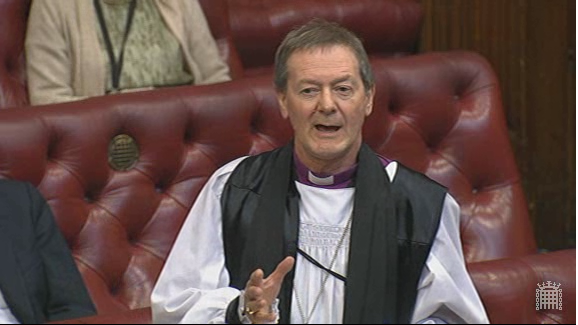
On 29th June 2015 the House of Lords heard the Leader of the House repeat a statement by the Prime Minister on the terrorist attacks in Tunisia. In questions to the Leader after the statement, the Bishop of St Albans, Rt Revd Alan Smith, focused on the need to strengthen community relations in the UK. 

Bishop of St AlbansThe Lord Bishop of St Albans: My Lords, we, too, on these Benches send our sympathies to those who have been bereaved and those who are injured. It is deeply concerning that Tunisia, a relatively peaceful haven in a part of the world in which there are many tensions, has now had this attack. Does the Minister agree that it calls for a renewed emphasis on working to strengthen community relations here in this country? The danger is that the events from Tunisia, Kuwait, Kobani and France could inflame ethnic and other violence and inspire copycat attacks here in this country. Continue reading “Tunisia terror attacks – Bishop of St Albans calls for community relations to be strengthened at home”

Bishop of Derby calls for generous support for interpreters working in conflict zones

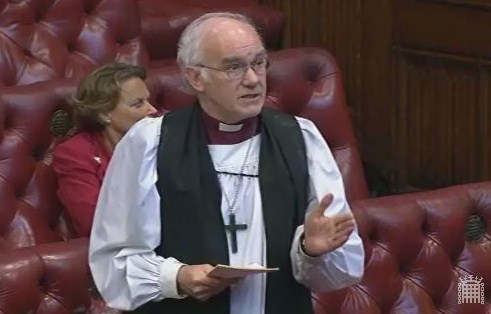
On 18th March 2015 the Bishop of Derby, Rt Rev Alastair Redfern, spoke in a debate on the protection of interpreters and translators working in conflict zones. His speech is below, along with the final section of the Minister’s response.

DerbyThe Lord Bishop of Derby: I, too, thank the noble Baroness, Lady Coussins, for securing this debate and for introducing it so helpfully. It seems to me that interpreters are like priests; they are mediators and help connect cultures and communities. In this case, they helped campaigns unfold properly and as planned. It is a key role. As we have heard, especially from the noble Lord, Lord Ashdown, it is a very risky role, on the front line in every sense, and we must be thankful for the courage and commitment of those who sign up for it.

Continue reading “Bishop of Derby calls for generous support for interpreters working in conflict zones”

Bishop of Chester takes part in debate on Counter-Terrorism and Security Bill

On 28th January 2015, the Bishop of Chester, the Rt Revd Peter Forster, took part in the debate on amendments to the Government’s Counter-Terrorism and Security Bill, during its Committee Stage. Speaking during the debate on the duties of higher education institutions under the Bill, the Bishop raised the point that places of religious instruction and education did not appear to fall under the remit of the Bill. Following the debate, the amendments were withdrawn.

14.03 Bishop of ChesterThe Lord Bishop of Chester: I will speak very briefly as we come to the end of this debate. As I was listening to it, I realised that there is a whole area to which we have not referred but which is entirely relevant; that is, religious institutions and places of religious instruction and education. Those are missing from the Bill. The application of the Bill to universities will have very uncertain benefits and be extremely impractical to apply in as much as universities are independent institutions. They do not always appear so to the heads of those institutions when they deal with Governments but they are independent institutions. That is a really important feature. Most of the authorities listed here are not independent in that way, although other educational establishments are included. Continue reading “Bishop of Chester takes part in debate on Counter-Terrorism and Security Bill”

Bishop of Peterborough asks about the encouragement of arts and humanities for the benefit of human flourishing

On the 20th January 2015 Baroness Kidron asked her Majestiy’s Government what steps they will take to ensure that arts subjects have equal weighting in the new Progress 8 measure. The Bishop of Peterborough, the Rt Revd Donald Allister asked a supplementary question:

The 14.02 PeterboroughLord Bishop of Peterborough: My Lords, does the Minister agree that the encouragement of arts or liberal humanities subjects is for the benefit of human flourishing and is also essential for preventing the development of extremism in religion and politics, and is therefore to be positively encouraged by government?

Lord Nash: I agree entirely with the right reverend Prelate. A rich cultural education, a knowledge of history and an understanding of British values are all part of a good education and should help combat any temptation to radical ways of life.

(Via Parliament.UK)

Bishop of Durham speaks about the Counter Terrorism and Security Bill

On 20th January 2015 the Bishop of Durham spoke in support of amendment 2 in the name of Lord Rosser to the Counter Terrorism and Security Bill 2014-15 during the Bills committee stage. The amendment relates to inserting a sunset clause into the Bill which would be reviewed by Parliament after a two-year period. Following Lord Bates’s response from the Government to the amendment Lord Rosser decided to withdraw his amendment.

14.06.10 Bishop of Durham 4The Lord Bishop of Durham: My Lords, it is worth reminding ourselves of the speed of change in the world that has led to this legislation. If these proposals had been before us even 18 months ago, I suspect that we would not even have entertained them. Therefore, the speed of change that has brought them about demands that we say that we do not wish to forgo our existing liberties, some of which would be restricted by this Act, without having recourse, in two or three years’ time, to a serious look at whether the measures are working. So I fully support the idea of a sunset clause. I am prepared to accept that two years may be rather too brief, given all the circumstances and the likelihood that we are going to live with this for some time. I would, however, encourage the House to support these amendments in some form, since I believe that the removal of our liberties that is encompassed in these clauses is so serious that we should not put them into permanent place.

Continue reading “Bishop of Durham speaks about the Counter Terrorism and Security Bill”

Bishop of Durham speaks during debate on Counter-Terrorism and Security Bill

On 13th January 2015, the Bishop of Durham, the Rt Revd Paul Butler, spoke during the Second Reading debate of the Government’s Counter-Terrorism and Security Bill. In his remarks, the Bishop praised the collaborative working between the Department for Communities and Local Government and local community projects aimed at community cohesion and the prevention of radicalisation. He noted that prevention was most effective when tackled at the long-term grass-roots level. He urged caution over the implementation of parts of the legislation that deal with placing obligations on public institutions, at the risk of creating climates of fear and suspicion within these institutions.

14.06.10 Bishop of Durham 5The Lord Bishop of Durham: My Lords, I share with every other reasonable person a horror of the evil actions and effects of terrorism, grief for the suffering caused by terrorist acts and a heartfelt concern for those whose lives are lost or wounded through it. Events in Paris last week clearly illustrated this to us all. However, those events also highlight the need to ensure that we keep a global awareness and perspective, as the fresh Boko Haram attacks in Baga and its surrounding villages last Friday show us. Here, around 2,000 were killed. As we consider counterterrorism and security here in our land, we must stay aware of the global nature of the issues. Continue reading “Bishop of Durham speaks during debate on Counter-Terrorism and Security Bill”

Bishop of Lichfield raises concerns about kidnappings by Boko Haram in Nigeria

On 30th October 2014, Baroness Cox asked Her Majesty’s Government what assessment they have made of recent developments in Nigeria, with particular reference to the terrorist activities of Boko Haram. The Bishop of Lichfield, the Rt Revd Jonathan Gledhill, asked a supplementary question:

14.03.27 Bishop of LichfieldThe Lord Bishop of Lichfield: My Lords, what does the Minister make of the claims recently made by journalists that the girls kidnapped by Boko Haram are being held as trophies for various tribal leaders, as is apparently common in these regions, and that they will be released as soon as some way is found to flatter these leaders?

Baroness Anelay of St Johns: My Lords, I have read those reports. Anyone who is kidnapped in any situation is a bargaining chip. The difficulty is knowing with whom one strikes the bargain and at what price for all.

(via Parliament.uk)

Bishop of Coventry on ISIS and UK Military Action in Iraq

“Dietrich Bonhoeffer said that when a madman came down the street swinging an axe it was our duty to not just apply plasters to the injured but to stop the madman with whatever means were expedient” – Bishop of Coventry, 26/9/14

Parliament was recalled on Friday 26th September 2014 in order to debate UK involvement in military action against ISIS/ISIL, following a request for assistance from the Government of Iraq. In the debate that took place in the House of Lords the Bishop of Coventry, Rt Rev Christopher Cocksworth, gave the following speech:

13.10 Bishop of Coventry

The Lord Bishop of Coventry: My Lords, the noble and learned Lord, Lord Howe of Aberavon, referred your Lordships’ House a few moments ago to the parallel in the 1930s and 1940s in Europe. I should like to draw on one figure from that period which I found helpful in thinking about the matters before us. Dietrich Bonhoeffer said that when a madman came down the street swinging an axe it was our duty to not just apply plasters to the injured but to stop the madman with whatever means were expedient.

The Government are seeking to join with others to stop the madman swinging the axe of cruelty, and we agree that stopped he must be. The question is: what are the expedient means for doing so? Continue reading “Bishop of Coventry on ISIS and UK Military Action in Iraq”