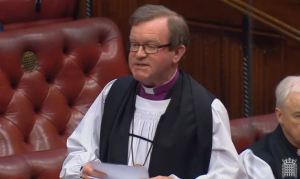
Domestic Abuse Bill: Bishop of London speaks in favour of amendment on protection for migrant women

The Bishop of London spoke in favour of an amendment to the Domestic Abuse Bill focused on protections for migrant women reporting domestic abuse on 15th March 2021:

The Lord Bishop of London [V]: My Lords, I thank the noble Baroness, Lady Meacher, for her work on this amendment. It is also a pleasure to follow the noble and learned Baroness, Lady Butler-Sloss.

Amendment 67, to which I give my support, speaks to an underlying issue with several amendments that concern migrant women: namely, the balance between the Home Office’s commitment to immigration enforcement and the support of victims, which is too often weighted too heavily towards the former. From my own work exploring how varying circumstances, such as migration, affect one’s health outcomes, I hear far too often of victims of crime too nervous to come forward to the police for fear that, rather than receiving the help and support that they need, they will instead find themselves indefinitely detained, split from children and families and deported. The result is that they simply do not come forward, for fear is weaponised by abusers to prevent their victims escaping. This is all too common.

Continue reading “Domestic Abuse Bill: Bishop of London speaks in favour of amendment on protection for migrant women”
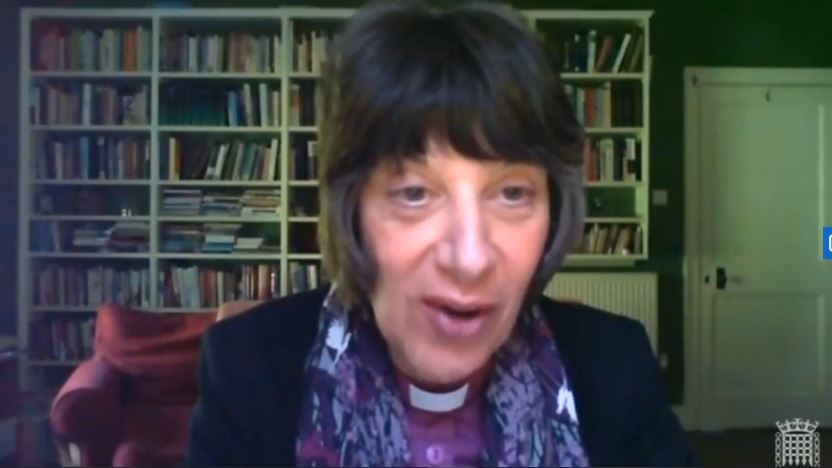
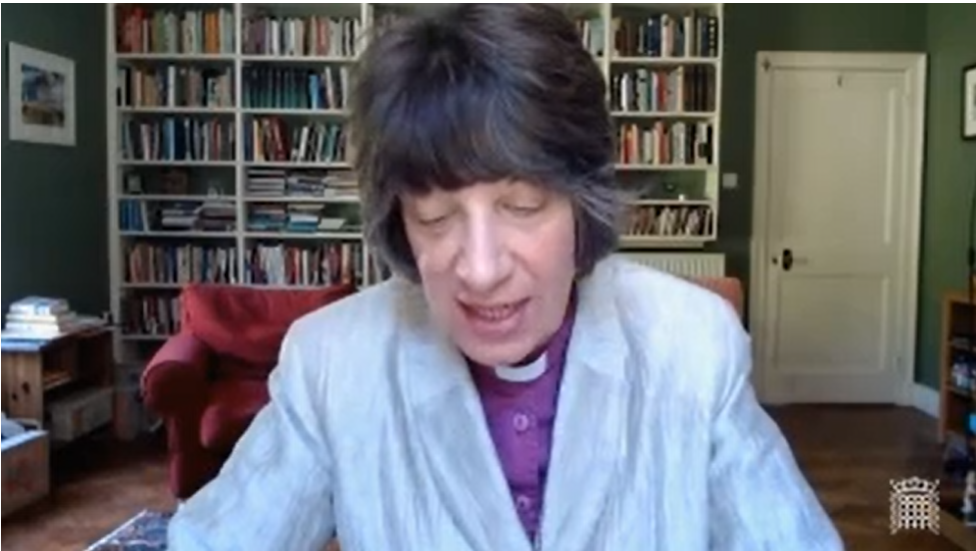
Bishop of Gloucester asks about tackling violence against women and girls

The Bishop of Gloucester asked a question on the implementation of a framework to tackle root causes of violence and discrimination against women and girls on 9th March 2021, during a discussion on global efforts to increase women’s equality:

The Lord Bishop of Gloucester [V]: I understand that the Government are investing over £67 million in the What Works to Prevent Violence Against Women and Girls programme. What plans do they have to follow the lead set by Australia in developing a national primary prevention framework to tackle the root causes of bias and discrimination against women and girls?

Continue reading “Bishop of Gloucester asks about tackling violence against women and girls”

Domestic Abuse Bill: Bishop of Gloucester supports amendment on statutory guidance on domestic abuse

On 10th February 2021, the Bishop of Gloucester spoke in support of an amendment to the Domestic Abuse Bill tabled by Baroness Lister which would require the statutory guidance in the bill to take into account the government’s Violence Against Women and Girls strategy:

The Lord Bishop of Gloucester: My Lords, I metaphorically rise to speak to Amendment 185. I am very grateful to the noble Baroness, Lady Lister, for outlining the issues so clearly. It is a real honour to follow the noble Baroness, Lady Hodgson, and I am delighted to have added my name to Amendment 185. I do not want to repeat what they have eloquently said already, all of which I agree with.

The UK is party to international treaties and conventions that make it clear that we must deliver a co-ordinated response and integrated measures to end violence against women and girls. Amendment 185, as we have heard, simply seeks to ensure good join-up: the statutory guidance issued alongside the Bill must be linked to any violence against women and girls framework.

Continue reading “Domestic Abuse Bill: Bishop of Gloucester supports amendment on statutory guidance on domestic abuse”

Domestic Abuse Bill: Bishop of Gloucester tables amendment supporting migrant victims of domestic abuse

The Bishop of Gloucester tabled an amendment to the Domestic Abuse Bill aimed at safeguarding migrant victims of domestic abuse on 8th February 2021:

The Lord Bishop of Gloucester [V]: My Lords, I am again glad to speak in this Committee and draw attention to my interests in the register. It is a great honour to follow the noble Lord, Lord Rosser, and I thank him for his excellent speech.

Amendment 151, in my name, seeks to ensure that migrant victims of abuse have access to refuge spaces and essential support services, as with other victims of abuse. I thank all noble Lords, including the noble Lords, Lord Rosser and Lord Alton of Liverpool, and the noble Baroness, Lady Hamwee, who have added their names in support of this amendment.

The existing domestic violence rule, or DV rule, is a proven route for a limited group of survivors, including those on certain spousal or partner visas, ensuring that they are able to regularise their immigration status independent of their perpetrator, and can access public funds for a limited time while the application is considered. Since 2002, this has given migrant women a lifeline—an escape route out of abuse, removing the power from abusers who threaten detention, deportation, destitution and separation from children.

Continue reading “Domestic Abuse Bill: Bishop of Gloucester tables amendment supporting migrant victims of domestic abuse”

Domestic Abuse Bill: Bishop of London sponsors amendment on non-fatal strangulation

The Bishop of London spoke during a debate on the Domestic Abuse Bill on 3rd February 2021, supporting an amendment which would define the act of non-fatal strangulation in a domestic abuse context as an indictable offence and calling for a modernised response to domestic violence cases:

The Lord Bishop of London: My Lords, I thank noble Lords who have preceded me and those who will follow. I also thank the steady campaigners, researchers and wider members of civil society for their tenacity in bringing the issue of non-fatal strangulation to the forefront of the Bill. It is something so nuanced that, if addressed, it has the potential to change the trajectory of women’s lives post strangulation.

Researchers, lobbyists and specialist organisations alike have spent significant proportions of their lives trying to highlight the one thing that we all know to be true: that there is almost always more than meets the eye. That said, I am delighted to have heard that the Government are committed to addressing this issue, and it is good to have heard so many noble Lords speak in favour of the amendment at Second Reading and today.

Continue reading “Domestic Abuse Bill: Bishop of London sponsors amendment on non-fatal strangulation”

Domestic Abuse Bill: Bishop of London urges measures to strengthen legislation

The Bishop of London spoke in a debate on the Domestic Abuse Bill on 5th January 2021, welcoming the bill while emphasising the need for legislation to go further in combatting domestic abuse:

The Lord Bishop of London [V]: My Lords, I will add my voice to those who have already welcomed this Bill while also, in the brief time I have, suggesting that still more could be done to strengthen it further. The legislation is long overdue. As others have mentioned, we know that the pandemic has only exacerbated an already dire situation that leaves far too many survivors of abuse without the protections and support they require.

Much in this Bill is welcome, yet I fully support the remarks of my right reverend friend the Bishop of Gloucester and others who have noted that it does not yet go far enough, particularly on children, young people and migrant women. It is a cliché to note that these count as some of society’s most vulnerable, but this Bill is meant precisely to provide support to those whom the system is currently failing. If it fails to support the most vulnerable survivors, it is not yet living up to its potential.

Continue reading “Domestic Abuse Bill: Bishop of London urges measures to strengthen legislation”

Domestic Abuse Bill: Bishop of Gloucester highlights need to protect women in vulnerable groups

On 5th January 2021, the Bishop of Gloucester spoke at the second reading of the Domestic Abuse Bill, highlighting issues faced by victims of domestic violence in the criminal justice system and the need to protect women and girls across communities:

The Lord Bishop of Gloucester: My Lords, I am glad to contribute to this vital debate and I draw attention to my interests as president of the Nelson Trust and as Anglican Bishop to Prisons.

I note three things. First, this is a landmark piece of legislation and reflects good progress. We must ensure that the Bill is as good as it can be for the sake of those at risk of abuse, its victims and survivors. Secondly, work on the task of ending domestic abuse does not end with this legislation. Thirdly, there are issues unresolved in the Bill regarding certain vulnerable groups, some of which have been mentioned. I will highlight just a few in the time I have.

Continue reading “Domestic Abuse Bill: Bishop of Gloucester highlights need to protect women in vulnerable groups”

Bishop of Gloucester asks Government to address violence against women

On 25th June, the Rt Revd Rachel Treweek, Bishop of Gloucester, asked the Government an Oral Question on their plans to work with faith communities to address violence against women. She then asked a follow-up question about the Domestic Abuse Bill.

The Lord Bishop of Gloucester: To ask Her Majesty’s Government what plans they have to work with faith communities to address violence against women.

Baroness Williams of Trafford (Minister of State, Home Office): My Lords, I welcome the important role that faith communities have played, and will continue to play, in tackling violence against women and girls in all its forms. Alongside our ongoing engagement with faith groups, Home Office officials are working on the next phase of the Government’s plan to end violence against women and girls. As part of our stakeholder engagement work, we will be reaching out to faith leaders and communities to seek their views.

Continue reading “Bishop of Gloucester asks Government to address violence against women”

Bishop of Portsmouth asks Government about provision for women and children leaving women’s refuges

On 10th March 2020 Baroness Donaghy asked the Government “what assessment they have made of the financial sustainability of women’s refuges.” The Bishop of Portsmouth, Rt Revd Christopher Foster, asked a follow-up question:

The Lord Bishop of Portsmouth: My Lords, I return to the provision available after victims and their children are able to move on from refuges. Substantial, important and fragile ground has been moved and gained through the provisions in this Bill. But the provision after victims leave refuges is very patchy indeed, offered in only one in seven local authorities. Can the Minister say when provision will be available everywhere, for all victims and survivors? Continue reading “Bishop of Portsmouth asks Government about provision for women and children leaving women’s refuges”

Bishop of Winchester raises concern about response of universities to student complaints of assault and harassment

On 5th March 2020 Baroness Gale asked the Government “what assessment they have made of the effectiveness of the Crown Prosecution Service in prosecuting cases of rape.” The Bishop of Winchester, Rt Revd Tim Dakin, asked a follow-up question:

The Lord Bishop of Winchester: My Lords, a recent study highlighted that only 25% of university students who had experienced rape went on to report it to their university or to the police. It is therefore of concern that, since 2016, 300 non-disclosure agreements have been issued by universities in response to student complaints, including assault and harassment reports. The Office for Students and Universities UK are working to improve the handling of harassment and misconduct by universities, but can the Minister advise the House when the Government plan to legislate against the misuse of NDAs by higher education institutions to ensure that students are not discouraged from reporting these assaults? Continue reading “Bishop of Winchester raises concern about response of universities to student complaints of assault and harassment”