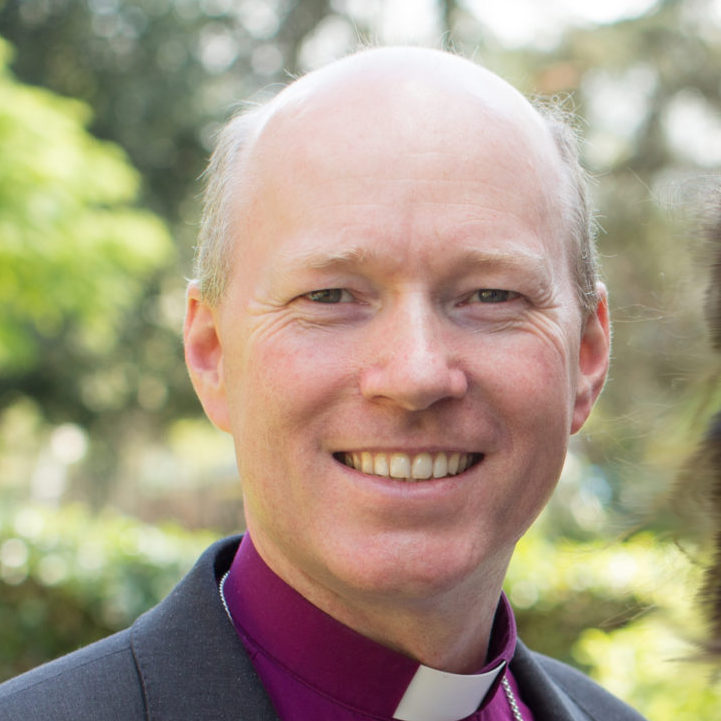
Bishop of Norwich asks about tackling issue of derelict boats on waterways

The Bishop of Norwich asked a question on funding to aid in tackling the issue of derelict boats in rivers and estuaries on 19th June 2025:

The Lord Bishop of Norwich: My Lords, the Broads Authority has had to spend £70,000 this year to raise two sunken boats in the Norfolk Broads. Will the Minister progress the recommendation in Defra’s Landscapes Review to remove the unnecessary complexities placed on the Broads Authority to account separately for income and expenditure from national park grant and from navigation, which would certainly enable the Broads Authority to undertake such work in a less complex way?

Continue reading “Bishop of Norwich asks about tackling issue of derelict boats on waterways”

Bishop of St Albans asks about role of beavers in restoring chalk streams

The Bishop of St Albans received the following written answer on 11th February 2025:

The Lord Bishop of St Albans asked His Majesty’s Government what consideration they have given to the potential role of beavers in restoring England’s chalk streams.

Continue reading “Bishop of St Albans asks about role of beavers in restoring chalk streams”

Bishop of St Albans asks about impact of beaver reintroduction

The Bishop of St Albans received the following written answer on 7th February 2025:

The Lord Bishop of St Albans asked His Majesty’s Government what assessment they have made of the impact of the introduction of a pair of beavers to the River Glaven in Norfolk in 2022 on (1) water pollution, and (2) flood risk.

Continue reading “Bishop of St Albans asks about impact of beaver reintroduction”

Bishop of Norwich highlights need for cultural change among water company leadership

The Bishop of Norwich spoke in a debate on ensuring fines paid by water companies are used to repair damage to the sewage system on 6th February 2025, stressing the need for cultural change among water company leadership

The Lord Bishop of Norwich: My Lords, I am grateful to the noble Baroness, Lady Grender, for securing this timely debate. It is a scourge on us all that sewage pollution is damaging so many of our watercourses and coastlines—damaging their ecosystems but also our enjoyment of them. I remember my first experience of such pollution when, as a young lad, I caught sticklebacks in my hands from the ditches around our Yorkshire village. One day, I went to my usual place of good stickleback hunting to find it putrid, with a storm drain leaking sewage and items—at the time, I did not understand what they were—floating in the ditch. The sticklebacks were gone for over a year.

Continue reading “Bishop of Norwich highlights need for cultural change among water company leadership”

Bishop of St Albans asks about monitoring of environmental effects of agricultural runoff into rivers

The Bishop of St Albans asked a question on the impact of run off into rivers from agricultural land, during a discussion on the possible failure of Thames Water and other water companies on 21st May 2024:

The Lord Bishop of St Albans: My Lords, could the Minister reassure the House that should any of the water companies fail, the ongoing monitoring of, for example, run-off from agricultural land—which is devastating many of our rivers, including the important chalk streams in Hertfordshire in my diocese—will continue, that we will continue to seek to find improvements, and that no momentum will be lost?

Continue reading “Bishop of St Albans asks about monitoring of environmental effects of agricultural runoff into rivers”

Bishop of St Albans asks about information on tankers in the English channel

The Bishop of St Albans received the following written answer on 12th March 2024:

The Lord Bishop of St Albans asked His Majesty’s Government, further to the Written Answer by Lord Davies of Gower on 14 February (HL2349), in what form the information on vessel transponders is collected; and where is it published.

Lord Douglas Miller (Con, DfT): The Government does not routinely collect information on vessel transponders.

Hansard

Bishop of Southwell and Nottingham asks about effectives of dredging rivers and waterways

The Bishop of Southwell and Nottingham received the following written answer on 12th March 2024:

The Lord Bishop of Southwell and Nottingham asked His Majesty’s Government what assessment they have made of the effectiveness of dredging rivers and waterways while balancing environmental and habitat considerations; and, in particular, what assessment they have made of how effective this would be for the River Trent.

Continue reading “Bishop of Southwell and Nottingham asks about effectives of dredging rivers and waterways”

Bishop of St Albans asks about unauthorised tankers in the English Channel

The Bishop of St Albans received the following written answers on 14 February 2024:

The Lord Bishop of St Albans asked His Majesty’s Government what assessment they have made of the number of ships in the ‘dark fleet’ passing through the English Channel carrying Russian oil and oil products in (1) 2020, (2) 2021, (3) 2022, and (4) 2023.

Lord Davies of Gower (Con, DfT): Definitions of the ‘shadow fleet’ or ‘dark fleet’ vary and so it is not possible to provide accurate figures in relation to the English Channel. This practice has emerged since the introduction of the Russian Oil Services ban and Oil Price Cap Exception by the Price Cap Coalition of the G7, the European Union and Australia in December 2022.

Continue reading “Bishop of St Albans asks about unauthorised tankers in the English Channel”

Bishop of St Albans asks about water pollution

The Bishop of St Albans asked a question about government discussions with water companies regarding pollution on 1st March 2023:

The Lord Bishop of St Albans: To ask His Majesty’s Government what recent discussions they have had with water companies regarding water pollution.

Lord Benyon (Con): My Lords, the current environmental performance of water companies is unacceptable. In December 2022, the Water Minister and the Secretary of State met with CEOs of lagging water companies—as identified by Ofwat’s recent assessment—to outline the Government’s expectations that performance must improve significantly. Furthermore, in January, my colleague Rebecca Pow met with the CEO of South West Water. She will be meeting the CEOs of all lagging companies individually every six months and she expects to see significant progress. Most recently, I also met CEOs of water companies with Minister Pow to highlight the importance of addressing water pollution and reaching their net-zero goals.

Continue reading “Bishop of St Albans asks about water pollution”

Bishop of St Albans calls for action on sewage disposal in rivers and coastal waters

On 7th July 2022, the House of Lords debated a motion put forward by Lord Oates on Sewage Disposal in Rivers and Coastal Waters. The Bishop of St Albans spoke in the debate – the Bishop’s speech is below along with contributions by other peers:

The Lord Bishop of St Albans: My Lords, I too thank the noble Lord, Lord Oates, for achieving this important debate. Many of the horrifying facts and statistics have been laid out with great clarity before your Lordships’ House.

I live in the city of St Albans, which is built next to the ancient Roman city of Verulamium. We have a 17-mile chalk stream which runs through the city called the River Ver, based on its Roman name; it flows eventually into the River Colne. We have a thriving local group of activists, the Ver Valley Society, which was set up and continues to work with great vigour to protect this really important chalk stream—it is really a stream rather than a river.

In 2021, the sewage treatment works at the top of the river spilled for 2,646 hours—just over 100 hundred days, so nearly a third of the year. Not only was that appallingly bad for this unique ecosystem—chalk streams and chalk rivers are mainly found here in this country—it was also bad because of the residual nitrate in the aquifer and it has led to a very poor state of the chalk stream. Insects at the bottom of the food chain are not as plentiful as they once were. Likewise, aquatic plant life is also suffering. It is unacceptable for this lovely, delightful small river, that many of us walk along regularly for leisure, that goes through our park, to be treated so badly.

Continue reading “Bishop of St Albans calls for action on sewage disposal in rivers and coastal waters”