Bishop of Winchester asks abut freedom of religion in Syria

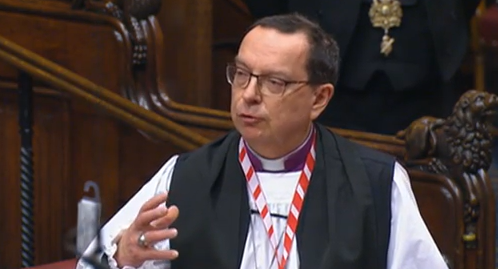
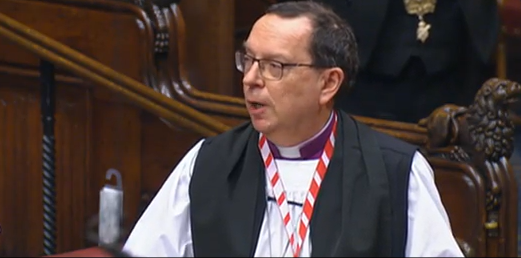
The Bishop of Winchester asked a question on Freedom of Religion and Belief in Syria on 19th December 2024, following a government statement on the recent regime change in the country:

The Lord Bishop of Winchester: I am very grateful to the Minister for repeating the Statement. I particularly welcome what he said about the appointment of a Special Envoy on Freedom of Religion or Belief, and what he said about north-east Syria. Forgive me for returning to that subject, given the reassurances he has given, but the semi-autonomous region of north-east Syria is an oasis of plurality in the region, where freedom of religion or belief is respected and women take a leading role in governance. It provides an exemplar for the whole region, yet it is under significant pressure from repressive forces supported by our NATO ally, Turkey. I believe that this is an asymmetric aggression, so can the Minister please assure the House that the UK will continue, along with other NATO allies, to bring pressure to bear on Turkey to desist from its destabilising activities in the region?

Continue reading “Bishop of Winchester asks abut freedom of religion in Syria”

Bishop of Winchester asks about mental health support for detained asylum seekers

On 28th November 2024, the Bishop of Winchester asked a question on the provision of mental health support for asylum seekers housed at the former MOD site in Wethersfield

The Lord Bishop of Winchester: My Lords, reports by Doctors of the World and Médecins Sans Frontières speak of the high levels of psychological distress experienced by many of the residents who are accommodated at Wethersfield, and this is corroborated by those from the diocese of Chelmsford volunteering on site. Can the Minister say what access there is to therapeutic mental health support on site, especially for those suffering from complex conditions such as PTSD?

Continue reading “Bishop of Winchester asks about mental health support for detained asylum seekers”

Bishop of Winchester asks about recognition of Cornish regional identity

The Bishop of Winchester asked a question on government plans to recognise Cornish identity within the future Council of the Nations and Regions on 27th November 2024:

The Lord Bishop of Winchester: My Lords, given that the UK Government have recognised the distinctive identity of the Cornish through the Council of Europe’s Framework Convention for the Protection of National Minorities, can the Minister say whether there are any plans to recognise that identity within the Council of the Nations and Regions, irrespective of whether they vote for a mayor? I note that the Cornish do not take kindly to being called English.

Continue reading “Bishop of Winchester asks about recognition of Cornish regional identity”

Bishop of Winchester asks about support for persecuted Christians

The Bishop of Winchester received the following written answer on 27th November 2024:

The Bishop of Winchester asked His Majesty’s Government what plans they have to implement the 22 recommendations set out in the Bishop of Truro’s independent review of Foreign and Commonwealth Office support for persecuted Christians, published in July 2019; and what is their timescale for doing so.

Continue reading “Bishop of Winchester asks about support for persecuted Christians”

Bishop of Winchester asks about the prioritisation of freedom of religion or belief in Foreign, Commonwealth and Development Office

On 5th November 2024, the Bishop of Winchester received the following written answer:

The Lord Bishop of Winchester asked His Majesty’s Government, further to the Written Answer by the Minister of State at the Foreign, Commonwealth and Development Office (FCDO) on 18 October (HC8437), how many FCDO staff are dedicated to freedom of religion or belief and at what level of seniority.

Continue reading “Bishop of Winchester asks about the prioritisation of freedom of religion or belief in Foreign, Commonwealth and Development Office”

Bishop of Winchester asks about protection of vulnerable communities in the Democratic Republic of the Congo and in Iraq

The Bishop of Winchester received the following written answers on 7th October 2024:

The Lord Bishop of Winchester asked His Majesty’s Government whether they intend to work within international forums to establish a commission of inquiry to investigate and hold accountable those responsible for human rights violations against the Banyamulenge in the Democratic Republic of the Congo.

Continue reading “Bishop of Winchester asks about protection of vulnerable communities in the Democratic Republic of the Congo and in Iraq”

King’s Speech Debate: Bishop of Winchester urges “faith literate” approach to foreign affairs

The Bishop of Winchester gave a speech on the topic of freedom of religion and belief during the King’s Speech debate on 25th July 2024, encouraging the government to take “a faith literate approach to foreign affairs”:

The Lord Bishop of Winchester: My Lords, I am grateful for the noble Baroness’s remarks at the start and am pleased that the Government have expressed a desire to reset the UK’s international relations. If the UK is to exercise the soft power that we undoubtedly might, not least through proper investment in the BBC World Service, it is vital that we are as fully engaged internationally as we can be. In that regard, I stress the vital importance of freedom of religion or belief—or FoRB for short, because it is a mouthful—in today’s world. It is a vital human right, and its increasing abuse is a growing global threat.

Continue reading “King’s Speech Debate: Bishop of Winchester urges “faith literate” approach to foreign affairs”

Bishop of Winchester asks about freedom of religion and belief in India

On 16th April 2024, the Bishop of Winchester tabled a question to the Foreign Secretary on the current state of freedom of religion and belief in India:

The Lord Bishop of Winchester: To ask the Secretary of State for Foreign, Commonwealth and Development Affairs what assessment he has made of the current state of freedom of religion or belief in India.

Lord Cameron of Chipping Norton (Con, Foreign Secretary): My Lords, India is a multifaith, multiethnic democracy and remains among the most religiously diverse societies in the world. It is home to 966 million Hindus, 172 million Muslims, 28 million Christians, 20 million Sikhs, 8 million Buddhists and 4.5 million Jains. India is committed via its constitution to freedom of religion and belief. Where specific issues or concerns arise, the UK Government of course raise these directly with the Government of India.

Continue reading “Bishop of Winchester asks about freedom of religion and belief in India”

Bishop of Winchester asks about religious freedom in Myanmar

The Bishop of Winchester received the following written answers on 12th April 2021:

The Lord Bishop of Winchester asked Her Majesty’s Government what assessment they have made of (1) the contribution made to aiding reconciliation by, and (2) the vulnerability of, religious groups in Myanmar.

Continue reading “Bishop of Winchester asks about religious freedom in Myanmar”

Schools (Mental Health Professionals) Bill: Bishop of Winchester applauds measures to address mental health issues in young people

The Bishop of Winchester spoke in a debate on the second reading of the Schools (Mental Health Professionals) Bill on 1st March 2024, pointing out the need for a consistent, universally applied policy to improve student mental health, and the need to address the causes of mental health issues at a root level:

The Lord Bishop of Winchester: My Lords, I am grateful to the noble Baroness for bringing this Bill to us for its Second Reading. We indeed face a crisis in this area and need to be aware of the long-term consequences of not addressing it.

The Bill would pave the way for just the kinds of interventions that are sorely needed. The NSPCC and our own Library briefing state that more than 20% of children and young people are living with poor mental health. CAMHS referrals are provided for only the most severe presenting issues, while early intervention, though widely recognised to be key to good long-term outcomes, is now a thing of distant memory. The sobering fact is that children are taking their own lives while they wait to be seen, and that is deeply shameful.

Last summer, the Church of England published the document Our Hope for a Flourishing Schools System, which makes specific mention of mental health, it being the issue school leaders most often raise with us. It states:

“Children’s mental health and wellbeing is prioritised and resourced generously by a society that invests in the long-term future of its nation by placing children first in funding and political direction. The fulfilling of a child’s potential should never be hindered, blocked or prevented by the system in which they find themselves”.

However, those words are, sadly, far from being the current reality.

Continue reading “Schools (Mental Health Professionals) Bill: Bishop of Winchester applauds measures to address mental health issues in young people”