King’s Speech Debate: Bishop of Worcester makes valedictory speech on the topic of international development

The Bishop of Worcester gave his valedictory speech on issues facing the field of international development, in particular the problem of debt, during the Kings Speech Debate on 25th July 2024:
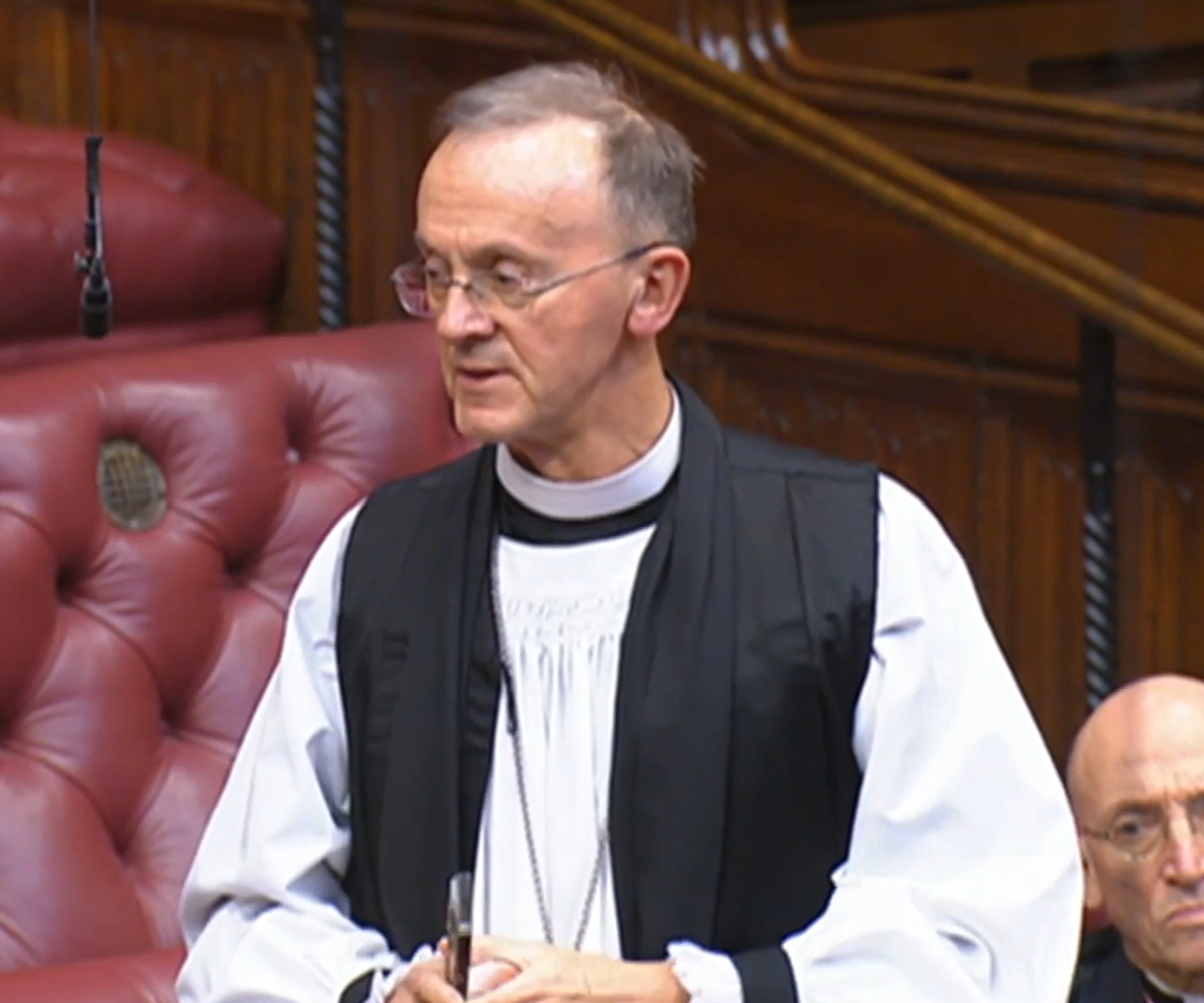
The Lord Bishop of Worcester: My Lords, I join others in welcoming the Ministers to the Front Bench and begin this valedictory speech by saying what a privilege it has been to serve in your Lordships’ House for the last 12 years. I thank all noble Lords and staff on the estate for all they do and their hard work.

After my maiden speech, a fellow Peer asked me how it had gone. “Oh, they were very nice and kind”, I responded. “Yes”, he retorted; “I have never known a place where courtesy is used as such an effective weapon”. I have experienced much unweaponised courtesy and civility here. I have consistently encountered humanity at its best, and I thank your Lordships, whatever their political affiliation, for their impressive devotion to the common good.

In this final intervention, I will concentrate my brief remarks on development issues, which have been a passion of mine throughout my adult life. While I recognise the imperative for defence spending and the need to be ready for war, I hope that the Government will pay equal attention to development, which is an indispensable contributor to peace and human flourishing.

Continue reading “King’s Speech Debate: Bishop of Worcester makes valedictory speech on the topic of international development”
Votes: Safety of Rwanda (Asylum and Immigration) Bill

On 17th April 2024, the House of Lords debated Commons reasons and amendments to the Safety of Rwanda (Asylum and Immigration) Bill. Votes were held on further amendments to the bill, in which Bishops took part:

Continue reading “Votes: Safety of Rwanda (Asylum and Immigration) Bill”

Votes: Safety of Rwanda (Asylum and Immigration) Bill

On 16th April 2024, the House of Lords debated Commons reasons and amendments to the Safety of Rwanda (Asylum and Immigration) Bill. Votes were held on further amendments to the bill, in which Bishops took part:

Continue reading “Votes: Safety of Rwanda (Asylum and Immigration) Bill”

Bishop of Worcester asks about humanitarian aid to Gaza and to Palestinian refugees

The Bishop of Worcester received the following written answers on 15th April 2024:

The Lord Bishop of Worcester asked His Majesty’s Government what assessment they have made of the impact on the humanitarian relief effort in Gaza and the West Bank of the decision to suspend aid to the United Nations Relief and Works Agency for Palestine Refugees in the Near East.

Continue reading “Bishop of Worcester asks about humanitarian aid to Gaza and to Palestinian refugees”

Artificial Intelligence (Regulation) Bill: Bishop of Worcester welcomes legislation

On 22nd March 2024, the Bishop of Worcester spoke in a debate on the Artificial Intelligence (Regulation) Bill (a private members bill tabled by Lord Holmes of Richmond), supporting the aims of the bill and calling for robust approach to AI regulation:

The Lord Bishop of Worcester: My Lords, I guarantee that this is not an AI-generated speech. Indeed, Members of the House might decide after five minutes that there is not much intelligence of any kind involved in its creation. Be that as it may, we on these Benches have engaged extensively with the impacts and implications of new technologies for years—from contributions to the Warnock committee in the 1980s through to the passage of the Online Safety Bill through this House last year. I am grateful to the noble Lord, Lord Holmes, for this timely and thoughtful Bill and for his brilliant introduction to it. Innovation must be enthusiastically encouraged, as the noble Baroness, Lady Moyo, has just reminded us. It is a pleasure to follow her.

That said, I will take us back to first principles for a moment: to Christian principles, which I hope all of good will would want to support. From these principles arise two imperatives for regulation and governance, whatever breakthroughs new technologies enable. The first is that a flourishing society depends on respecting human dignity and agency. The more any new tool threatens such innate dignity, the more carefully it should be evaluated and regulated. The second imperative is a duty of government, and all of us, to defend and promote the needs of the nation’s weak and marginalised —those who cannot always help themselves. I am not convinced that the current pro-innovation and “observe first, intervene later” approach to AI get this perennial balance quite right. For that reason, I support the ambitions outlined in the Bill.

Continue reading “Artificial Intelligence (Regulation) Bill: Bishop of Worcester welcomes legislation”

Bishop of Worcester asks about support for pupils with special educational needs and disabilities

The Bishop of Worcester asked a question on the need for more funding to be put into the system to support SEND pupils and their families on 19th March 2024, during a discussion on the level of support given to pupils with special educational needs: 

The Lord Bishop of Worcester: My Lords, I declare my interest as a parent who had to fight hard for an EHCP for his child. It is not only in deprived areas that it is very hard to be awarded an EHCP; it is certainly true in Worcestershire, where a large proportion of applications are turned down. As I was fighting through mediation, I was told by a health professional, “Remember, John, only pushy parents get EHCPs”, and that seemed to be the case. Does the Minister agree that this is shameful? Does she also agree with the LSE that the basic problem is that more money needs to be put into the system?

Continue reading “Bishop of Worcester asks about support for pupils with special educational needs and disabilities”

Budget Debate: Bishop of Worcester highlights need for increased spending on overseas aid

On 18th March 2024, the Bishop of Worcester spoke in a debate on the spring budget, paying tribute to aspects of the budget such as the continuation of the household support fund and the reduction in National Insurance, and expressing regret that the international aid budget had not been increased:

The Lord Bishop of Worcester: My Lords, I congratulate the noble Lord, Lord Kempsell, on an excellent maiden speech, which was thoughtful and brief—and, as we all know, concision is next to godliness.

I have learned a lot in this debate, including the operation of the VAT regime on nuts—probably more than I would have wanted to have known. However, I will not concentrate my remarks on that.

It is clear that the Chancellor had a difficult task in producing the Budget, as has been observed by one of his predecessors, the noble Lord, Lord Lamont, who knows better than anyone. I want to pay tribute to the many good things in the Budget: the continuation of the household support fund, the reform of non-dom status, the increase in public services spending by 1% above inflation, and the welcome reduction in national insurance, to name but a few. However, I was very disappointed by one lacuna, to which I want to address my remarks now. That is, that the aid budget was not increased.

Continue reading “Budget Debate: Bishop of Worcester highlights need for increased spending on overseas aid”

Bishop of Worcester asks about benefits of inter-school partnerships

The Bishop of Worcester asked a question on the benefits of cooperation and partnerships between schools on 18th March 2024, during a discussion on the contribution of independent schools to the education sector:

The Lord Bishop of Worcester: My Lords, I draw attention to my interest as president of the Woodard Corporation, one of the largest Christian education charities in the country. The noble Lord, Lord Black, drew attention to the partnership between Brentwood School and other schools in the area.

Continue reading “Bishop of Worcester asks about benefits of inter-school partnerships”

Bishop of Worcester responds to government statement on the closure of the UK Interfaith Network

The Bishop of Worcester asked a question in response to a government statement on the closure of the UK Interfaith Network on 22nd February 2024:

The Lord Bishop of Worcester: My Lords, I too pay tribute to the work of the Inter Faith Network. As has been stated, surely the optics of this are not good. I would like to ask the Minister how far non-engagement extends, because surely, in our society, we want to encourage dialogue, even with those organisations that may express some views with which we disagree. To not be willing to engage at all with an organisation that has not been proscribed goes against all the efforts being made to bring our society together—it seems very strange.

Continue reading “Bishop of Worcester responds to government statement on the closure of the UK Interfaith Network”

Bishop of Worcester asks about steps towards a ceasefire and investigation into the conflict in Gaza

The Bishop of Worcester received the following written answer on 29th January 2024:

The Bishop of Worcester asked His Majesty’s Government what steps they are taking (1) to secure a ceasefire, and (2) to press for an investigation by the International Criminal Court of violations of international humanitarian law, in Gaza.

Lord Ahmad of Wimbledon (Con): The UK wants to see an end to the fighting in Gaza as soon as possible. We are calling for an immediate humanitarian pause to get aid in and hostages out, and as a vital first step towards building a sustainable, permanent ceasefire, without a return to destruction, fighting and loss of life. But to achieve that:

Continue reading “Bishop of Worcester asks about steps towards a ceasefire and investigation into the conflict in Gaza”