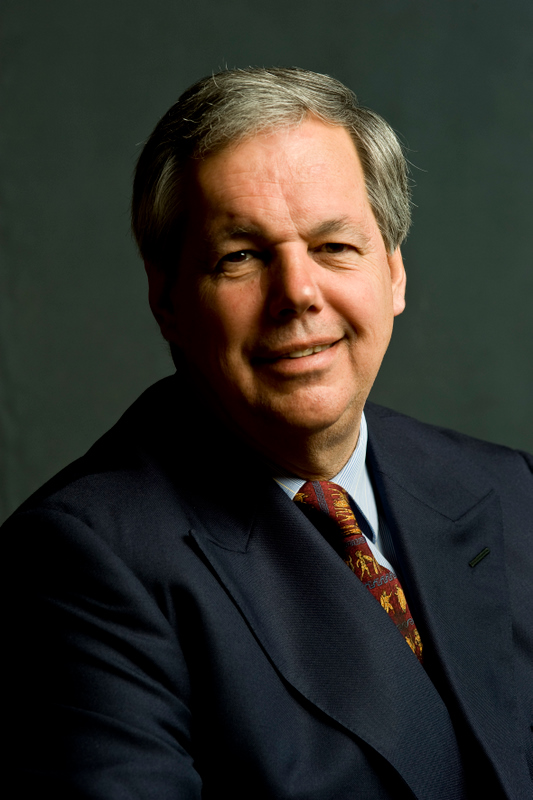
Bishop of Worcester Calls for Greater Third Sector Involvement in Local Enterprise Partnerships

On 11th February 2015, Baroness Bakewell of Hardington Mandeville asked Her Majesty’s Government what assessment they have made of the effect of local enterprise partnerships on the economy and key skills in their local areas. The Bishop of Worcester, the Rt Revd John Inge, asked a supplementary question:
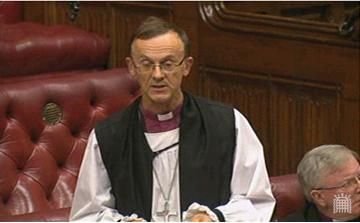
WorcesterThe Lord Bishop of Worcester: My Lords, does the Minister agree that the involvement of the third sector in local enterprise partnerships is very enriching? As that involvement is very varied across the nation, would she be prepared to monitor the involvement of, and the partnership with, the third sector, as part of an assessment of the progress of LEPs?

Baroness Neville-Rolfe (Parliamentary Under-Secretary of State, Department for Business, Innovation and Skills): As I have said, the composition of a local enterprise partnership is very much a matter for the LEP, provided that it is business led and brings in local democracy with the local authorities. Otherwise, we draw on people who can help with growth and skills, and certainly there are those in the third sector who bring great strength to these areas.

(Via Parliament.uk)

Deregulation Bill- Divisions

On 11th February 2015, three bishops took part in divisions on the Government’s Deregulation Bill, during its Report Stage.

House of Lords Division Lobby

Continue reading “Deregulation Bill- Divisions”

Recall of MPs Bill – Division

On 10th February 2015, three bishops took part in a division on the Recall of MPs Bill, during the bill’s Report Stage:

House of Lords Division Lobby

Amendment 1

Baroness Hayter of Kentish Town moved amendment 1, in clause 1, page 1, line 10, at end to insert: “( ) In this Act the signing of a recall petition constitutes a public act and the information of each person who signs a recall petition will be accessible in a marked electoral register, if requested.” Continue reading “Recall of MPs Bill – Division”

Bishop of Worcester calls for greater communication over local welfare assistance schemes

On 10th February 2015, Baroness Lister of Burtersett asked Her Majesty’s Government what has been the response to their consultation on the future financing of local welfare assistance schemes. The Bishop of Worcester, the Rt Revd John Inge, asked a supplementary question:

WorcesterThe Lord Bishop of Worcester: My Lords, the Minister might be aware that the right reverend Prelate the Bishop of Truro has secured a debate on this issue this evening, which I welcome. In the mean time, in the absence of ring-fencing, will the Minister undertake to write to local authorities to highlight the £129 million allocation for local welfare provisions within the local government settlement, and the additional £74 million to which reference has been made, to ensure that local authorities have the resources they need to assist those most in need, and to encourage them to use them?
Lord Ahmad of Wimbledon: In response to the right reverend Prelate, as I said earlier, I am of course aware of the debate and look forward to that later today. It is for local authorities to set their priorities, and we have been responding directly to local authorities; it was part of the consultation after the initial settlement. I myself met with several local authorities. The issue of welfare provision was high on their list, and the Government have responded accordingly.

Written Answer from the Second Church Commission – Employment Tribunals Service

On 27th January 2015, the Second Church Estates Commissioner, the Rt Hon Sir Tony Baldry MP, answered a written question on the subject of the Employment Tribunals Service:

Tony Baldry MPIan Murray (Edinburgh South, Labour): To ask the right hon. Member for Banbury, representing the Church Commissioners, how much the Commissioners have spent on the Employment Tribunal action by the Reverend Mark Sharpe against the Bishop of Worcester and the Worcester Diocesan Board of Finance.

The Second Church Estates Commissioner (Rt Hon Sir Tony Baldry): Owing to ongoing legal proceedings, the Church Commissioners are unable to comment on this case at present.

(via Parliament.uk)

Bishop of Worcester takes part in debate on relationship between children’s rights and internet use

“The Church of England schools’ commitment to this aim is seen in the breadth of our holistic educational vision. We seek to conceive of education as developing children’s creativity and awareness of the world around them—of course, we are not alone in that. To fit students for a life of active civic engagement, and not just to learn facts, is what education should be about.”

On 20th November 2014, Baroness Kidron led a debate in the House of Lords to take note of the impact of the United Nations Convention on the Rights of the Child on children’s and young people’s online and digital interactions. The Bishop of Worcester, the Rt Revd John Inge, took part in the debate, which was timed to mark the 25th anniversary of the Convention. The Bishop spoke about the ability of online education resources to release the talents of all children, noting the Church of England’s commitment to a holistic educational vision in its schools. He also highlighted some of the risks associtated with young people using the internet and supported calls for the government to review how the UNCRC can be applied to the context of these online and digital interactions.

WorcesterThe Lord Bishop of Worcester: My Lords, I begin by echoing the congratulations offered to the noble Baroness, Lady Shields, on an excellent maiden speech. I join her in applauding the wonderful work in this area of the noble Baroness, Lady Kidron, to whom I am also grateful for providing the House with an opportunity to take stock of the changes wrought over the past couple of decades by the growth of the internet and evolution of digital technologies—on this auspicious day, 25 years since the establishment of the UN Convention on the Rights of the Child, which coincides, as she pointed out, with the beginning of the development of the internet. What a different world we live in now that the convention has come of age. It behoves us to consider the new cultural landscape in which we find ourselves, in which 81% of 12 to 15 year-olds use the internet every day. Continue reading “Bishop of Worcester takes part in debate on relationship between children’s rights and internet use”

Bishop of Worcester supports calls for review of Azure card system for asylum seekers

“If we wish to dissuade people from coming to this country without the legal right to be here, it is wrong to try to send a message by treating asylum applicants, even when appeal rights are exhausted, in a way unworthy of our values.”

On 20th November 2014, Lord Roberts of Llandudno led a take-note debate in the House of Lords on the subject of the Azure card, the means of support through which the Government supports people making applications for asylum who are not allowed to work in the UK. The Bishop of Worcester, the Rt Revd John Inge, spoke in the debate, highlighting a number of concerns about the current system, including the level of support provided and the limited number of places in which the card can be used. He called on the Government to review the current system.

WorcesterThe Lord Bishop of Worcester: My Lords, I am very grateful to the noble Lord, Lord Roberts, for securing this debate on a very important matter. The churches have long held, and maintained in this House, that those who have applied for asylum and who are not allowed to do paid work should be given enough financial help to maintain a decent basic standard of living for themselves and their families. Indeed, the most reverend Primate the Archbishop of York has more than once led delegations on this theme. Surely every person who is in this country should be treated in accordance with our values. If we wish to dissuade people from coming to this country without the legal right to be here, it is wrong to try to send a message by treating asylum applicants, even when appeal rights are exhausted, in a way unworthy of our values. Continue reading “Bishop of Worcester supports calls for review of Azure card system for asylum seekers”

Bishop of Worcester calls for simplification of visa rules for Commonwealth countries

On 19th November 2014, Lord Lea of Crondall asked Her Majesty’s Government whether they have made any proposal to other European Union member states, either severally or collectively, which would limit (1) the right of United Kingdom citizens to live and work in other European Union member states, or (2) the parallel right of citizens of other European Union member states to live and work in the United Kingdom. The Bishop of Worcester, the Rt Revd John Inge, asked a supplementary question:

WorcesterThe Lord Bishop of Worcester: My Lords, the Minister mentioned the reputation that this country has for hospitality. Is he aware of an associated issue: the difficulty that members of the Commonwealth face in obtaining a visa even to visit, let alone to work and live in this country, which seriously hampers a lot of very important overseas links with dioceses, including my own—so much so that my friends in Tanzania were unable to be present at my wife’s funeral earlier this year? Is that sort of impediment government policy and, if not, can he assure us that it will be addressed?

Lord Bates: We very much encourage people to come to this country, whether to study or to work. We want to encourage the best and the brightest to come to this country, as well as tourists; there are many people we want to encourage—but there is a difference between that and people who significantly abuse the system in coming here because of benefits.

(via Parliament.uk)

Bishop of Worcester calls on Government to help tackle negative perceptions of adoption

On 18th November 2014, Baroness King of Bow asked Her Majesty’s Government what assessment they have made of the recent drop in referrals of children for adoption by local authorities. The Bishop of Worcester, the Rt Revd John Inge, asked a supplementary question: 

WorcesterThe Lord Bishop of Worcester: My Lords, does the Minister agree that, whatever the assessment of these figures, there remains a task to be done concerning negative perceptions about adoption in this country? Does he agree with the observation of a judge in the adoption of one of my children that whereas conception is sometimes a biological accident, adoption is always an act of love? Does he agree that it is a noble task and a noble thing to do? What are the Government doing to promote adoption in that light?

Lord Nash: As is well known, the Government have in place a very active reform programme on adoption which has had quite a substantial effect. I agree entirely with the right reverend Prelate’s comments. I was interested to see recent research by Professor Julie Selwyn at Bristol which shows that only 3% of adoptions break down. I think there is cross-party consensus that where there is no option of staying with the birth family, a long-term relationship with loving adoptive parents who have been well scrutinised is clearly in the best interests of the child.

(via Parliament.uk)

Bishop of Worcester calls for action on sexual violence in South Sudan

On July 7th 2014, the Bishop of Worcester, the Rt Revd John Inge, received an answer to a written question on South Sudan.

WorcesterThe Lord Bishop of Worcester: To ask Her Majesty’s Government what assessment they have made of the prevalence of sexual violence in the conflict in South Sudan; whether they are planning to deploy suitable experts from the Stabilisation Unit to strengthen and support efforts in South Sudan to respond; and, if so, when.

The Senior Minister of State, Department for Communities and Local Government & Foreign and Commonwealth Office (Baroness Warsi) (Con): We are deeply concerned by reports of human rights violations and abuses in South Sudan, including the widespread use of sexual violence. We fully support the work of the Africa Union Commission of Inquiry and echo the call in the recent UN Human Rights Council resolution for thorough and genuine investigations into all human rights violations and abuses and for the perpetrators to be brought to justice.

The UK is funding a project with non-governmental organisation Non Violent Peaceforce to establish women’s protection teams in Northern Bahr El Ghazal. This project aims to tackle sexual violence in communities affected by insecurity around the border with Sudan by establishing and training women’s peacekeeping teams to work within communities. We continue to raise the issue of human rights, and of sexual violence specifically, with South Sudanese Ministers. The Parliamentary Under-Secretary of State for Foreign and Commonwealth Affairs, my hon. Friend the Member for Boston and Skegness (Mr Simmonds), discussed the issue with the Foreign Minister of South Sudan at the Global Summit to End Sexual Violence in Conflict on 11 June. Our Ambassador also raises these issues regularly with the Government of South Sudan.

There are currently no plans to send additional experts from the Stabilisation Unit to South Sudan. However, we keep all such plans under constant review.

(via Parliament.uk)