On 16th January 2020 Baroness Doocey asked Her Majesty’s Government “what is the Home Office’s policy on the processing of an asylum claim when an applicant says they have been the victim of child trafficking?” The Bishop of Worcester, Rt Revd John Inge, asked a follow-up question:
On 15th January 2020 the House of Lords considered amendments to the Government’s European Union (Withdrawal Agreement) Bill at its second day in Committee. The Bishop of Worcester, Rt Revd John Inge, spoke in support of an amendment in the name of Lord Dubs and the Bishop of Durham, to ensure the continuation of the refugee children and family reunification provisions of the European Union (Withdrawal) Act 2018. The amendment was withdrawn by Lord Dubs at the end of the debate, with a commitment to return to it at a later stage.
Clause 37: Arrangements with EU about unaccompanied children seeking asylum. Debate on whether Clause 37 should stand part of the Bill.
The Lord Bishop of Worcester: My Lords, I am pleased to support this amendment, to which my friend the right reverend Prelate the Bishop of Durham has put his name. He is sorry not to be able to be in the Chamber today. A few weeks ago, we celebrated the story of Christmas. In the nativity, the happy events in a Bethlehem stable were followed by the more dramatic flight of the holy family to escape the violent persecution of King Herod. As we discuss this amendment, that story of the child Jesus and his parents fleeing from violence to a foreign land resonates loudly.
Children are among the most vulnerable victims of conflict, persecution and violence around the world. We all know that they do not choose to become refugees separated from their families. We as a nation can choose to reunite some families torn apart by conflict by offering children shelter, hope and a future. That is what I believe the majority of people in this country wish, and I am sure that is what the Government wish. This amendment seeks to ensure it by guaranteeing a safe, legal, effective and managed route for child refugees to join their families in this country. Continue reading “European Union (Withdrawal Agreement) Bill: Bishops support Dubs amendment on refugee children family reunion”
On 14th January 2020 Baroness Bennett of Manor Castle asked the Government “what plans the Constitution, Democracy and Rights Commission has to engage with civil society”. The Bishop of Worcester, Rt Revd John Inge, asked a follow-up question:
The Lord Bishop of Worcester: My Lords, I have seen the disillusionment to which the Minister refers. Given that no plans have yet been made for exactly how the commission will work, as well as the success of citizens’ assemblies in Ireland and France in rebuilding trust in democratic institutions, might the Minister think it a good idea to involve such citizens’ assemblies in the commission’s work? Continue reading “Bishop of Worcester asks Government to work with citizens’ assemblies on plans for democratic reform”
On 6th September 2019 the House of Lords considered the European Union (Withdrawal) (No. 6) Bill at its Committee, Report and 3rd Reading stages. Three bishops voted against an amendment to the Bill that was tabled by Conservative Peer Lord True, which would have delayed the implementation of the Act until after a General Election had been held.Continue reading “Vote – European Union (Withdrawal) (No. 6) Bill”
On 28th March 2019 Baroness Ludford asked the Government, “in the light of developments including the judgment of the Court of Justice of the European Union of 26 February Œuvre d’assistance aux bêtes d’abattoirs v Ministre de l’Agriculture et de l’Alimentation (C–497/17) that meat prepared according to the rules of religious slaughter cannot be classed as organic, what plans they have to encourage a wider debate about the space for practice in accordance with religious rights that respects human rights and equalities laws”.
The Lord Bishop of Worcester: My Lords, the noble Baroness’s Question is about much more than meat. It was Lord Acton who wrote that religious freedoms are the foundation of political freedoms. Is it not true that the debate for which the noble Baroness is calling is very relevant, despite the record to which the Minister has drawn attention and of which we can be proud? Religious groups are feeling caught between the views of the majority in all sorts of situations and their own religious observance and conviction.
On 24th January 2019 the Bishop of Worcester, Rt Revd John Inge, spoke in a debate tabled by Lord Scriven, “That this House takes note of the ability of local authorities across the United Kingdom to deliver essential services to their communities.”
The Lord Bishop of Worcester: My Lords, I rise with a heavy heart to raise questions concerning the ability of local councils to deliver essential services to their communities. I welcome the prospect of increased short-term government funding but, without that being increased and continued or there being rises in council tax, whatever the rights and wrongs of that, I question whether it will be sufficient to enable councils to meet rising demand, especially in social care. That issue is of immense concern, but others have spoken eloquently about it.
On 21st January 2019 Lord Black of Brentwood asked the Government “what assessment they have made of the performance of pupils taking the subjects that make up the English Baccalaureate.” The Bishop of Worcester, Rt Revd John Inge, asked a follow-up question:
The Lord Bishop of Worcester: My Lords, one does not need to be an avid follower of the news to realise the huge impact that religion has for good and for ill geopolitically in our world. That is happening at the same time as we see a level of unprecedented and increasing religious illiteracy in our own society. Does the Minister regret the exclusion of RE from the baccalaureate, given the drop in numbers studying the subject at GCSE? Would its inclusion not assist in community cohesion as well as in an understanding of our world?
On 29th November 2018 Baroness Morris of Yardley led a debate in the Lords on the motion “That this House takes note of the impact on schools of Her Majesty’s Government’s approach to school funding.” The Bishop of Worcester, Rt Revd John Inge, spoke in the debate:
The Lord Bishop of Worcester: My Lords, I am grateful to the noble Baroness, Lady Morris of Yardley, for securing this important debate on school funding and for her impassioned and powerful introduction to it. I fear that she is right that there is a crisis in school funding. Head teachers in the diocese of Worcester speak of the stress they are experiencing due to funding worries; of not sleeping due to such worries, which impacts negatively on all they are trying to do; of a sense of letting down children with significant needs; and of a feeling that they have nowhere to turn to be truly heard. One head of a school who has been asked to double its numbers has not been provided with sufficient funding to do so, throwing his school into financial insecurity and causing immense stress. Continue reading “Bishop of Worcester says crisis in school funding causing stress for staff and impacting children with special educational needs”
On Wednesday 28th November 2018 Lord Berkeley asked Her Majesty’s Government “what assessment they have made of the case for the disestablishment of the Church of England.” Several Members asked follow-up questions, including the Bishop of Worcester, Rt Revd John Inge, and a transcript of the exchanges is below:
Church of England: Disestablishment
Lord Berkeley: To ask Her Majesty’s Government what assessment they have made of the case for the disestablishment of the Church of England.
On 27th November 2018 the House of Lords considered amendments to the Mental Capacity (Amendment) Bill [HL]. Two bishops took part in a vote on an amendment from Baroness Watkins of Tavistock:Continue reading “Votes – Mental Capacity (Amendment) Bill”

 On 16th January 2020 Baroness Doocey asked Her Majesty’s Government “what is the Home Office’s policy on the processing of an asylum claim when an applicant says they have been the victim of child trafficking?” The Bishop of Worcester, Rt Revd John Inge, asked a follow-up question:
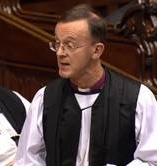 On 14th January 2020 Baroness Bennett of Manor Castle asked the Government “what plans the Constitution, Democracy and Rights Commission has to engage with civil society”. The Bishop of Worcester, Rt Revd John Inge, asked a follow-up question:
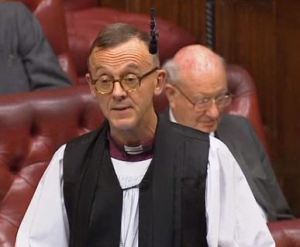 On 29th November 2018 Baroness Morris of Yardley led a debate in the Lords on the motion “That this House takes note of the impact on schools of Her Majesty’s Government’s approach to school funding.” The Bishop of Worcester, Rt Revd John Inge, spoke in the debate:
 The Church of England in Parliament
You must be logged in to post a comment.