
The Bishop of Gloucester spoke in a debate on the proposed removal of the universal credit uplift on 9th September 2021, with reference to the impact such a decision would have on levels of food poverty in the UK:
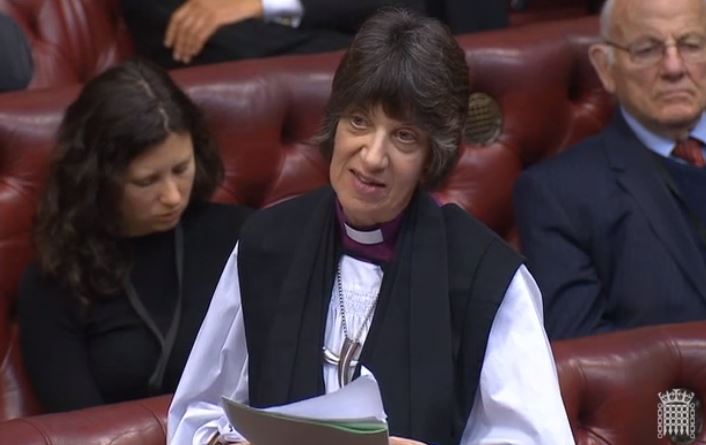
The Lord Bishop of Gloucester: I am grateful to the noble Baroness, Lady Tyler, for introducing this important debate, and I declare my interest as a trustee of Feeding Britain. I will focus my time on the impact that withdrawing the £20 uplift will have on food poverty. More than 500 anti-poverty workers, volunteers and supporters within the Feeding Britain network have signed a petition calling on the Government not to remove the increase, and that petition will be delivered to No. 10 in about an hour.
Food banks in the Feeding Britain network have credited the £20 increase with helping to stabilise, or indeed reduce, the levels of need for crisis support. As has been said, the decision to remove that increase coincides with the ending of other support schemes, such as furlough and local support grants and, with the imminent predicted increase in food and energy prices, there is deep concern that withdrawing this uplift will lengthen the queues outside food banks.
A survey published this week for the Trussell Trust found that, faced with a cut of £20 a week, 1.2 million people—20% of those who claim universal credit—say that they are very likely to need to skip meals, and nearly 1 million—that is, 15%—say they are very likely to need to use a food bank as a result of the cut. I find it really shocking to read a stat from the Food Foundation, which estimates that in order to eat according to government guidelines for a healthy diet, the poorest in our society would have to spend 74% of their disposable income, compared to only 6% for the richest.
This is most certainly not about laying all the solution for addressing food poverty at the Government’s feet. The role of civil society and community engagement, particularly during the pandemic, has been inspiring and has involved many faith groups, and it needs to continue to be fanned into flame. During the first six months of the pandemic, a project involving the diocese of Gloucester partnering with a charity in Stroud called the Long Table delivered over 35,000 meals to the vulnerable and NHS workers. However, to enable civil society and community responsibility, we need the Government to put the right enablers and safeguards in place, and that means keeping this £20 uplift.
In 2018, I added my voice to the End Hunger UK campaign. Three years later, the fundamental point remains. While celebrating the work that churches and other faith and voluntary groups are doing to respond to urgent need, it is clear to me that structural change needs to happen to reduce the need for food banks in the first place. That now includes retaining the uplift to universal credit.
Extracts from the speeches that followed:
Baroness Smith of Newnham (Lab): While I listened closely to the words of the right reverend Prelate the Bishop of Gloucester, and it is clearly encouraging that people have rallied around the most vulnerable during the pandemic, we should not need food banks in this country, ever. The state should ensure that people are not indebted to such an extent that they cannot afford to feed themselves and their children.
The noble Baroness, Lady Bennett, made absolutely the right points. For so many of us, £20 might seem a very small amount of money. How many chai lattes does it buy—how many things that seem so incidental to many people above the poverty line? But for others, that small amount of money makes all the difference. If it is right during the pandemic, it is right going forward as well, because we have heard that so many people are on in-work benefits. They cannot do more and more jobs. If they can get a better-paid job, fantastic—but if they cannot, there are questions to be raised.
I have a final question for the Minister. The Economic Affairs Committee, in calling for the uplift to be made permanent, said:
“Universal Credit should be set at a level that provides claimants with dignity and security.”
Does the Minister agree? If so, does she think that reducing the uplift will leave people with dignity and security?
Baroness Bennett of Manor Castle (GP): I started by contemplating £20. What does that mean to different people in our society? Like the right reverend Prelate, I focused on food. I thought about the people in this Chamber and those who live around us here in Westminster. I looked at some of the restaurants around us here in Westminster. At the Corinthia London Hotel, just up the road, you can get a baked fig starter for £18. At the Ivy restaurant you can get a shepherd’s pie for £19.50. If you have lunch at the Ritz, you can get a veal sweetbread starter for £28.
Also visiting us here briefly at Westminster were people testifying to the Work and Pensions Committee, telling it what £20 meant to them. Anthony Lynam said that it means,
“do I go hungry, do my kids go hungry?”
Amina Nagawa said that already with the £20 she goes without food and her son cannot eat something nutritious. Gemma Widdowfield said that she would buy essentials on her credit card and just stack up the debt.
The right reverend Prelate talked about the need for structural change. We have a crisis of inequality in our society. £20 means the world to some people or a veal sweetbread starter to others. As the noble Lord, Lord Davies, just said, this involves not just individual households but whole communities. Citizens Advice assessed the community impact of this cut as the Government appear not to have done. It worked out that for each £1 of investment that the Government might put in their levelling-up fund, £1.80 was being taken from local economies targeted by the levelling-up fund, the poorest in our society.
Baroness Stedman-Scott (Con, Department for Work & Pensions): We have heard how the £20-a-week uplift to universal credit has made a difference to households facing economic shock and financial disruption as a result of the pandemic. The noble Baronesses, Lady Donaghy and Lady Tyler, the right reverend Prelate the Bishop of Gloucester and others have made reference to the £20 uplift. It was clear right from the word go that it was temporary and not going to be permanent. I remind the House that the Chancellor has always been clear that the universal credit uplift was a pandemic response. He has ensured that support was in place well beyond the end of restrictions and reopening the economy, and we are not finished supporting those who need our help. No one wants to see anyone in poverty, so I agree with my right honourable friend the Chancellor when he says that he does not accept that people will be forced into poverty because it is now right that we switch our focus to getting people back into work and improving their prospects to progress in work. Our comprehensive plan for jobs will help to deliver this.
As I have said, the £20-a-week uplift to universal credit and working tax credit was announced by the Chancellor as a temporary measure in March 2020. We took this approach in order to give those people facing the most financial disruption the help that they needed as quickly as possible. At the Spring Budget, we announced a six-month extension of the temporary £20-a-week increase, meaning that it would be in place well beyond the end of restrictions. The additional support has increased the universal credit standard allowance and working tax credit basic element by up to £1,560 since its introduction.
(…)
The right reverend Prelate the Bishop of Gloucester and the noble Baroness, Lady Smith of Newnham, talked about food bank usage. I pay tribute to the food banks; they are doing a great job in supporting communities. They have enabled people and communities to work together to benefit the people they are trying to help, but it is difficult to predict impacts on the use of food banks. There are many reasons why people use them, and their use cannot completely be linked to a single cause. Impacts also depend on the speed of economic recovery and how we can quickly return individuals to work.


You must be logged in to post a comment.