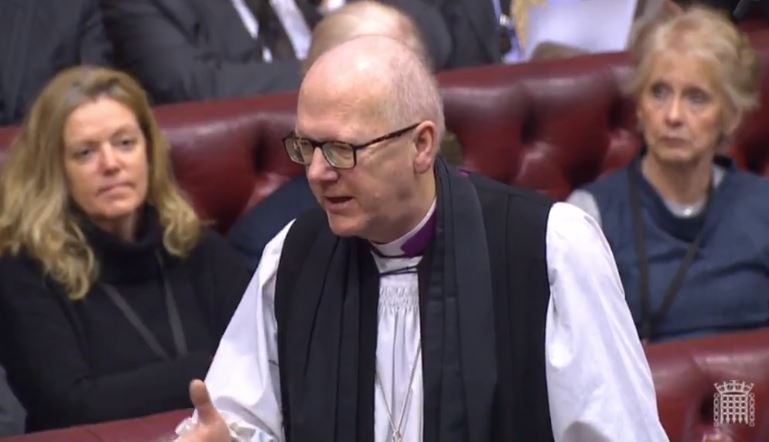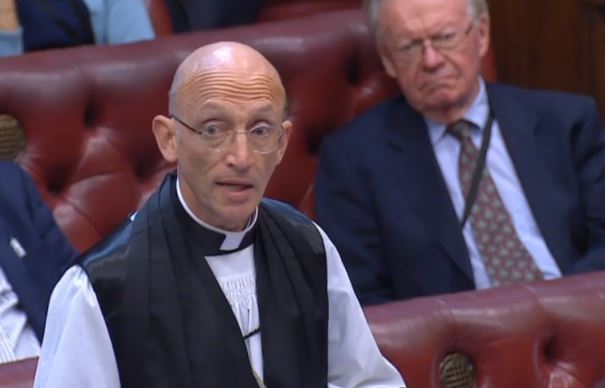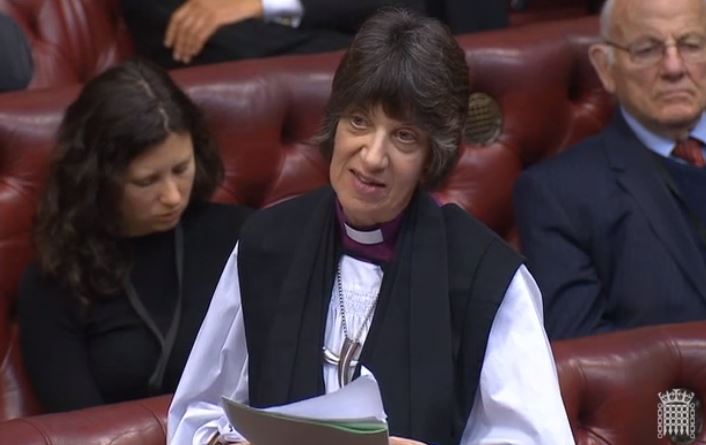
Bishop of St Albans tables question on political prisoners in Hong Kong

On 22nd February 2022, Lord Alton of Liverpool asked a question on human rights and political prisoners in Hong Kong, on behalf of the Bishop of St Albans:

The Lord Bishop of St Albans: To ask Her Majesty’s Government what representations they have made to the Government of Hong Kong about the (1) human rights, and (2) release, of pro- democracy political prisoners remanded in custody under that Government’s national security law.

Lord Alton of Liverpool (CB): My Lords, on behalf of the right reverend Prelate the Bishop of St Albans, and with his permission, I beg leave to ask the Question standing in his name on the Order Paper. In so doing, I declare my interests both as a patron of Hong Kong Watch and as vice-chairman of the All-Party Parliamentary Group on Hong Kong.

The Earl of Courtown (Con): My Lords, the mainland Chinese and Hong Kong authorities have used the national security law to target pro-democracy figures, curtail freedoms and shrink the space for opposition, a free press and civil society. The UK continues to raise its concerns directly with Hong Kong and Chinese authorities. We continue to urge Beijing to uphold its international obligations, including the rights and freedoms protected in the joint declaration.

Continue reading “Bishop of St Albans tables question on political prisoners in Hong Kong”
Bishop of Coventry asks about cooperation with European partners when responding to humanitarian issues

The Bishop of Coventry asked a question on European cooperation in the event of humanitarian crises caused by conflict, climate change, and other issues on 21st February 2023, during a debate on foreign policy and defence cooperation:

The Lord Bishop of Coventry: My Lords, given the Minister for Europe’s comments yesterday that the conflict in Ukraine could lead to 5 million refugees fleeing to neighbouring countries, what forms of co-operation are Her Majesty’s Government preparing with European partners in response to this looming humanitarian crisis and other catastrophes on the world stage, caused through conflict, climate change or whatever?

Continue reading “Bishop of Coventry asks about cooperation with European partners when responding to humanitarian issues”

Bishop of Durham asks about conditions of vaccine donation

The Bishop of Durham received the following written answer on 21st February 2022:

The Lord Bishop of Durham asked Her Majesty’s Government whether UK donations of COVID-19 vaccinations to other countries ever have conditions attached to the donation; and if so, what conditions have been placed on donations.

Continue reading “Bishop of Durham asks about conditions of vaccine donation”

Bishop of St Albans asks about rural health in the Integration White Paper

The Bishop of St Albans asked a question on references to rural health in the the Integration White Paper on 10th February 2022:

The Lord Bishop of St Albans: My Lords, I declare my interests as a vice-president of the Local Government Association and president of the Rural Coalition. I want to pick up very briefly on what the noble Baroness, Lady Brinton, said about rural issues. It is disappointing that there are no explicit references to rural health. One of the concerns of the APPG on Rural Health and Social Care parliamentary inquiry was the way in which inappropriate data, metrics and funding formulas can disadvantage rural areas. National programmes are one thing, but when they are delegated to local areas how are we going to ensure that they are properly rural-proofed and will integrate both health and care?

Continue reading “Bishop of St Albans asks about rural health in the Integration White Paper”

Nationality and Borders Bill: Bishop of St Albans supports amendments to clause on modern slavery decision thresholds

During a committee debate on the Nationality and Borders Bill on 10th February 2022, the Bishop of St Albans spoke in support of amendments to clause 59 of the bill, relating to thresholds for assessing victims of modern slavery via the National Referral System. The amendments would seek to stop the threshold for assessment of modern slavery victims being raised above the standard of “suspect but cannot prove.”

The Lord Bishop of St Albans: My Lords, I shall speak to amendments 156A and 156B in the names of the noble Lord, Lord Alton of Liverpool, and the noble Baroness, Lady Prashar, to which I have added my name. I hope I can be fairly brief because much of the ground has been set out brilliantly by the noble Lord, Lord Alton, and I am very grateful for that.

The reality of Clause 59 is that raising the threshold—from “reasonable grounds” to believe that someone maybe a victim of modern slavery, to “is” such a victim—could lead to the national referral mechanism failing to identify victims of modern slavery, effectively shutting them out of the support that they so desperately need. That was picked up yesterday in our General Synod debate across the road, to which the right reverend Prelate the Bishop of Bristol has already alluded.

Continue reading “Nationality and Borders Bill: Bishop of St Albans supports amendments to clause on modern slavery decision thresholds”

Nationality and Borders Bill: Bishop of Bristol supports amendments on modern slavery

On 10th February 2022, the House of Lords debated the Nationality and Borders Bill in the 5th day of Committee. The Bishop of Bristol spoke in favour of two amendments:

  • An amendment to remove Clause 57 of the bill. Clause 57 would establish a deadline for potential victims of modern slavery to disclose that information, and would penalise late disclosure.
  • An amendment to remove clause 62 from the bill. Clause 62 “excludes from the national referral mechanism persons who have committed criminal offences as well as other offences relating to terrorism [and those who] claimed to be victims of terrorism in bad faith.” Hansard

The Lord Bishop of Bristol: My Lords, I have added my name to those noble Lords who oppose Clause 57 standing part. I am very grateful to the noble Lord, Lord Coaker, and others, who have already so eloquently made the case about concerns for this part of the Bill. As the Church of England’s lead bishop for modern slavery, I have had the privilege to sit with and listen to many charities, agencies and survivors of modern slavery, so it seemed appropriate to bring those conversations from the grass roots to your Lordships’ attention.

This is a clause which resonates deeply with the Church. Through the Clewer initiative, the Church of England is working across England with many partners to raise awareness of all aspects of modern slavery and to help support victims and vulnerable groups. This includes running training courses on county lines, producing apps which allow for reporting of suspected modern slavery cases in car washes and the farming sector, and working with many churches to raise up and equip volunteers in this area.

Continue reading “Nationality and Borders Bill: Bishop of Bristol supports amendments on modern slavery”

Bishop of Chichester asks about health outcomes in coastal communities

The Bishop of Chichester asked a question on government plans to tackle higher levels of disability and poor health in coastal communities on 10th February 2022, during a debate on the National Disability Strategy:

The Lord Bishop of Chichester: My Lords, last year, the Chief Medical Officer’s annual report focused on health in coastal communities, noting higher levels of deprivation and disability in these locations. What will the Government do to tackle the levels of multiple need and disability in these communities?

Baroness Scott of Bybrook (Con): My Lords, I cannot say specifically, but I will certainly write with the answer. Across the whole of this country, there are areas where disability is more of an issue than in others. That is why we have this cross-government strategy, and why we will deliver on it.

Hansard

Bishop of Durham asks about humanitarian crisis in Afghanistan

The Bishop of Durham asked a question on refugees fleeing the country during a debate on the ongoing humanitarian situation in Afghanistan on 9th February 2022:

The Lord Bishop of Durham: My Lords, it is very good how much is being given. Operation Herrick cost us at least £22 billion and we managed to find that, so I hope we can release more generous aid rapidly. There is also a humanitarian issue for Afghans who have been freed and are now here but whose families are still in hiding for fear in Afghanistan. Can the Minister update us on how those people are going to be got out of Afghanistan?

Continue reading “Bishop of Durham asks about humanitarian crisis in Afghanistan”

Nationality and Borders Bill: Bishop of Gloucester supports amendment on women’s safety and human trafficking

On 8th February 2022, the House of Lords debated the Nationality and Borders Bill in the fourth day of the Committee stage. The Bishop of Gloucester spoke in favour of amendment 105, tabled by Baroness Lister, which would remove restrictive wording in clause 32 of the bill, especially with regards to victims of trafficking:

“The amendment would remove the narrow restrictive and requirement in Clause 32 that, in order to qualify under the “particular social group” grounds of persecution for recognition as a refugee under the convention, two conditions must be met. The amendment would replace this with an either/or condition.” Hansard

The Lord Bishop of Gloucester: My Lords, I have added my name to Amendment 105 and the intention to oppose Clause 31 standing part of the Bill. I too am grateful to Women for Refugee Women and others for their briefings and support.

In the New Plan for Immigration and the briefings for the Bill, the Government have argued repeatedly that the existing asylum and refugee system is weighted against vulnerable women. The Home Secretary has repeatedly made the point that the large majority of channel crossings are by men aged under 40, for example. Given this, there might be some expectation that the Bill would contain some good news or ambitions on the part of the Government for better reaching and helping the women and girls who make up 50% of the world’s refugees and displaced people. Unfortunately, I do not see any such commitments. As a sting in the tail, in Clauses 31 and 32 we find proposals that seem to significantly disadvantage women further.

Continue reading “Nationality and Borders Bill: Bishop of Gloucester supports amendment on women’s safety and human trafficking”

Bishop of St Albans asks about gambling levies

The Bishop of St Albans asked a question on tackling harms related to gambling during a debate on the Gambling Act 2005 on 9th February 2022:

The Lord Bishop of St Albans: My Lords, I declare my interests as a member of Peers for Gambling Reform. The British Medical Journal said:

“We do not allow tobacco companies to design tobacco control policies, yet the gambling industry, through the organisations it funds, shapes our responses to … harms”.

Does the Minister agree that the system of voluntary levies is part of the problem, because the industry is controlling the messaging, and that what we need are statutory, smart levies to give total independence to research, treatment and education if we are really to tackle gambling-related harms?

Continue reading “Bishop of St Albans asks about gambling levies”