
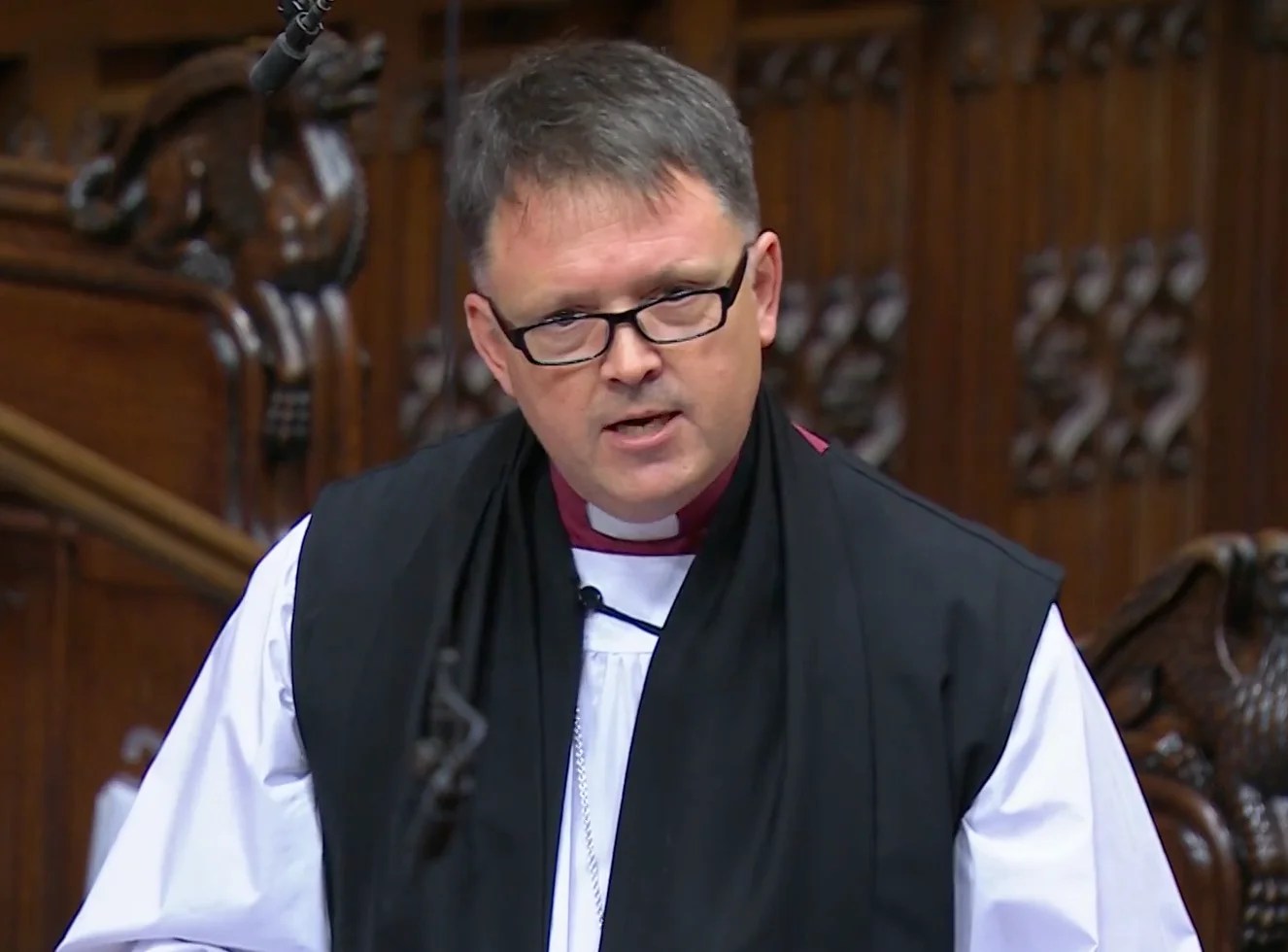
On 12th December 2025, Bishop of Norwich spoke in support of amendments to the Terminally Ill Adults (End of Life) Bill focused on ensuring training and resources given to GPs would also apply to Scotland in the event of the bill passing, and consideration of those living on the Scottish border:
The Lord Bishop of Norwich: My Lords, I support Amendments 17 and 309A, proposed by the noble Lord, Lord Beith, and so ably explained by the noble Baroness, Lady Fraser. I declare an interest, in that my wife is a GP and a medical examiner—so the Bill has had much discussion at home.
Having spent 10 years living in Northumberland, and having friends who live along the Scottish border, I know that many of those living sufficiently close to the border have chosen very deliberately to be registered with a Scottish GP because they then receive free prescriptions. This raises a number of questions for the noble and learned Lord.
Let us say that you live on the English side of the border, at Cornhill-on-Tweed, and your GP is in Coldstream. The sense of continuity of care that GPs give to their patients is vital to that GP-patient relationship. Indeed, this House was reminded of that yesterday in the excellent maiden speech of the noble Baroness, Lady Gerada:
“That continuity, seeing lives unfold across time, gives general practice its unique moral and social power. It allows us to see people as whole human beings, not as isolated organs or diagnoses”.—[Official Report, 11/12/25; col. 370.]
In supporting this probing amendment, I am interested to discover more about how that continuity of care that is so essential in primary health care can be continued.
If the Bill is passed here and such a Bill is passed in the Scottish Parliament, the approaches taken are likely to be very different, so I am keen to understand from the noble and learned Lord what discussions have taken place to give this House confidence that Scottish GPs will receive the required training in any system that might be in place for their patients who live just across the River Tweed.
My second question is about access to healthcare for those living along the England-Scotland border. If you live in Berwick-upon-Tweed, you may sometimes choose to attend the Borders General Hospital in Melrose, which is 37 miles away, or you can go down the A1—which has not yet been dualled—to the hospital in Cramlington, which is over 50 miles away. Although in Berwick there are the excellent Berwick “cancer cars”, driven by volunteers to help patients get to places, I can fully understand why this is process utterly exhausting for people.
People living in remote parts of the borders, faced with a long drive when they are not feeling well and needing to attend an appointment 55 miles away in Cramlington, for example, could have a greater sense of wanting to seek to end their life because of the stress and sheer exhaustion that comes with travelling such distances for cancer or other terminal illness treatments. I therefore ask the noble and learned Lord, what consideration has been given to those living in remote parts along the England-Scotland border?
Extracts from the speeches that followed:
Lord Rook (Lab): My Lords, my Amendment 19 would add a modest but important safeguard to Clause 1 by ensuring that a person seeking an assisted death has been registered with a GP practice in England or Wales for at least 12 months and has had at least two contacts with that practice in that period, whether in person, remotely or through a home visit. These are minimal thresholds. They do not obstruct genuine applicants. They would simply ensure that before someone seeks the assistance of the state in ending their life, there is at least some continuity of care—the importance of which the right revered Prelate the Bishop of Norwich has already stressed this morning.
To this end, a real relationship with the primary care system is important and prevents a terminal decision becoming subject only to a paper exercise. The Bill already requires 12 months of ordinary residence, but ordinary residence, as we discussed on the last day in Committee, can be, legally speaking, a somewhat elastic concept. A single GP registration can in practice be little more than having your name down on a list. The Government’s own equality impact assessment notes that access to GP services is uneven, that continuity of care is declining, and that patients in deprived or rural areas often struggle to obtain timely appointments.
Lord Blencathra (Con): I know that the noble Baroness is in favour of assisted dying, but what she said in one part of her speech yesterday was directly relevant to these amendments. The noble Baroness—I am rather vexed at the right reverend Prelate the Bishop of Norwich, who stole these lines earlier this morning—said:
“I became a GP in Kennington, and I have lived and worked in the community I serve ever since … My very first patient was a young woman who suffered a stillbirth. Decades later, I look after her children and now their children too. That continuity, seeing lives unfold across time, gives general practice its unique moral and social power. It allows us to see people as whole human beings, not as isolated organs or diagnoses. We are interpreters of experience, translators of suffering and witnesses to change”.—[Official Report, 11/12/25; col. 370.]
That is exactly the sort of GP I trust to make a decision on whether a person has a confirmed wish to opt for assisted dying—not just any general practitioner, who may never have met the patient before and has just 10 minutes to form an opinion.


You must be logged in to post a comment.