
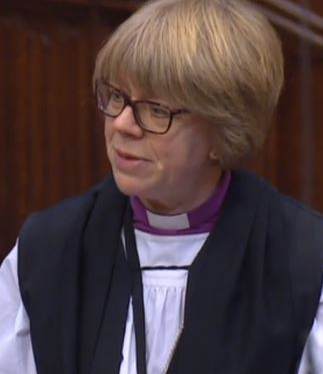
The Archbishop of Canterbury spoke during a debate on the proposed clause 208 of the Crime and Policing Bill on 18th March 2026, which would seek “to add the requirement of DPP consent for the institution of the criminal proceedings in Clause 208 against a woman acting in relation to her own pregnancy and reduces the limitation period for the offence,”, opposing the clause and supporting amendments on the safeguarding of under-18s accessing abortion services:
The Lord Archbishop of Canterbury: My Lords, many noble Lords will know that the Church of England’s view on abortion is one of principled opposition, recognising that there can be limited conditions under which abortion may be preferable to any available alternatives. This is based on the belief of the infinite worth and value of every human life, however old or young, and including life not yet born. The infinite value of human life is a fundamental Christian principle that underpins much of our legal system and has shaped existing laws on abortion. All life is precious. We therefore need to recognise that women confronted with the very complex and difficult decision to terminate a pregnancy deserve our utmost understanding, care and practical support as they face what is often a heart-wrenching decision.
However, I cannot support Clause 208. Though its intention may not be to change the 24-week abortion limit, it undoubtedly risks eroding the safeguards and enforcement of those legal limits and, inadvertently, undermining the value of human life.
I support Amendment 425 in the name of the noble Baroness, Lady Stroud, since it is not clear how the law can function in an enforceable way without in-person consultation before accessing early medical abortion. The risks of medical complications are, as we have heard, much greater if the pills for early abortion are taken beyond the 11-week limit. Although there are benefits to telemedicine—I do not dispute that—there are also flaws, and they are key to the debate on whether Clause 208 should pass.
As I have already said, this is not a debate on whether the legal abortion limit should change, but without the levers necessary to monitor and enforce the law, we are at risk of it becoming exactly that.
In the same vein, I support the amendment in the name of my right reverend friend the Bishop of Leicester, as we have a particular duty of care to those under 18 to ensure that they are properly cared for and supported while making such difficult decisions.
I am reminded of the call of the prophet Micah both to do justice and to love mercy. Balancing justice and mercy is the challenge that we are debating today. I do not think that women who act in relation to their own pregnancies should be prosecuted, but I also do not wish to see any increase in late-term abortions.
Although Clause 208 is well intentioned, it risks making an already imperfect situation worse. Therefore, I support Amendment 424 in the name of the noble Baroness, Lady Monckton.
Decriminalisation of abortion is a question of such legal, moral and practical complexity that it cannot be properly addressed in an amendment hastily added to another Bill. Consideration of any alteration to the abortion laws needs public consultation and robust parliamentary processes to ensure that every aspect of this debate is carefully considered and scrutinised.
There are many outstanding questions, which deserve greater attention, about the tone of policing in this area, about how we can best ensure that women suffering miscarriages can access the right care when they need it, and about how those who provide abortions outside the law will continue to be held accountable for doing so.
As I have said before in this place, we need a framework that supports women, not one that puts them and their unborn children in the way of greater harm. On that basis, I will support the amendments in the names of the noble Baronesses, Lady Monckton and Lady Stroud, and my right reverend friend the Bishop of Leicester should they push them to a vote.
 The Church of England in Parliament
You must be logged in to post a comment.