
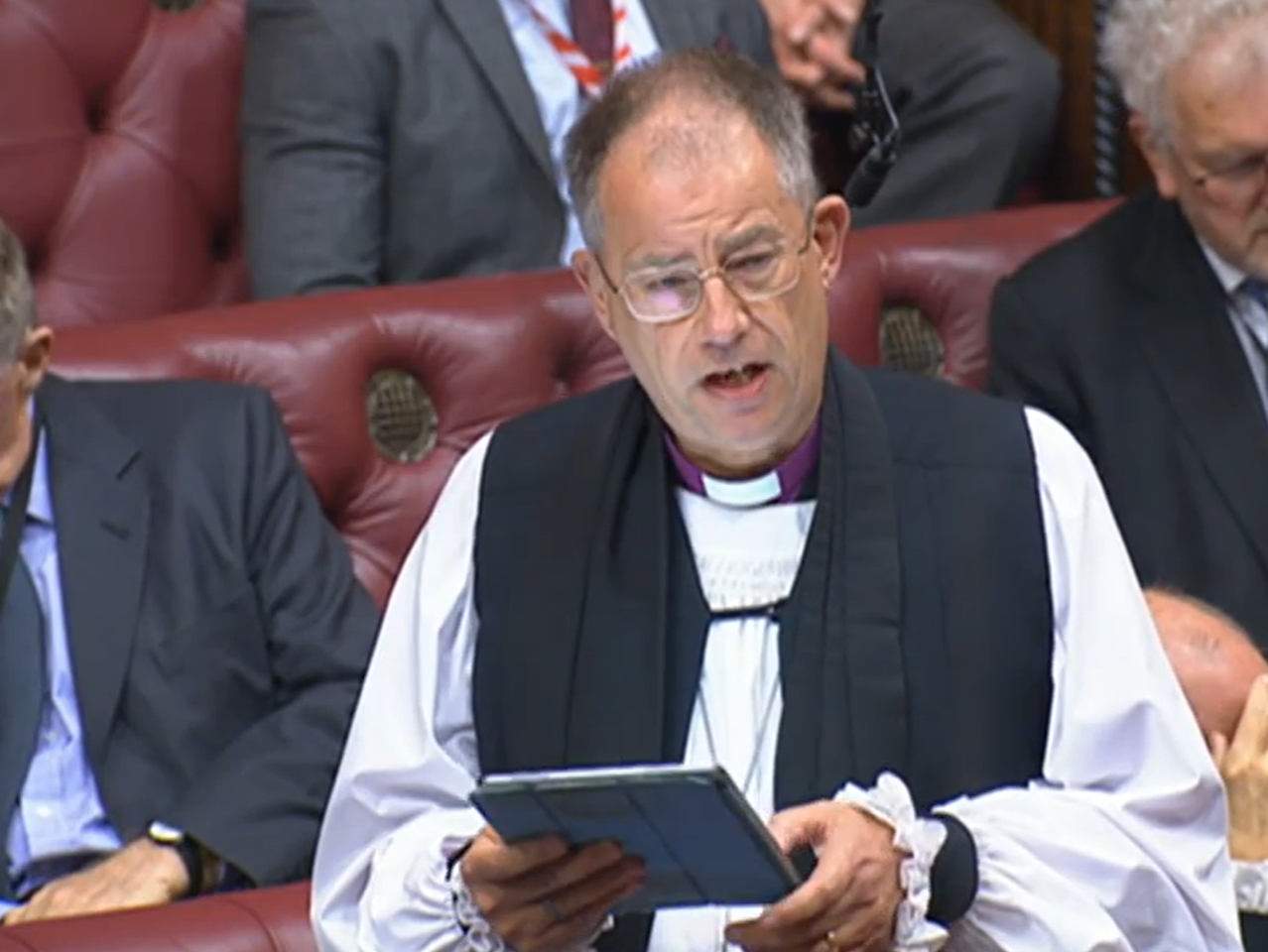
The Bishop of Oxford spoke on the issue of artificial intelligence during the King’s Speech debate on 19th May 2026:
The Lord Bishop of Oxford: My Lords, it is always a pleasure to follow the noble Baroness, Lady Kidron. I look forward to the maiden speeches to come.
In the words of the King’s Speech,
“an increasingly dangerous and volatile world threatens the United Kingdom”.
The Government will respond “with strength” and in line with
“the British values of decency, tolerance and respect”.
Not all threats are visible, though all need an intentional response.
The potential of artificial intelligence is clear, but there is rising public concern about the risks and dangers, both present and future. There is concern about employment and jobs being displaced by technology—which is already registering in statistics—and in the aspirations of the young. There is concern about the toxic effects of social media on public discourse. Nearly 1 million children are in the mental health system and, according to a report by Smartphone Free Childhood, youth worklessness has doubled over the last 10 years. There is concern about public truth, abuse perpetrated through and by chatbots, and increasing violence against women and girls. There is concern about the proliferation of AI in warfare, and there is growing concern about the international competition to develop general AI and the lack of guardrails for technology companies.
There are some things on technology in the King’s Speech to welcome, each of which will require careful scrutiny in this Chamber. However, for me, there is a massive hole in the centre of government policy in the area of online safety and security and the relationship between government and technology companies. The best interests of our citizens are simply not being served by a small number of global companies pledged to generate revenue and meet the demands of their shareholders. We are seeing, and will see, an increasing distortion of human dignity and value in the interests of profit. I look forward very much to Pope Leo’s forthcoming encyclical, Magnifica Humanitas, which will be on AI, to be published on Monday, and to your Lordships’ House exploring these issues in more depth on 5 June in the debate on human-centred AI, sponsored by the most reverend Primate the Archbishop of Canterbury.
Where in the gracious Speech is the legislative vehicle to deliver the urgent changes needed to the online safety regime? Where is the strategic approach to AI safety? Where is the careful balancing of ethics with innovation? Where are the laws binding development on superintelligent AI? Will the Minister please comment?
Finally, as the bishop of a diocese with over 280 schools, and which has two of our own MATs and is a partner in 22 further MATs, and on behalf of the Church of England, I welcome the proposed reforms of the special educational needs system. They align with the Church of England’s vision for education, centred on human dignity, belonging, inclusion and enabling every child to flourish, regardless of their needs or abilities. However, we need to pay much more attention to the ordering of the digital world our children will inhabit.
Extracts from the speeches that followed:
Baroness Morgan of Cotes (Non-Afl): I want to focus on the issues of tech and education. First, I welcome references in the gracious Speech to cyber resilience measures and the digital identity Bill, and I look forward to debating those. But as we have already heard, there will have to be much focus in this Session on online safety and the implications of new technology. I entirely support the remarks of the right reverend Prelate the Bishop of Oxford about the Online Safety Act version 2-shaped hole in the gracious Speech. I also support the remarks of the noble Baroness, Lady Benjamin, on the need for tech companies to have a licence for broadcasting to children, and on the impossibility otherwise of Ofcom enforcing successfully many of the obligations under the Online Safety Act.
Something we are looking forward to in this Session is the report on the under-16 social media ban, due fairly shortly thanks to the last-minute government amendment. The first report from the Secretary of State on how that consultation is to be implemented is due by the end of July and is of deep relevance to many families and many Members of this House. The House will also have to consider the impact of new technology, particularly AI chatbots, which the noble Baroness, Lady Kidron, has spoken about so powerfully not just today but in other debates.
I am reminded of the damage that AI-generated child sexual abuse material can do. The Internet Watch Foundation says that in 2025, it saw over 260 times more AI-generated child sexual abuse videos—more than 3,400 of them—than in 2024, when it saw 13. This is a growing problem.
Lord Clement Jones (LD): A number of noble Lords mentioned the technology and digital sovereignty aspect. The noble Baroness, Lady Kidron, and the right reverend Prelate the Bishop of Oxford spoke of the impact of technology. Rishi Sunak has admitted recently that he wishes he had spoken to the country more about the change that AI is going to bring. This Government have been equally reticent. As I mentioned, there is a rising lack of trust in AI and concern about its implications. This makes the absence of an AI Bill all the more inexplicable. My noble friend Lord Fox asked the question directly last week, and a number of noble Lords, including the noble Baroness, Lady Harding, and the noble Lord, Lord Taylor, asked the same question today. I will repeat it. Given that AI is set to affect every aspect of our economy, how can that be sensible? Ahead of artificial general intelligence, fragmented rules will not be adequate. We need binding comprehensive regulation—particularly, as the noble Lord, Lord Ranger, pointed out, in the world of money.
Lord Markham (Con): This being a King’s Speech debate on education, culture, technology and energy security, I must admit that, like the right reverend Prelate the Bishop of Oxford and the noble Baroness, Lady Freeman, I expected more of a strategic King’s Speech—a bigger picture, if you like, that sets out some of the challenges and the Government’s vision and values on how to address them. For instance, I expected a major AI plan, as the noble Lord, Lord Tarassenko, and my noble friend Lord Taylor said. I expected to hear how AI represents a generational opportunity to transform productivity and output, increase our human knowledge and free us from mundane tasks to enjoy our leisure time, improve our lives and create unprecedented wealth and prosperity.
I expected to hear about the generational threat that AI brings to certain types of jobs, to potentially many of our freedoms, to cyber security, and to the whole nature of modern warfare and the defence of this nation. Most of all, I expected to hear how we are going to ensure that the UK is in the AI fast lane, and about the dire consequences of being stuck in the AI slow lane—yet, as many have said, we do not even have an AI Bill.
Baroness Smith of Malvern (Lab, DfE/DWP): I now turn to the issues around technology and AI. First, in response to the contributions by the right reverend Prelate the Bishop of Oxford, the noble Baronesses, Lady Kidron and Lady Owen, my noble friend Lady Hazarika, and the noble Lord, Lord Carlile, this Government have been clear that we will be putting some form of age or functionality restrictions for online services in place for under-16s. Our consultation will determine the best route to do this. To ensure the safety and well-being of our children, we will act by the end of the year.
When this Government published the AI Opportunities Action Plan, we set out our ambition to ensure that Britain leads in shaping the AI revolution. AI has the potential to grow the economy, create good jobs and deliver huge societal benefits. We are making sure that we shape a future that works for all, not just a few at the top. We are building on Britain’s technological strengths and expanding our domestic capabilities through the £500-million sovereign AI fund to back British start-ups. At the same time, our AI growth zones are accelerating the delivery of data centres and bringing in billions in private investment, and we are working towards a copyright solution that both protects the UK’s creative industries and unlocks the potential of AI driven innovation. However, if we are to realise any of AI’s benefits, we need to make sure that it is safe. That is why we have taken important steps to ensure that most AI systems are already regulated at the point of use by our existing expert regulators.
The Government continue to act decisively to address harms where the evidence suggests it is necessary to do so. That is why we have taken powers in the Crime and Policing Act to bring unregulated chatbots into scope of the Act to mitigate illegal content risks like non-consensual intimate images and child sexual abuse material. We have also taken powers in the Children’s Wellbeing and Schools Act to ensure that we can act on the findings of the consultation, including, as I say, whether restrictions should be placed on children’s use of chatbots.
We recognise that AI capabilities are accelerating rapidly and bring the potential for serious risks. This is why we are strengthening cyber resilience through the cyber security and resilience Bill and a new national cyber action plan, while ensuring that AI is regulated at the point of use. We are also supporting our world-leading security institute, which is working with frontier developers to identify and mitigate model vulnerabilities to ensure that we understand and prepare for AI’s potential impacts.


You must be logged in to post a comment.