
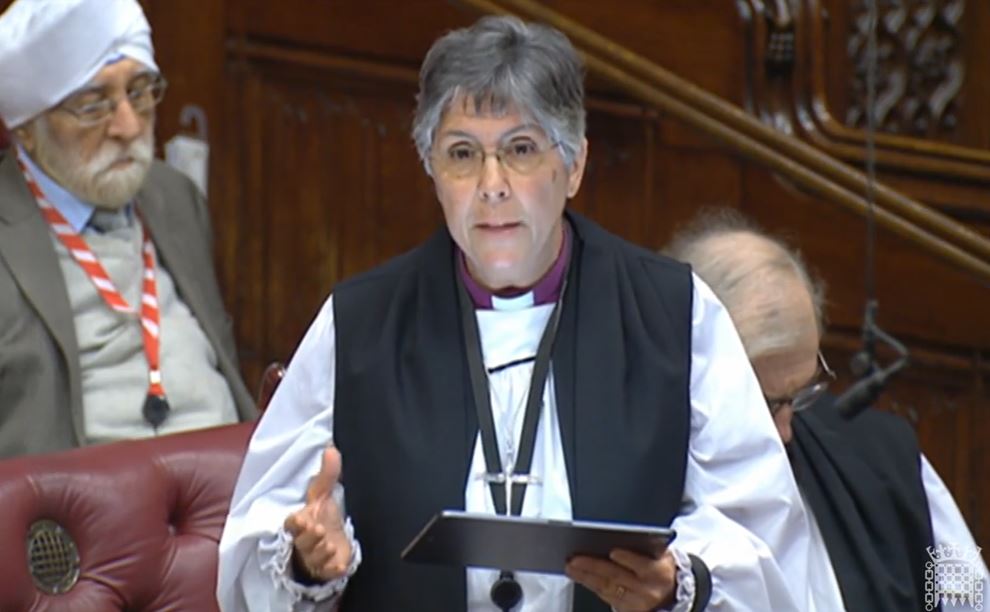
The Bishop of Chelmsford spoke in the King’s Speech debate on 20th May 2026 on the topic of housing, urging government action to tackle the crisis in housing affordability:
The Lord Bishop of Chelmsford: My Lords, as the Church of England’s lead bishop for housing, I commend the measures in the gracious Speech that will improve different parts of our housing system.
The housing affordability crisis threatens to unravel the unwritten social contract: that if you get a decent education and then work hard, you should be able to earn enough to save for a deposit, buy a home, get married, start a family and provide stability for your children until they can do likewise. While these proposed Bills are important and worth while, I urge the Government to use this forthcoming legislation to address the most acute part of the housing crisis: the affordability of homes, whether for rent or for purchase.
The social housing renewal Bill represents an opportunity to build more decent, affordable homes. Will the Minister consider allowing councils access to low-interest, long-term development finance on the same favourable terms as those given to housing associations?
It is important to complete the legislation in the leasehold reform Bill and to get it right, so that it delivers a fairer system and justice to those leaseholders who have suffered gravely at the hands of unscrupulous freeholders. At the same time, we need to recognise that legislative nuance may yet be required to preserve the heritage value of certain historical estates.
There is a fundamental moral case for correcting the imbalances, distortions and injustices in our housing system. First, there is the growing inequality between those with housing equity and those without. The former have seen their unearned housing wealth grow inexorably, whereas those whose income is derived solely from their labour watch the bottom rung of the housing ladder slowly receding from their grasp. Secondly, there is the lack of labour mobility. People struggle to relocate to where new jobs are emerging, which puts a drag on economic growth, productivity and incomes. Lastly, long-term damage is even more insidious. Prolonged high housing costs delay family formation and fewer children are born. Would-be parents cannot afford to stop work to raise a family unless one of them is a high earner. The consequences of demographic decline can be severe, including a shrinking workforce, a growing old-age dependency ratio and severe pressures on health and social care provision for an ageing population.
My second point is that there is a real danger that vital qualitative aspects of the housing that we need will be sacrificed in pursuit of arbitrary numerical targets. I encourage the Government to promote the language of building homes, not units, and creating communities, not developments, and places, not housing estates. We also need to ensure that the foundational infrastructure is delivered in a timely way. Good design also creates the shared green spaces where both nature and residents can thrive. The report of the New Towns Taskforce underscored this priority. Can the Minister provide assurance that the new towns unit is putting as much emphasis on the qualitative aspects of delivering new towns as the quantitative?
The Church of England is ready to support the soft relational side of place-making as we strive to offer a Christian presence in every community. We can provide schools, social housing and management of community centres. Our network of volunteers can offer a welcome and attend to the spiritual and social welfare of the residents. Together with other grass-roots charities and faith organisations, we can help build the relational networks that shape the character of any new community. I hope that we will not allow the pressure for action, acute though it is, to deter us from creating a housing system that our children and grandchildren will thank us for.


You must be logged in to post a comment.