
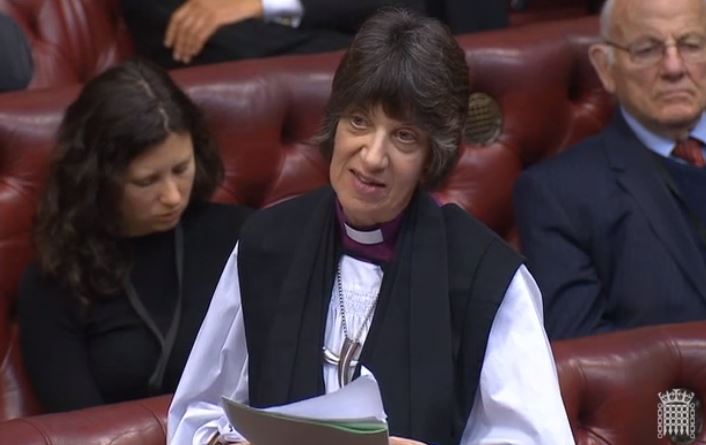
The Bishop of Gloucester tabled a question on efforts to promote women’s representation in peace processes in conflict-affected regions on 30th June 2026:
The Lord Bishop of Gloucester: To ask His Majesty’s Government what steps they are taking to promote women’s representation in peace processes in conflict-affected regions.
Baroness Chapman of Darlington (Lab, FCDO): My Lords, the Government are firmly committed to the women, peace and security agenda. We see women’s representation not as an addition to peacebuilding but as central to more effective conflict prevention and resolution. Over the last two years, we have supported women’s safe and meaningful participation in processes in Sudan, Colombia, Iraq, Myanmar, South Sudan, Syria and the Philippines, among others, and worked to integrate women’s perspectives into all UK support on conflict resolution.
The Lord Bishop of Gloucester: I am very grateful to the Minister for that Answer. Would she please say more about how the commitments in this plan will be translated into measurable, accountable outcomes, particularly where women’s participation remains limited? Could she also say how the Government are supporting female-led grass-roots organisations in conflict-affected regions through flexible, accessible funding?
Baroness Chapman of Darlington: We fund many such organisations. The right reverend Prelate is right to highlight the significant role that women and women-led organisations play, not just in negotiating. Processes that involve women are also more likely to be successful, and the peace that is secured is more likely to last—there is lots of evidence that this is the case. The outcome she asked me about, which eventually we would be looking to measure, is that we resolve more of the conflicts we see around the world. I have to say that, as of today, we are not seeing enough success.


You must be logged in to post a comment.