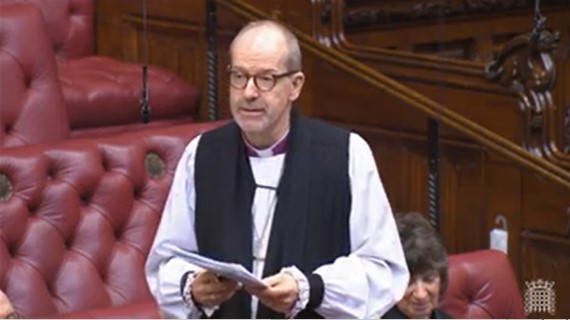
Bishop of Gloucester asks about release of prisoners on temporary licence

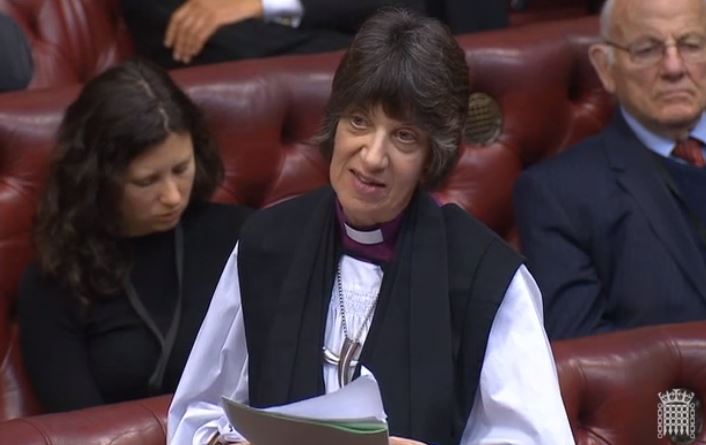
The Bishop of Gloucester asked a question on steps being taken to increase release of prisoners on temporary licence to encourage rehabilitation and help with finding work, during a discussion on employment of people with criminal convictions on 26th February 2024:

The Lord Bishop of Gloucester: My Lords, from these Benches I add our own sadness at the death of Lord Cormack. His contributions to this House and to the Church will be sorely missed.

As has been said, there has been a serious decline in rehabilitation and release planning services in recent years. Prisoners need to be engaged with purposeful work; there needs to be planning ahead of their release—including release on temporary licence—to secure employment, if we are to prevent reoffending. What steps are the Government taking to increase release on temporary licence?

Continue reading “Bishop of Gloucester asks about release of prisoners on temporary licence”

Church Commissioners Written Questions: Churches in Nigeria, Silent Discos, Asylum, Independent Safeguarding Board, CofE Staff, and Church Finances

On 26th February 2024, Andrew Selous MP, representing the Church Commissioners, gave the following written answers to questions from MPs:

Churches: Nigeria

Sir Edward Leigh MP (Con, Gainsborough): To ask the Member for South West Bedfordshire, representing the Church Commissioners, whether the Church has had discussions with the Foreign, Commonwealth and Development Office on the attack on the St Francis Xavier Church in Owo, Nigeria in 2022; and whether the Church is providing aid for the victims of that attack.

Continue reading “Church Commissioners Written Questions: Churches in Nigeria, Silent Discos, Asylum, Independent Safeguarding Board, CofE Staff, and Church Finances”

Bishop of St Albans asks about training on forced marriage

The Bishop of St Albans received the following written answer on 26th February 2024:

The Lord Bishop of St Albans asked His Majesty’s Government how many professionals the Forced Marriage Unit delivered training to in 2023; and how many people took the Forced Marriage Unit’s “Awareness of Forced Marriage” free online course in 2023.

Continue reading “Bishop of St Albans asks about training on forced marriage”

Bishop of Norwich asks about government plans to withdraw from the Energy Charter Treaty

The Bishop of Norwich received the following written answer on 26th February 2024:

The Lord Bishop of Norwich asked His Majesty’s Government what plans they have to withdraw from the Energy Charter Treaty.

Continue reading “Bishop of Norwich asks about government plans to withdraw from the Energy Charter Treaty”

Bishop of St Albans asks about domestic waste management systems

The Bishop of St Albans received the following written answers on 26th February 2024:

The Lord Bishop of St Albans asked His Majesty’s Government what assessment they have made of the impact of household waste and recycling centre closures on incidences of fly-tipping.

Lord Douglas-Miller (Con, DEFRA): We have previously commissioned research into the drivers, deterrents and impacts of fly-tipping that suggested any friction in the system relating to the use of Household Waste Recycling Centres (HWRCs), which have negative impacts on cost or convenience, can act as provocations for normally law-abiding people or businesses to fly-tip or give their waste to someone who goes on to fly-tip. The Environmental Protection Act 1990 requires waste disposal authorities to provide places for residents to deposit household waste. It is a Local Authority responsibility to manage suitable availability.

Continue reading “Bishop of St Albans asks about domestic waste management systems”

Bishop of Norwich asks about amount of development aid spent on ecosystem conservation

The Bishop of Norwich received the following written answers on 26th February 2024:

The Lord Bishop of Norwich asked what proportion of Official Development Assistance has been spent on ecosystem conservation, protection and restoration and tree planting internationally in the last five years, and what proportion of Official Development Assistance is forecast to be spent in these areas in the next budget period.

Continue reading “Bishop of Norwich asks about amount of development aid spent on ecosystem conservation”

Bishop of St Albans asks about Ash Dieback Disease

The Bishop of St Albans received the following written answer on 26th February 2024:

The Lord Bishop of St Albans asked His Majesty’s Government what assessment they have made of the number of ash trees infected with the fungus Hymenoscyphus fraxineus in the year 2023.

Lord Douglas-Miller (Con, DEFRA): The Government does not collect data on the number of individual ash trees that have become infected with ash dieback, but the disease is now present in all counties and is predicted to kill over 100 million trees in the UK. Hymenoscyphus fraxineus is spread via spores which can spread for considerable distances in the wind before infecting another ash tree. This means it is not possible to limit the spread of the disease. Some local authorities conduct annual surveys of ash trees to track local spread and decline and inform their management strategies.

Continue reading “Bishop of St Albans asks about Ash Dieback Disease”

Bishop of Worcester responds to government statement on the closure of the UK Interfaith Network

The Bishop of Worcester asked a question in response to a government statement on the closure of the UK Interfaith Network on 22nd February 2024:

The Lord Bishop of Worcester: My Lords, I too pay tribute to the work of the Inter Faith Network. As has been stated, surely the optics of this are not good. I would like to ask the Minister how far non-engagement extends, because surely, in our society, we want to encourage dialogue, even with those organisations that may express some views with which we disagree. To not be willing to engage at all with an organisation that has not been proscribed goes against all the efforts being made to bring our society together—it seems very strange.

Continue reading “Bishop of Worcester responds to government statement on the closure of the UK Interfaith Network”

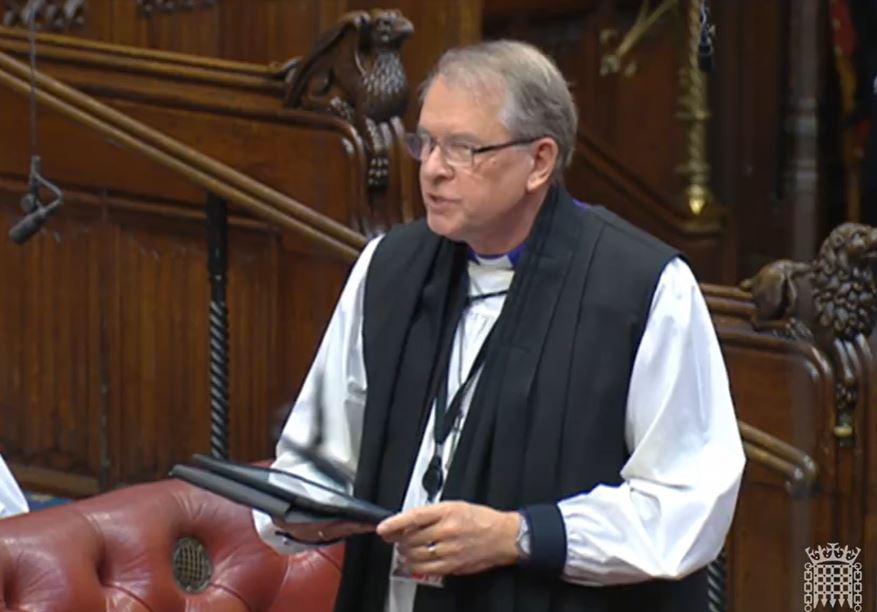
Bishop of Hereford makes maiden speech on poverty in rural communities

On 22nd February 2024, the Bishop of Hereford made his maiden speech during a debate on poverty reduction, focusing on tackling poverty in rural communities:

The Lord Bishop of Hereford: My Lords, I begin by recording my grateful thanks for the welcome and encouragement I have received since my introduction to your Lordships’ House. I am especially grateful for the forbearance of the staff as they have helped me navigate the labyrinthine corridors of this place, and to my colleagues for their patience in introducing me to the various procedures and protocols that govern our business.

I became the Bishop of Hereford in early 2020, just before the start of the first lockdown. The diocese of Hereford celebrates the 1,350th anniversary of its foundation in 2026—we are a diocese that predates the foundation of England. Indeed, the earliest timbers in the episcopal residence were acorns in the year 910. I have both worthy and ignoble predecessors in this role. I have already done better than four of them, who never actually came to the diocese at all. I hope not to emulate one of my Saxon predecessors, who, angered by the burning of the cathedral by the Welsh in 1055, took up arms with some of the canons and died in battle as a result. I also hope to avoid the fate of the cousin of the bishop who was murdered in the garden in 1256 on the coat-tails of his cousin’s unpopularity.

Hereford is the smallest and most rural diocese in England. We comprise the counties of Herefordshire and the southern half of Shropshire, one parish in Worcestershire and 14 in Wales. Sustaining a diocesan infrastructure with such a small base presents its challenges. For every 800 people who live here, we have one church building, and three-quarters of them are grade 1 listed.

Continue reading “Bishop of Hereford makes maiden speech on poverty in rural communities”

Bishop of Durham gives valedictory speech in debate on poverty reduction, calling for greater efforts to combat child poverty in the UK

The Bishop of Durham gave his valedictory speech in the House of Lords on 22nd February 2024, during a debate on poverty reduction, focusing on continuing high levels of child poverty and calling for poverty in the UK to be confronted as a national emergency:

The Lord Bishop of Durham: I am very grateful to the noble Lord, Lord Bird, for securing this debate on an issue of such importance and for the way that he introduced it. Also, because I have spoken on this issue repeatedly throughout my past 10 years as a Member of this House, it thus seems a fitting debate for my valedictory speech. I am very grateful to the noble Baroness, Lady Armstrong, for speaking straight after me. We have worked together on poverty in the north-east. I also look forward to the right reverend Prelate the Bishop of Hereford’s maiden speech.

During my maiden speech, I spoke of the high levels of poverty in my region of the north-east. Sadly, poverty, particularly child poverty, remains as significant an issue today as it was 10 years ago. Only last week, the North East Child Poverty Commission released its blueprint for tackling child poverty, featuring the latest poverty stats from 2021 to 2022, along with those recorded in 2014-15—the very year I entered this House. They reveal that, in 2021-22, there were around 134,000 children living in poverty in the North East Mayoral Combined Authority—an increase of over 7% since 2014-15.

But poverty is not just about numbers. Behind each statistic are the lives of children and the impact on them is all-encompassing. Poverty means going without the basic essentials. It means not being able to concentrate in school due to an empty stomach and not getting adequate nutrition; a packet of apples costs five times the amount of a packet of biscuits. Poverty means missed opportunities. It denies the chance to develop new skills through extra-curricular activities. Poverty means growing up too soon. It means dealing with stresses and anxieties with which no child should ever be burdened. It impacts the present and its effects last a lifetime.

Continue reading “Bishop of Durham gives valedictory speech in debate on poverty reduction, calling for greater efforts to combat child poverty in the UK”