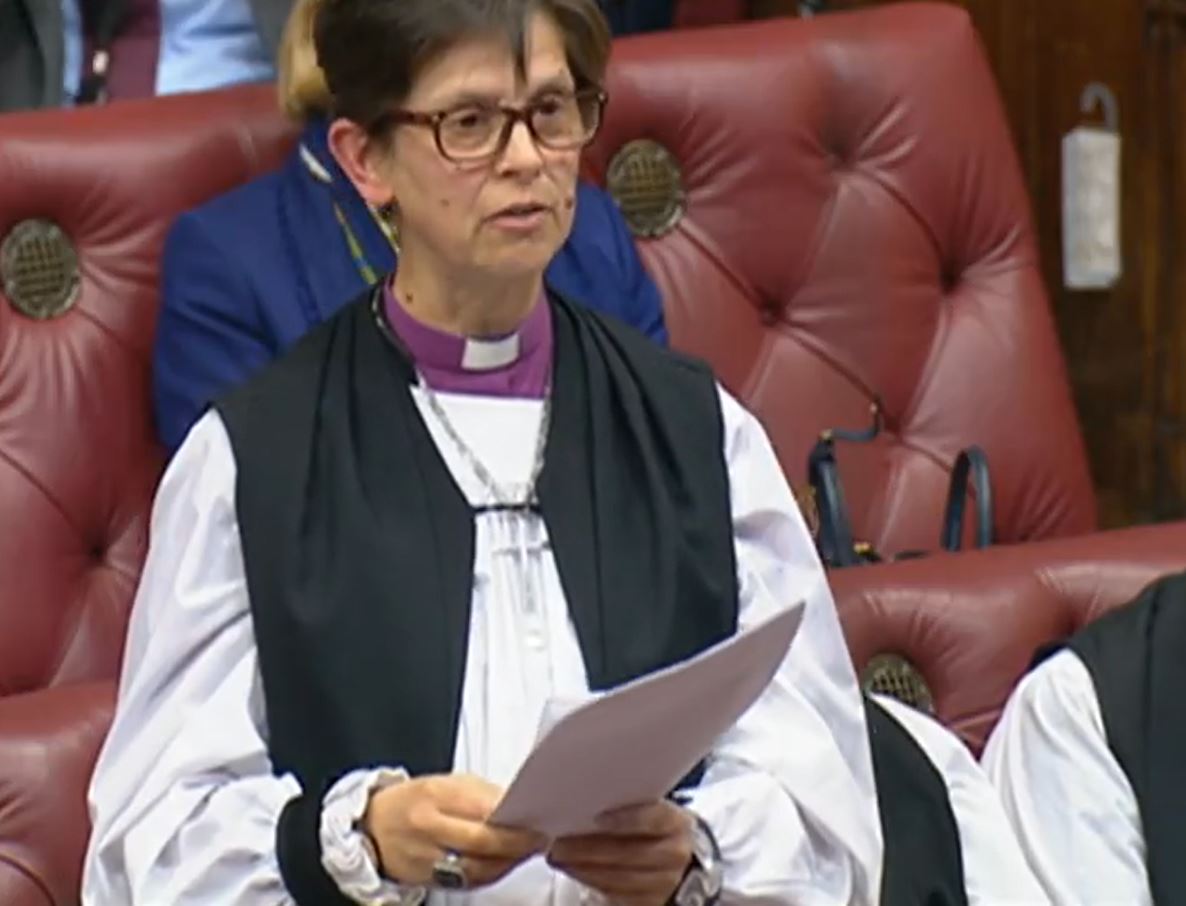
Bishop of Leicester asks about impact of benefit sanctions

The Bishop of Leicester received the following written answer on 13th November 2025:

The Bishop of Leicester asked His Majesty’s Government what recent assessment they have made of the impact of benefit sanctions on (1) the mental health of claimants, (2) levels of household debt, and (3) food bank use.

Continue reading “Bishop of Leicester asks about impact of benefit sanctions”

Sentencing Bill: Bishop of Gloucester questions lack of long-term planning in bill

On 12th November 2025, the Bishop of Gloucester spoke at the second reading of the Sentencing Bill, expressing concern at the lack of comprehensive long term planning in the legislation:

The Lord Bishop of Gloucester: My Lords, I declare an interest as Anglican bishop to His Majesty’s prisons in England and Wales. I, too, pay tribute to the late Baroness Newlove, not least in her role as Victims’ Commissioner. I want to echo so much of what the noble Lord, Lord Beith, and the noble and learned Lord, Lord Burnett, have just said, which has lifted my spirits.

There is much to welcome in this Bill. For example, as has been said, we know in general that short custodial sentences do more harm than good, so I am delighted that we are now seeing some evidence-based policy-making rather than policy shaped by media headlines. We also need to clarify our long-term vision and aims. As a Christian, I believe that every human being is made in the image of God and is created to live in interdependent relationship, and broken relationship sits at the heart of all brokenness. Strong relationship sits at the heart of all that is good and transformative. I thank the Minister for his introduction, but I am dismayed that we are setting the context of this Bill as overcrowded prisons and a current crisis. Surely our long-term vision and big picture is not simply about more prisons or even decent prisons, but ultimately about strengthening communities so that people flourish in a network of healthy and safe relationships.

Continue reading “Sentencing Bill: Bishop of Gloucester questions lack of long-term planning in bill”

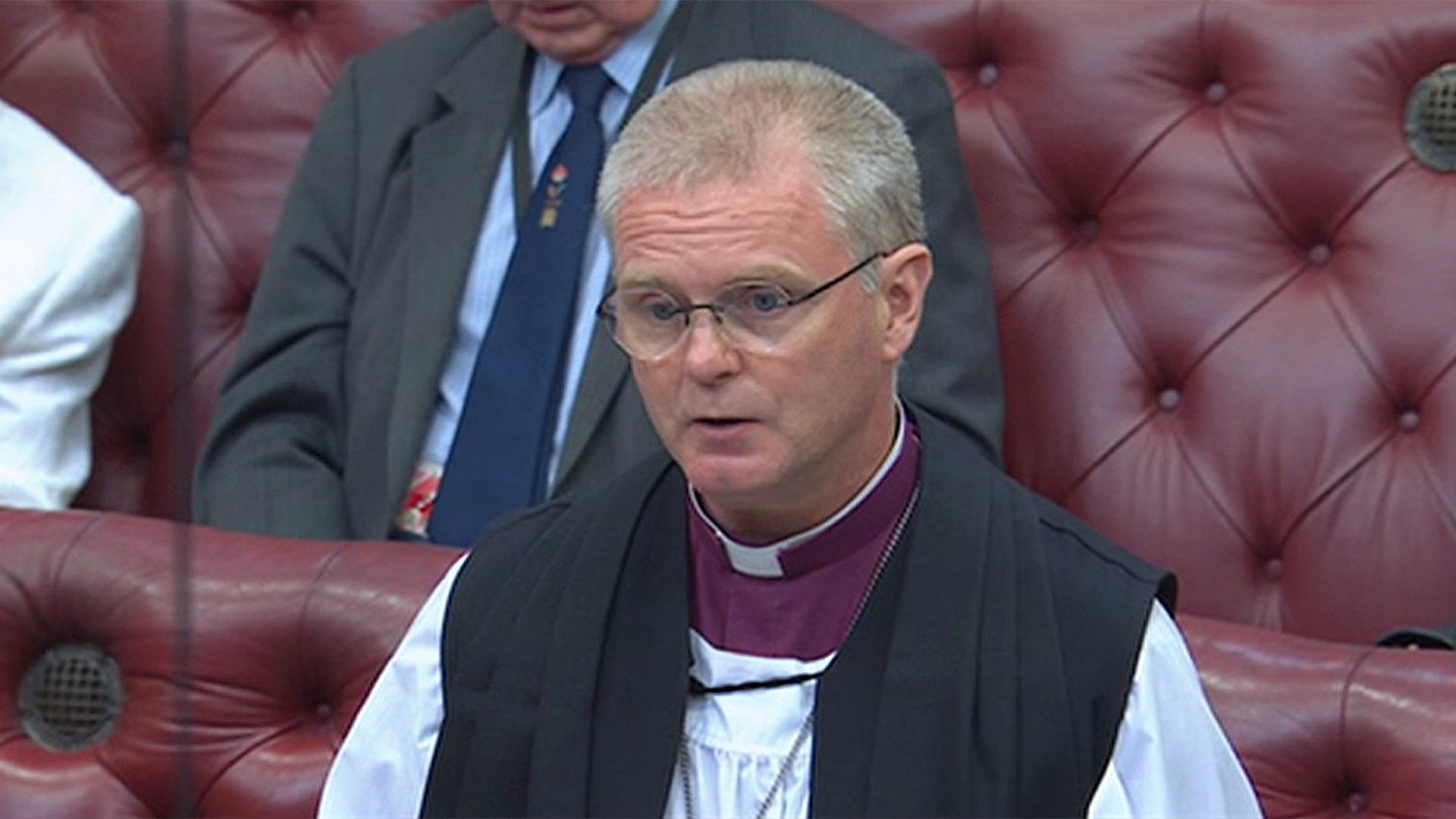
Bishop of Leicester asks about important role of the BBC World Service

The Bishop of Leicester asked a question on the important role of the BBC in providing trusted information through the BBC World Service Programme on 12th November 2025, during a discussion on recent changes in leadership at the BBC:

The Lord Bishop of Leicester: My Lords, I have just returned from a visit to a country in west Africa that I know very well, and which has sadly suffered a number of coups in recent years. However, I can testify first-hand that the role of the BBC in such situations is highly regarded. In a situation where people do not know where to turn to find out what is happening around them, and where there are huge amounts of fear and anxiety, it is to the BBC that they turn to find out what is happening. I believe that remains true today, even in the face of mistakes that have been made. Can the Minister reassure us that the BBC will continue to have the people and resources needed to play this vital role internationally?

Continue reading “Bishop of Leicester asks about important role of the BBC World Service”

Bishop of London asks about data collection on telemedical abortions

The Bishop of London asked a question on collection of data on the provision of telemedical abortions on 12th November 2025:

The Lord Bishop of London: My Lords, the extension of the regulations to enable early medical abortion to be provided without requiring in-person medical consultation was a significant change. We have heard about the tragic cases of early medical abortion pills being provided outside the law and women being put at risk as a result. We are now three years on from this change. What data has been collected in that time and what does it tell us about the workability of the new system in providing safe abortions within the law?

Baroness Merron (Lab, DHSC): The data available does not point to concerns about the provision of telemedicine. I should emphasise that, of course, abortions can take place only in an NHS hospital, in a place approved by the Secretary of State, or via telemedicine at the woman’s usual place of residence. Approval has to be given by the Secretary of State, and there is inspection by the Care Quality Commission, which inspects providers. The data thus far does not flag a difficulty in respect of telemedicine. In fact, all aspects of this are saying that this ensures that this safe procedure is assisting the situation for the women concerned.

Hansard

Church Commissioners Written Questions: Armed Forces – Ukraine

On 12th November 2025, the Second Church Estates Commissioner, Marsha De Cordova MP, gave the following written answer to a question from an MP:

Armed Forces: Ukraine

Mark Pritchard MP (Con, The Wrekin): To ask the hon. Member for Battersea, representing the Church Commissioners, what support the Church of England is providing to military chaplaincy training in Ukraine.

Continue reading “Church Commissioners Written Questions: Armed Forces – Ukraine”

Bishop of Leicester asks about benefit sanctions

The Bishop of Leicester received the following written answer on 12th November 2025:

The Lord Bishop of Leicester asked His Majesty’s Government what recent assessment they have made of the effectiveness of benefit sanctions in supporting claimants into sustained employment.

Continue reading “Bishop of Leicester asks about benefit sanctions”

Border Security, Asylum and Immigration Bill: Bishop of London supports amendments on freedom of religion and modern slavery

During a debate on the Border Security, Asylum and Immigration Bill on 11th November 2025, the Bishop of London spoke in opposition to two amendments aimed at potentially restricting claims of asylum for reasons of freedom of religion and modern slavery, pointing out the lack of evidence of any abuse of the baptism process by asylum seekers and the need to protect the safety of those under threat from religious discrimination:

The Lord Bishop of London: My Lords, I resist Amendment 79D. This amendment and Amendment 79E in the next group are both motivated by reports that asylum seekers are choosing to convert to Christianity upon arrival in the UK in order to support their claim for asylum on the grounds of religious persecution. Amendment 79E is of deep concern. I will address this in the next group.

Continue reading “Border Security, Asylum and Immigration Bill: Bishop of London supports amendments on freedom of religion and modern slavery”

Votes: Border Security, Asylum and Immigration Bill

On 11th November, the House of Lords debated the Border Security, Asylum and Immigration Bill. Votes were held on amendments to the bill, in which bishops took part:

Continue reading “Votes: Border Security, Asylum and Immigration Bill”

Border Security, Immigration and Asylum Bill: Bishop of Chelmsford tables amendment on ‘good character’ requirement

On 11th November 2025, the Bishop of Chelmsford The Bishop of Chelmsford tabled her amendment to the Border Security, Immigration and Asylum Bill which would “ensure the good character requirement is not applied contrary to the UK’s international legal obligations across a number of instruments. It also ensures that an assessment of good character may not take into account a person’s irregular entry or arrival to the UK if they were a child, and it may only be taken into account to the extent specified in guidance published and in force at the time of an adult’s irregular entry or arrival.”

The Lord Bishop of Chelmsford: My Lords, I declare my interests as per the register. I am grateful to the noble Lord, Lord German, and the noble Baroness, Lady Lister, for their support as signatories and for their guidance, especially as this is the first amendment that I have sponsored to a piece of legislation. My thanks go also to the noble Baroness, Lady Lister, for rightly explaining in my absence in Committee that I have tabled this amendment because I am passionate about the issues it raises: namely, how best to include, not preclude, those with a legal right to be here—those friends, neighbours and colleagues whom we live, work and worship alongside.

The Government’s change to the good character guidance, enacted through secondary legislation with retrospective implementation, in effect makes the “how” of a person’s travel to the UK a determining factor in their character assessment, not the “why” of the reason behind their travel in pursuit of sanctuary. This is a fundamental cultural shift and introduces a factor that bears no correlation to someone’s moral character, their worth and value or the contribution they might make to British society.

Continue reading “Border Security, Immigration and Asylum Bill: Bishop of Chelmsford tables amendment on ‘good character’ requirement”

Bishop of London asks about role and importance of churches in providing religious education

The Bishop of London asked a question on the importance of religious education following a government statement on the curriculum and assessment review on 10th November 2025: 

The Lord Bishop of London: My Lords, we are living in an increasingly complex world, and the study of religious education is critical in helping young people to navigate it. The need for understanding and dialogue across different faith groups and worldviews is increasingly obvious. The Church of England has welcomed the scrapping of the EBacc, because it has positive implications for religious education. At present, schools with a religious character provide the most comprehensive RE in the country. Will the Government commit to ensuring that these new proposals do not undermine this or the historic role that churches have in providing education in England?

Continue reading “Bishop of London asks about role and importance of churches in providing religious education”