The Bishop of St Albans received the following written answer on 14th December 2021:
The Lord Bishop of St Albans asked Her Majesty’s Government what discussions they have had, if any, with the Crown Estate regarding its purchase of a property from a company linked to President Aliyev of Azerbaijan.
Lord Agnew of Oulton (Con): Under the Crown Estate Act of 1961, The Crown Estate is operationally independent of government. Decisions regarding the sale and purchase of property are a matter for them.
The Bishop of St Albans received the following written answer on 14th December 2021:
The Lord Bishop of St Albans asked Her Majesty’s Government whether they (1) audit, and (2) monitor, the commercial UK real estate holdings of companies directly associated with regimes with poor human rights records.
Lord Callanan (Con): Monitoring of individuals, and any companies they may be associated with, for human rights abuses overseas is a matter for FCDO and HM Treasury, under the recently introduced Global Human Rights Sanctions Regulations 2020.
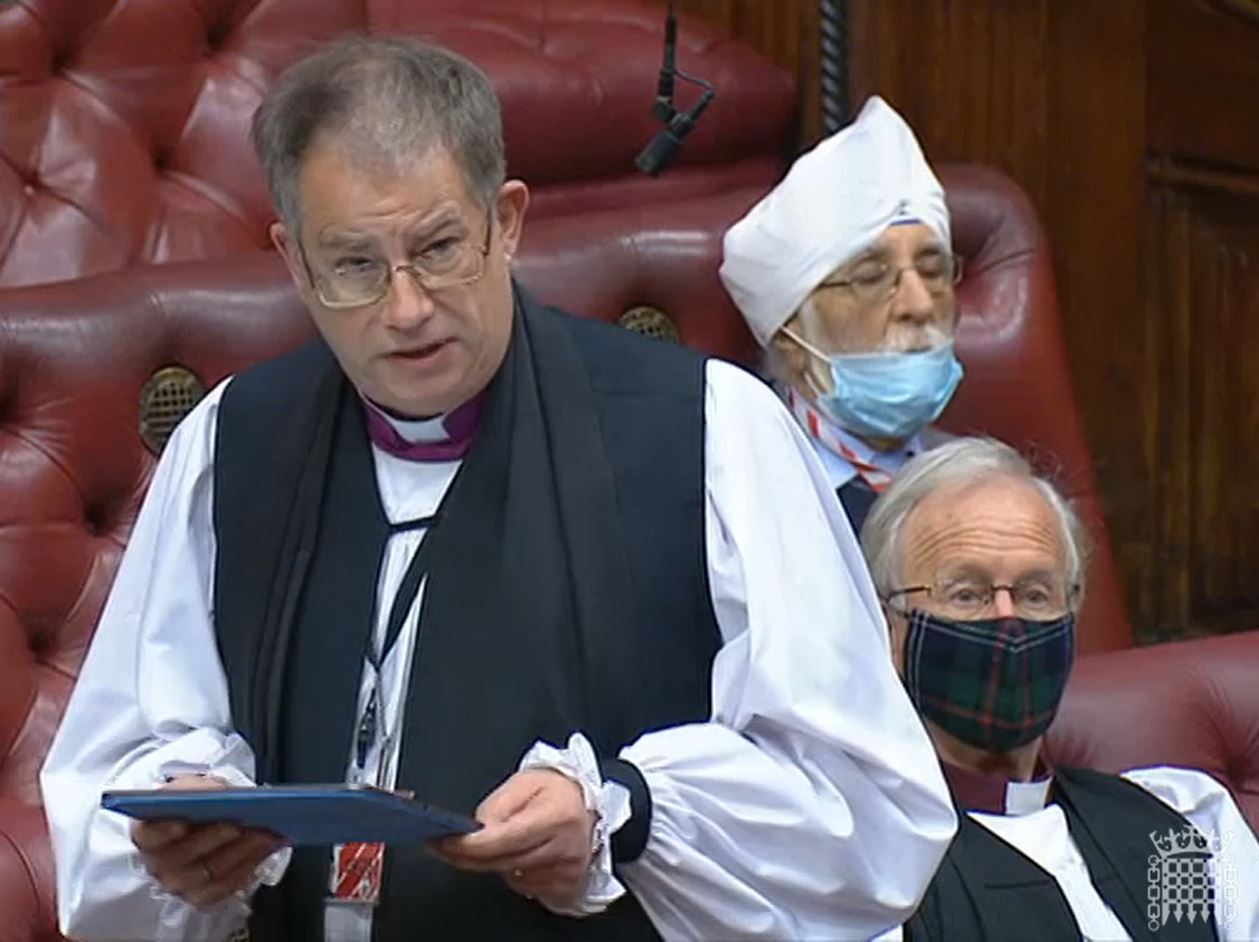
On 13th December 2021, during a debate on the Police, Crime, Sentencing and Courts Bill, the Bishop of Manchester spoke in support of amendments that would provide protection from eviction and homelessness for those from Gyspy, Roma, and Traveller communities:
The Lord Bishop of Manchester: My Lords, I declare my interests, first in my work with the National Police Chiefs’ Council, which has already been referred to today, secondly as chair of the Wythenshawe Community Housing Group, and lastly as deputy chair of the Church Commissioners for England, one of the largest owners of farmland in the country. I think I have almost as wide a range of interests as has this extraordinarily diverse and far-reaching Bill.
I am grateful to those noble Lords from across the House who have proposed and supported the amendments in this group and spoken to them so powerfully in this debate. Like others, I am also grateful to the Minister for generously taking time to engage with us last week.
In my short time so far as a Member of your Lordships’ House, I have become accustomed to Ministers telling us that they have sympathy for our position but that the present Bill is not the way to address the matters that concern us—for example, when we tried to look at safety in high buildings on the then Fire Safety Bill. I do not see why we cannot play the same card. We need a separate Bill, one that deals comprehensively with the needs as well as the obligations of Gypsy, Roma and Traveller people—not simply legislation that offers fresh and very serious penalties for what may be rather minor infractions. The matters addressed in these clauses would surely be better dealt with in that more balanced context. That would allow Her Majesty’s Government to deliver on their manifesto commitment.
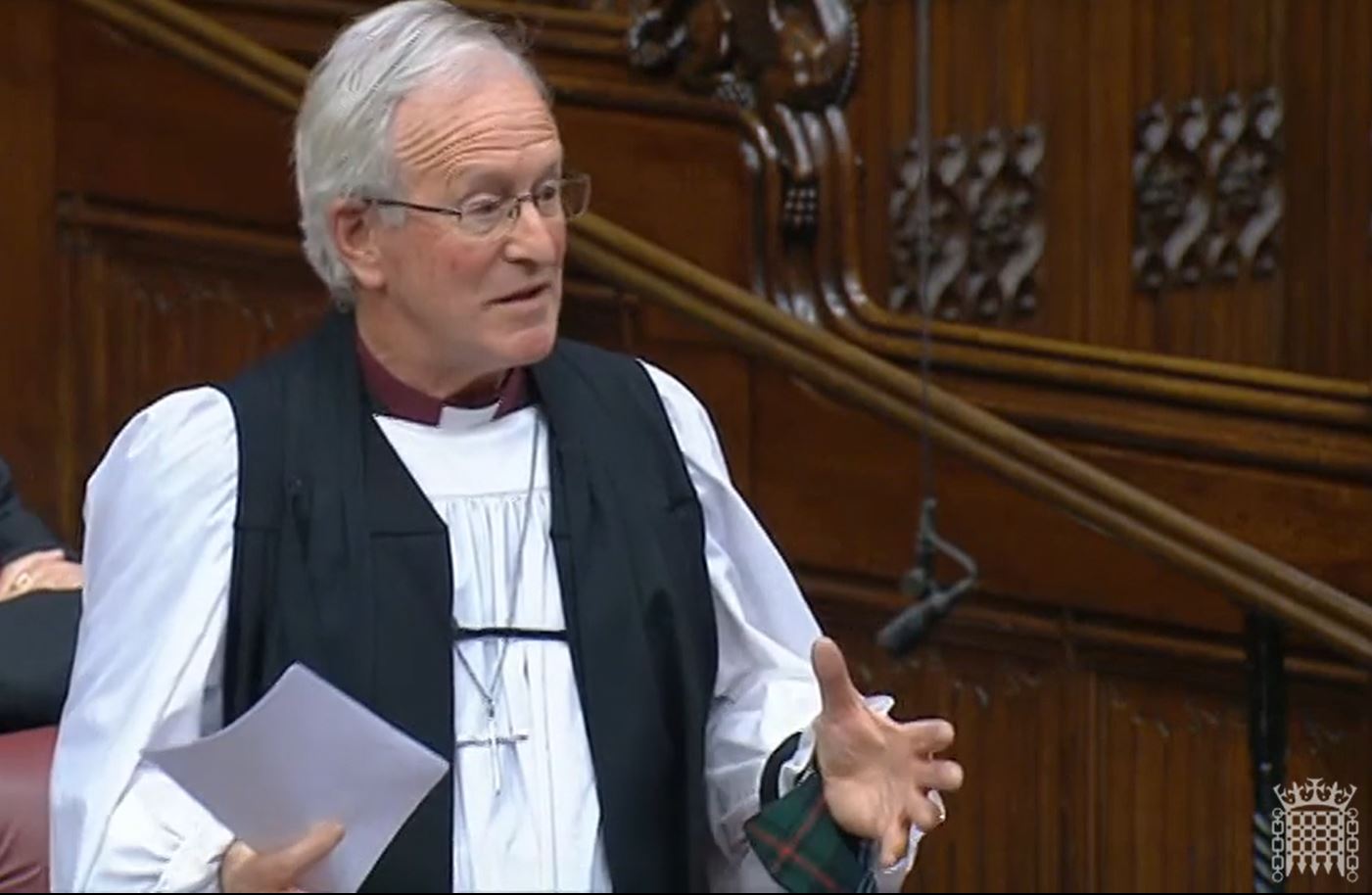
On 13th December 2021, the House of Lords debated the Police, Crime, Sentencing and Courts Bill in the second day of the report stage. The Bishop of Leeds spoke in the debate, following an amendment from Baroness Chakrabarti on digital extraction of information from devices by police, highlighting issues regarding lack of understanding of technology and the need to communicate with young people:
The Lord Bishop of Leeds: My Lords, especially following the speech by the noble Lord, Lord Carlile, I am conscious that I have no conception of what the world looks like through the eyes of my grandchildren. When I was their age there were three channels on television, which began at 4.40 in the afternoon with “Jackanory”. The world has changed considerably and, although I have tried to keep up with technology, professionally and personally, I am aware that I cannot see the world into which we are moving. We are not ahead of the game.
On 13th December 2021, the House of Lords debated the Police, Crime Sentencing and Courts Bill in the report stage. Votes were held on amendments to the bill, in which Bishops took part.
The Bishop of St Albans asked a question on capacity to educate doctors from overseas as part of the Global Britain Initiative on 13th December 2021, during a debate on the amount of training places available in UK medical schools:
The Lord Bishop of St Albans: My Lords, this latest Covid omicron variant has made us realise that we are one human race, and we are now facing a scandal whereby we are relying on bringing in doctors from some of the poorest parts of the world to look after our needs. For centuries, this country was renowned for sending doctors and nurses abroad and founding hospitals in all parts of the world. What consideration have Her Majesty’s Government given to ensuring not only that we are producing enough of our own doctors =but that we are expanding our tertiary education and bringing in more people to send them back to help some of these countries as part of our global Britain initiative?
“When people are too scared to express their genuinely held and legally protected beliefs, that is very dangerous for democracy.”
On 10th December 2021 in the House of Lords the Archbishop of Canterbury held a debate on freedom of speech. His opening and closing remarks are below, and the full debate including the contributions of Peers and the Opposition and Government response, can be read in Hansard, here.
Moved by The Archbishop of Canterbury: That this House takes note of contemporary challenges to freedom of speech, and the role of public, private and civil society sectors in upholding freedom of speech.
The Archbishop of Canterbury: My Lords, I am most grateful to the Leader of the House, the usual channels, all noble Lords who have taken the trouble to be here today and, especially, the noble Lord, Lord Parkinson, for answering on behalf of the Government in order that we may have this debate. It is a return to an Advent tradition, interrupted in recent years by elections and pandemics. Should your Lordships worry that I am infectious in some way, I have been tested to the limits of testing. I have my granddaughter’s cold, for which I would like to record my grateful thanks.
We on these Benches have our critics—I have a large number—but for all our present failings you would be hard-pressed to find a more disastrous move by the Lords spiritual than when, in 1831, 21 of them lined up behind the Duke of Wellington and opposed the Great Reform Bill. Had they voted the other way, it would have passed. The people, denied their rights, responded with riots, and bishops were particularly targeted, some with violence. In Bristol, the Bishop’s Palace was burned down. A dead cat was thrown at my predecessor Archbishop Howley, narrowly missing him but striking his chaplain in the face. “Be glad it wasn’t a live one,” Howley is reported to have responded.
I start with this dive into the past because it illustrates a present point. The grey area between, on the one hand, peaceful protest and reasoned criticism and, on the other, incitement to hatred or to violence is one that we are still trying to navigate today. The Church of England knows about that. I must start by suggesting that our society should never follow our historical example of coercion, Test Acts and punishment. There is still a prison at Lambeth Palace at the top of the Lollards’ Tower, with room for eight people. It was used for the Lollards—I have a little list.
“search engines free of advertising, social networking freed from the blind pursuit of profit, messaging services which do not mine our data—and all protecting the rights of the child? Perhaps the Government might be willing to explore this kind of radical intervention—social media in public service—in this vital area”
On 10th December 2021 the Bishop of Oxford spoke in a House of Lords debate led by the Archbishop of Canterbury on contemporary challenges to freedom of speech and the role of the public, private and third sectors in upholding it:
The Lord Bishop of Oxford: My Lords, it is a great privilege and honour, as always, to follow the noble and right reverend Lord, Lord Harries, one of my distinguished predecessors. I am grateful for this timely debate and to the most reverend Primate for his very comprehensive introduction. In a few days’ time, as we have heard, the scrutiny committee of both Houses will publish its report on the online safety legislation: a potentially vital web of provisions to prevent harm to individuals and, I hope, to society.
“civil society and faiths can create and convene safe spaces where difference can be spoken with care and understanding can be deepened, truth revealed and progress made towards a common good”
On 10th December 2021 the Bishop of Birmingham spoke in a House of Lords debate led by the Archbishop of Canterbury on contemporary challenges to freedom of speech and the role of the public, private and third sectors in upholding it
The Lord Bishop of Birmingham: My Lords, as we have been hearing, speech is one of the most precious gifts for humanity, freedom of which is easy to take for granted, as we may do from week to week in this House, but even easier to abuse. Speech is so important that, at this season of the year, for people of Christian tradition, we even call the son of God’s appearance the word of God—the word made flesh
In the same scriptures in which we read that story, there is warning of the danger of the use of the tongue:
“If anyone thinks he is religious and does not bridle his tongue but deceives his heart, this person’s religion is worthless.”
Of course, I do not refer to anyone who stands on the platform at Speakers’ Corner or any other venue of that kind. We remember also
“the tongue is a small member, yet it boasts of great things. How great a forest is set ablaze by such a small fire!”—
the blaze of instant phone recordings or a tweet out of context.
The Bishop of Durham received the following written answer on 10th December 2021:
The Lord Bishop of Durham asked Her Majesty’s Government whether 14 residents in a dormitory meets the UKHSA recommendations for a COVID-19 compliant environment; and if so, what guidance informed this recommendation.





You must be logged in to post a comment.