
 On 3rd April 2019 Baroness Whitaker asked the Government “whether they intend to implement the recommendations of the report of the Joint Committee on Human Rights, Immigration Detention (HL Paper 279), published on 7 February, in particular those related to indefinite detention.” The Bishop of Durham, Rt Revd Paul Butler, asked a follow-up question:
The Lord Bishop of Durham: My Lords, the Joint Committee’s report recommends that initial detention decisions be reviewed by a judge within 72 hours. Can the Minister explain why the usual standards of British justice should not apply here? Continue reading “Bishop of Durham asks Government about timescale of immigration detention review”
 On 2nd, 3rd & 4th April 2019 the Bishop of Durham, Rt Revd Paul Butler, received answers to three written questions on the benefit cap policy.
 The Lord Bishop of Durham: To ask Her Majesty’s Government what assessment they have made of the rising tensions between Rwanda and Uganda; and what steps they have taken to reduce tensions.
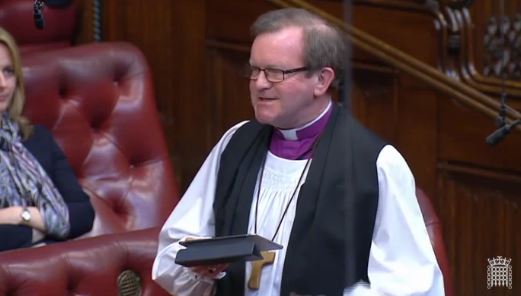 The Lord Bishop of Portsmouth: My Lords, it is as ever a pleasure to speak in your Lordships’ House, but today perhaps I feel the privilege especially. I cannot report that, 70 years ago, a Bishop contributed to this House’s debate on the founding of NATO. Without the personal, military, diplomatic or political experience to which the Minister alluded, I am grateful for the forbearance of your Lordships in listening to my contribution today.
 The Lord Bishop of Peterborough: My Lords, I am most grateful to the noble Lord, Lord McInnes, for raising this important Question. I draw attention to my non-financial interest as a vice-president of the Leprosy Mission. I hasten to add that, to the best of my knowledge, that excellent organisation has not been infected by the scourge of corruption.
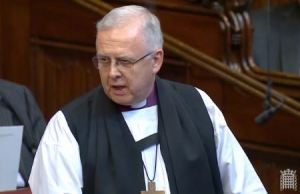 The Lord Bishop of Peterborough: My Lords, I thank the Minister for the answers he has given so far and for the Government’s investment. In the city of Peterborough we have seen, as in many other places, a large increase in rough sleeping. The third sector groups, including the churches, have been doing a great deal to support rough sleepers, but one of the problems we are very conscious of is how tight money is for local government. Does he agree that local government financial settlements could be part of the solution, with targeted money to local government specifically to help rough sleepers?

You must be logged in to post a comment.