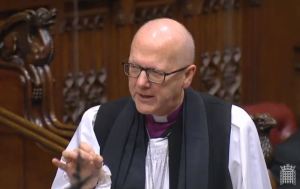
 The Lord Bishop of St Albans: To ask Her Majesty’s Government what is their current assessment of freedom of religion in China.
The Minister of State, Foreign and Commonwealth Office (Lord Ahmad of Wimbledon) (Con): My Lords, there are several recognised religions in China, with tens of millions of practising Christians, Muslims and Buddhists, among others. However, we are deeply concerned about developing restrictions on freedom of religion or belief in China, including reports that authorities are tightening control over how certain religions are practised. At the United Nations Human Rights Council last month, I raised directly our concerns about restrictions on freedom of religion or belief in China, including on Muslims and Christians in Xinjiang.
The Lord Bishop of St Albans: I thank the Minister for his reply. There are deeply worrying reports coming out of China, not least about persecuting the Christian churches there—an ancient Christian church there was founded in the 7th century. Will he comment particularly on the developing situation concerning Uighur Muslims and the development of the network of re-education camps in Xinjiang province? What representations have Her Majesty’s Government made and what are they planning to do?

 On 9th April 2019 the Bishop of Gloucester, Rt Revd Rachel Treweek, received written answers to two questions about asylum decisions and consultation with religious communities:
 On 8th and 9th April 2019 the Second Church Estates Commissioner, Rt Hon Dame Caroline Spelman MP, answered five written questions from Sir John Hayes MP on a diverse range of issues: evangelical congregations, the 2020 Lambeth Conference, lay membership, pastoral support for women with unplanned pregnancies, and increasing church attendance.
 The Lord Bishop of London: My Lords, I add my voice to those of my friends, the right reverend Prelates who sit on these Benches, who have welcomed this White Paper as a first step. Many of the platforms that would fall under the proposed regulator are based overseas. I hope that the proposals set out in the White Paper will give sufficient power to any regulator to hold these and future international companies to account.
 The Lord Bishop of London: My Lords, I thank the noble Baroness for her answers so far. Can I pick up the issue of children? As the Bishop of London, I am very grateful for the ultra-low emission zone being implemented today. Can the Minister reassure us that money is going to be put into research to ensure that we know the long-term effects on the health of those children who have already incurred high emissions?
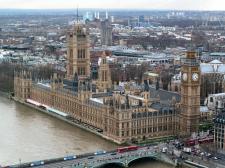 This week in the House of Lords bishops spoke on the 70th anniversary of NATO, charities and anti-corruption measures, and voted on procedure for the European Union (Withdrawal) (Number 5) Bill. They asked questions about rough sleepers, religious freedom in China, street preachers, religious literacy in asylum applications, immigration detention, the benefit cap, Rwanda and Uganda, hare coursing. In the House of Commons the Second Church Estates Commissioner answered questions from MPs on mining companies and dam safety, and forestry holdings.
 On 3rd April 2019 the Minister for Equalities, Baroness Williams of Trafford, repeated a statement made in the House of Commons by the Home Secretary, Sajid Javid, about the Windrush Compensation Scheme. The Bishop of Peterborough, Rt Revd Donald Allister, responded with a follow up question about religious literacy in determining asylum applications:

You must be logged in to post a comment.