

On 31st October 2017 a Government statement on its new consultation on fixed-odds betting terminals was repeated in the House of Lords. The Bishop of St Albans, the Rt Revd Alan Smith, responded to the statement :
The Lord Bishop of St Albans: My Lords, last year, there were more than 200,000 occasions when gamblers on FOBTs lost more than £1,000 at a single sitting. All other forms of gambling with stakes of more than £2 are restricted to premises such as casinos, which do not have open access and are not on the high street. Does the Minister agree that the only way to rectify the mistake of the 2005 Act and restore logic and order to the gambling regime is to support a £2 stake?
Continue reading “Bishop of St Albans urges Government to support a £2 stake for betting machines”
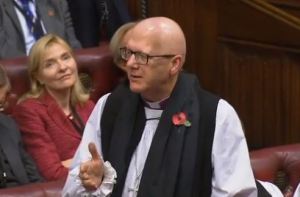 The Bishop of St Albans, Dr Alan Smith, has responded to the Government’s announcement today of The Triennial Review of Stakes and Prizes.
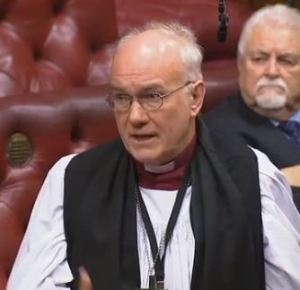 The Lord Bishop of Chester: My Lords, I very much welcome the report; I have simply read the executive summary. It is obviously important to respond well after death occurs, but equally, arguably, it is even more important to put in place measures to reduce the possibility of death. This is where the healthcare provision in the police service is especially important. Given that the NHS has a direct responsibility to provide healthcare in prisons but does not have an equivalent responsibility for those in police care, and given that for half the people the cause of death is alcohol and drug-related, is there not a need to join up A&E, the police, the whole NHS and police support? It is no doubt complex, but at the heart of this lies quite a simple issue. This ought to be brought within the ambit of the NHS, which is the case with prisons.
  The Archbishop of Canterbury: I declare an interest as having members of the family who have used child and adolescent mental health services. Does the Minister not agree that the fundamental principle of the NHS is free treatment at the point of need? Does he also agree that one of the major failures in CAMHS—it has been well evidenced by academic studies over the last two years—has been that, because of the shortage of resources, only those with the most critical needs are treated at all, and the early intervention which would help prevent needs becoming critical has been deeply neglected owing to an absence or lack of specialised therapies, particularly talking therapies? Will he confirm that the work on the most critical side is going to be extended so that children and adolescents can get care earlier and more effectively, saving the state money and fulfilling the purposes of the NHS?
  The Lord Bishop of Oxford: My Lords, does the Minister agree that incentivising people back into work and supporting the poorest in our society, including children, are not mutually exclusive? Will she comment on the ways of doing the second alongside the first? Will she also set out the Government’s plans to remedy the current situation, in which the poorest of the poor are falling further behind?
  The Lord Bishop of Durham: To ask Her Majesty’s Government, further to the remarks by the Secretary of State for Work and Pensions on 9 October (HC Deb, col 4), whether they will publish the evidence supporting his statement that the roll-out of Universal Credit will mean that 250,000 more people will be in work.
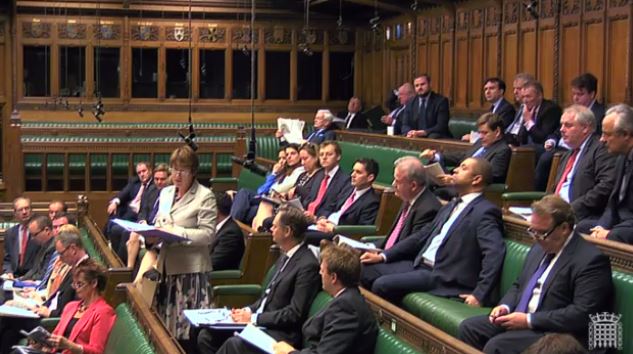
  This week in the House of Lords bishops spoke in debates on the liberation of Raqqa, intergenerational fairness, Rohingya refugees, air and water pollution and the Political Activity (Funding and Expenditure) Bill. They asked questions about automatically increasing credit card limits, animal welfare, counter terrorism and private renters with budgetary problems. The Second Church Estates Commissioner hosted a debate on teaching English to refugees and spoke in a debate about modern slavery, highlighting the work of The Clewer Initiative. She also answered questions in the House of Commons on income inequality, the Heritage Lottery Fund, clergy vocations, the oppression of Christians overseas and same-sex marriage.
 The Church of England in Parliament
You must be logged in to post a comment.