 This week in the House of Lords bishops spoke in a debate on facial recognition technology and asked questions about disabled access, minimum unit pricing for alcohol, immigration detention, support for students with learning disabilities, and free school meals for children in poverty. Continue reading “Week in Westminster, 26th February – 2nd March 2018”
Author: parliamentaryunit
Time to recognise mothers’ names – Bishop of St Albans and Caroline Spelman
The following article was published in the Church Times on 2 March 2018:
Time to recognise mothers’ names

Our Bill will right an injustice and lessen clergy burdens, say Alan Smith and Caroline Spelman.
THE current system of marriage registration contains a clear and historic injustice. Only the couple’s fathers’ names are formally recorded when the marriage is registered. This practice, unchanged since 1837, means that mothers are systemically overlooked on a day that celebrates the creation of a new family.
We have, therefore, chosen to introduce identical Bills in the House of Lords and the House of Commons to ensure that mothers’ names are equally recognised when marriages are registered (News, 2 February). MPs from all main parties have supported calls for reform, and a 2014 petition asking the Government to include mothers’ names received more than 70,000 signatures.
Continue reading “Time to recognise mothers’ names – Bishop of St Albans and Caroline Spelman”
Bishop of St Albans asks for wider debate on use of facial recognition technology
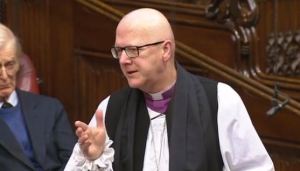 On 1st March 2018 Baroness Jones of Moulsecoomb led a debate in the House of Lords on her question to Her Majesty’s Government ‘what proposals they have for the use of facial recognition technology in security and policing.’ The Bishop of St Albans, Rt Revd Alan Smith, spoke in the debate:
The Lord Bishop of St Albans: I too thank the noble Baroness, Lady Jones of Moulsecoomb, for this debate. My guess is that most of us see some very useful ways in which this technology can be used, but many people are also concerned that it may have other uses as well, which they are less keen on. Continue reading “Bishop of St Albans asks for wider debate on use of facial recognition technology”
Bishop of Salisbury asks Government about standards of disabled access

On 28th February 2018, Baroness Deech asked Her Majesty’s Government “what steps they have taken to address the criticism in the 2017 report of the United Nations Committee on the Rights of Persons with Disabilities of the lack of obligatory and implemented accessibility standards in the United Kingdom, in particular in relation to transport and the physical environment.” The Bishop of Salisbury, Rt Revd Nicholas Holtam, asked a follow-up question:
The Lord Bishop of Salisbury: Does the Minister agree with the UN committee’s concern that not enough is being done to apply the Convention on the Rights of Persons with Disabilities and to involve disabled people themselves in decisions that affect their lives? What have the Government heard from disabled people themselves about the impact of austerity on their access to the physical environment and to housing, transport, information and other services? How will the Minister respond to disabled people’s concerns about the UK’s increasing non-compliance with existing legislation affecting their access to these things—for example, our meeting the obligation to carry out impact assessments and gather statistics about policies likely to have a disproportionately negative impact on disabled people?
Continue reading “Bishop of Salisbury asks Government about standards of disabled access”
Bishop of Southwark asks Government about Minimum Unit Pricing of alcohol
On 28th February 2018, Lord Rennard asked Her Majesty’s Government “what assessment they have made of the costs benefit to the National Health Service and police of introducing minimum unit pricing for alcohol in England.” The Bishop of Southwark, Rt Revd Christopher Chessun, asked a follow-up question:
The Lord Bishop of Southwark: My Lords, the report of the University of Sheffield referred to earlier said that the top 30% of drinkers consume 80% of all alcohol consumed, as measured in pure ethanol; and that, of the beer sold in supermarkets, a disproportionately high amount is sold on promotion—and much of that well below 50p per unit. Does the Minister agree that a floor in the unit price of alcohol would help to yield a more orderly, content and healthy society by bearing down on demand?
Continue reading “Bishop of Southwark asks Government about Minimum Unit Pricing of alcohol”
Bishop of Salisbury asks Government about immigration detention centres
 On the 27th February 2018 Lord Paddick asked Her Majesty’s Government an urgent (private notice) question, “what steps they are taking to respond to the hunger strike at Yarl’s Wood Immigration Removal Centre in Bedfordshire”. The Bishop of Salisbury, the Rt Revd Nicholas Holtam, asked a follow-up question about the appropriateness of the number of individuals detained in detention centres:
The Lord Bishop of Salisbury: Can the Minister inform the House what percentage of those held in immigration detention centres are released back into the communities from which they came and what that tells us about the appropriateness of the numbers being detained in that way?
Continue reading “Bishop of Salisbury asks Government about immigration detention centres”
Bishop of St Albans asks Government about support for students with learning disabilities
 On 27th February 2018,Lord Addington asked Her Majesty’s Government ‘what consideration they have given to removing the need for candidates for higher education with dyslexia and other specific learning disabilities to pay for new assessments for the disabled students’ allowance if they have an existing diagnosis acquired before the age of 16 and a history of support’. The Bishop of St Albans, the Rt Revd Dr Alan Smith, asked a follow up question about distinguishing learning disabilities from physical and mental disabilities:
The Lord Bishop of St Albans: My Lords, as I understand it, the Equality Act recognises learning disabilities and other forms of mental and physical disabilities in the same way. Yet until now, the Government’s position has been to separate learning disabilities out into a different category. I welcome this review but can the Minister assure us that it will lay out the basis for that different treatment?
Bishop of Durham – all children in poverty should have free school meals
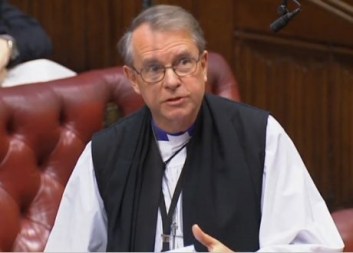 On 26nd February 2018, Baroness Benjamin asked Her Majesty’s Government ‘what plans they have for publicising a detailed evaluation of stage one of the National Child Obesity Strategy; and when a publication timetable for stage two will be produced’. The Bishop of Durham, the Rt Revd Paul Butler, asked a follow up question about free school meals.
The Lord Bishop of Durham:
My Lords, the relationship between childhood obesity and poverty is well evidenced. In the light of warnings by the Children’s Society and others that 1 million children in poverty will miss out on a free school meal under the current proposals for changes to entitlement under universal credit, does the Minister agree that all children in poverty should receive a free school meal to combat child malnutrition by ensuring that they receive a healthy meal at lunchtime? Continue reading “Bishop of Durham – all children in poverty should have free school meals”
Week in Westminster, 19th -23rd February 2018
This week in the House of Lords bishops spoke on the importance of volunteers, on nuclear weapons, and the Ecumenical Marriage Bill. They asked questions about the humanitarian crisis in Syria, women in the prison system, apprenticeships, attacks on Christians in Sudan, social care, child tax credits, and the Democratic Republic of Congo.
Continue reading “Week in Westminster, 19th -23rd February 2018”
Ecumenical Marriage Bill – Bishop of Winchester points to difficulties
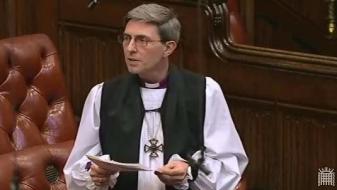 On the 23rd February 2018, Lord Deben’s ‘Ecumenical Marriage Bill’ was debated in the House of Lords at Second Reading. The Bishop of Winchester, the Rt Revd Tim Dakin, spoke during the debate to say that he could not support the Bill for reasons related to detail and due process. The Government also declined to give the Bill its support, but as is convention, it passed Second Reading to be considered further in Committee. The Bishop’s speech and the closing speeches of the Minister and Lord Deben are reproduced below:
The Lord Bishop of Winchester: My Lords, I am grateful to the noble Lord, Lord Deben, for giving us the opportunity to speak about issues of such importance to this Bench as the celebration of marriage and our ecumenical relationships. I first acknowledge the personal and pastoral issues raised by the noble Lord and the way that he has so succinctly put those in his four concluding points, about sacraments, the ecumenical world, the fudges and the ecumenical movement.
I am, therefore, rather embarrassed to start with something slightly more dry and technical. However, I begin by addressing what I believe to be the key issue here, which is constitutional in nature. There is a long-standing constitutional convention, with which noble Lords will be very familiar, that the Church of England makes its own legislation by synodical process. That legislation comes before Parliament for approval, having first been considered by the Ecclesiastical Committee. This Bill represents a departure from that convention. Continue reading “Ecumenical Marriage Bill – Bishop of Winchester points to difficulties”


You must be logged in to post a comment.