
On 1st March 2017 the House of Lords considered the Government’s EU (Notification of Withdrawal) Bill at committee. A vote was called on an amendment from Labour Peer Baronss Hayter. Five Lords Spiritual took part. Continue reading “Votes: EU (Notification of Withdrawal) Bill”
Author: parliamentaryunit
Bishop of St Albans asks about local business rates
 On 1st March 2017, the Bishop of St Albans asked a follow up question to Lord Kennedy of Southwark’s oral question on business rates. Lord Kennedy asked what action the government proposed to take in light of concerns expressed about the increases in business rates.
The Lord Bishop of St Albans: My Lords, will the Minister inform the House whether Her Majesty’s Government would look at the feasibility of setting the threshold of business rate relief at a local level, thereby protecting small independent businesses, many of which are now at risk, especially in high-value areas? Continue reading “Bishop of St Albans asks about local business rates”
Church Commissioners – Clergy Credit Unions
 On 1st March 2017 the Second Church Estates Commissioner, Rt Hon Dame Caroline Spelman MP, answered a written question from Mark Hendrick MP on the Churches Mutual Credit Union.
Churches: Credit Unions
Mr Mark Hendrick (Preston): To ask the right hon. Member for Meriden, representing the Church Commissioners, what plans the Churches Mutual Credit Union (CMCU) has to allow members of religious denominations other than the Church of England and the Catholic churches to become members of the CMCU. (64096) Continue reading “Church Commissioners – Clergy Credit Unions”
Church Commissioner Written Question – Procurement
On 1st March 2017 the Second Church Estates Commissioner, Dame Caroline Spelman MP, answered two written questions from Jon Trickett MP about the membership of the Churches Mutual Credit Union and procurement procedures in the Church Commissioners.
Church Commissioners: Procurement
Jon Trickett MP (Hemsworth): To ask the right hon. Member for Meriden, representing the Church Commissioners, how many Church Commissioners’ staff oversee contracts which have been awarded to external providers. (64993)
Dame Caroline Spelman: The Church Commissioners external contracts are managed either in partnership with the other National Church Institutions through shared office services schemes or by the Corporation of Church House, who manage the building. Continue reading “Church Commissioner Written Question – Procurement”
Votes: Neighbourhood Planning Bill
On 28th February 2017 the House of Lords voted on an amendment to the Government’s Neighbourhood Planning Bill. The Bishop of St Albans took part in the vote.The Archbishop of York spoke in favour of the amendment. Continue reading “Votes: Neighbourhood Planning Bill”
Neighbourhood Planning Bill: Archbishop of York supports amendment on community value of pubs
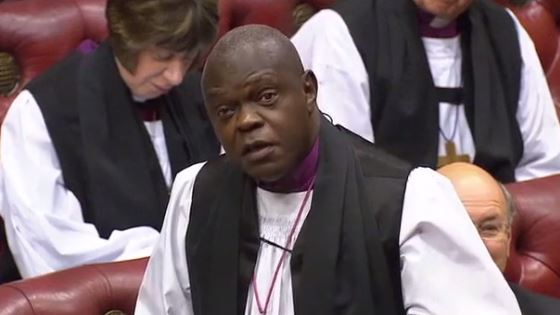 On 28th February 2017 the House of Lords considered the Government’s Neighbourhood Planning Bill at Report Stage. The Archbishop of York, Most Revd and Rt Hon John Sentamu, spoke in favour of an amendment to ensure planning permission had to be granted for a change of use for pub buildings. The amendment was passed at a vote. Continue reading “Neighbourhood Planning Bill: Archbishop of York supports amendment on community value of pubs”
Bishop of Peterborough asks whether Government is addressing China’s North Korean refugee policy
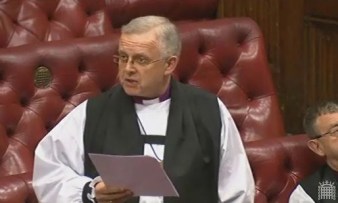 On 28th February, Lord Alton of Liverpool asked the Government, in the light of the sanctions imposed by China against North Korea following the assassination of Kim Jong-nam and the recent ballistic missile test, whether they will call in the North Korean Ambassador. The Bishop of Peterborough, the Rt Revd Donald Allister, asked a follow up question about the Government’s engagement with China over their policy to return North Korean refugees to the country. Continue reading “Bishop of Peterborough asks whether Government is addressing China’s North Korean refugee policy”
EU (Notification of Withdrawal) Bill: Bishop of Newcastle highlights contribution of Newcastle University to North East economy
 On 27th February 2017, Labour Peer Baroness Quin moved an amendment to the Government’s EU (Notification of Withdrawl) Bill, requiring Government to undertake an impact assessment of the impact of Brexit on the North-East of England. The Bishop of Newcastle, the Rt Revd Christine Hardman, spoke to the amendment to highlight the contribution of Newcastle University to the North-East economy. The amendment was later withdrawn after debate.
Bishop of Newcastle: My Lords, I declare an interest as a member of the court of Newcastle University. The amendment tabled by the noble Baroness, Lady Quin, and the noble Lord, Lord Shipley, asks for an impact assessment of the effect of Brexit on the economy of the north-east. When we think about that economy, perhaps our thoughts turn first to the EU funding that the economy receives and then to the manufacturing sector. But the city of Newcastle is deeply enriched by the presence of two first-class universities, and there are 50,000 students in Newcastle. Tomorrow a report will be released to the media which details the extraordinary contribution of Newcastle University to the economy of the north-east. Continue reading “EU (Notification of Withdrawal) Bill: Bishop of Newcastle highlights contribution of Newcastle University to North East economy”
Bishop of Newcastle pays tribute to late Lord Waddington
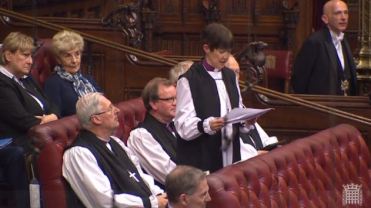 On Monday 27th February 2017, the Bishop of Newcastle, the Rt Revd Christine Hardman, paid tribute on behalf of the BIshops’ Benches to Lord Waddington, the former Leader of the House, who had died the previous week.
The Lord Bishop of Newcastle: My Lords, I would like to be associated with the comments already made about the late Lord Waddington, and to add a few words of tribute on behalf of these Benches. Although I came to the House shortly after Lord Waddington retired, I know that his Christian faith was a source of great comfort and inspiration to him. Continue reading “Bishop of Newcastle pays tribute to late Lord Waddington”
Bishop of Durham asks Government if it will accept unaccompanied child refugees in next financial year
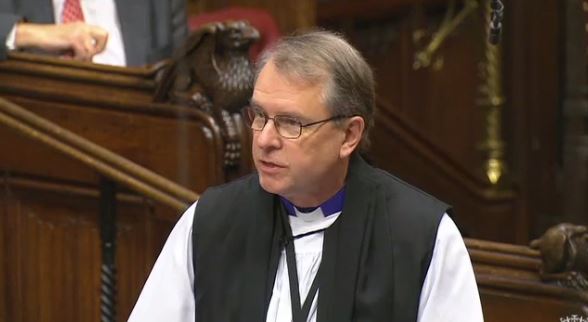 On 27th February 2017 the Bishop of Durham, Rt Revd Paul Butler, received a written answer to a question about unaccompanied child refugees.
The Lord Bishop of Durham: To ask Her Majesty’s Government whether they will accept unaccompanied child refugees under section 67 of the Immigration Act 2016 in the financial year 2017–18. Continue reading “Bishop of Durham asks Government if it will accept unaccompanied child refugees in next financial year”


You must be logged in to post a comment.