
On 24th November 2015 Lord Greaves asked Her Majesty’s Government “what proposals they have for strengthening the role and powers of town and parish councils, particularly as part of the northern powerhouse.” The Bishop of St Albans asked a follow up question:
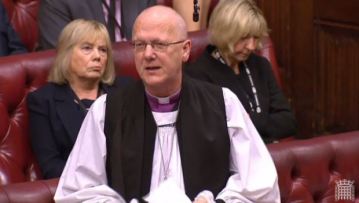 The Lord Bishop of St Albans: My Lords, the northern powerhouse has great potential to bring social and economic benefit to many people, but it is fundamental from the very start that we embed it in the rural communities. Micro-businesses employing fewer than 10 people make a very significant contribution to the rural economy, yet previous approaches to regional development tended to ignore or sideline the rural dimension of it. Will the noble Lord the Minister assure the House that, with the northern powerhouse and other devolved areas, there will be a specific, focused and relevant approach to providing resources for small rural businesses? Continue reading “Bishop of St Albans asks about support for rural small businesses”
 The Lord Bishop of Leeds: My Lords, would the Minister agree with me that some of the language we are using in this debate reflects an assumption that the world is binary and divided into allies and enemies? The reality is that allies become enemies, and enemies become allies. In any strategic approach to the future, could we be assured that that possibility will be taken into account? I worked on elements to do with Iraq in the 1980s, and we can see what happened in the 2000s.
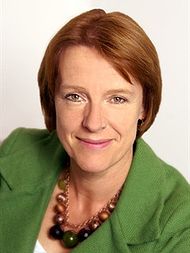 Mr Stewart Jackson (Peterborough): To ask the right hon. Member for Meriden, representing the Church Commissioners, for what reason the Church Commissioners have not released land for the construction of a primary school, in accordance with previous legal undertakings, at the Paston Reserve urban extension in Peterborough; and if she will make a statement.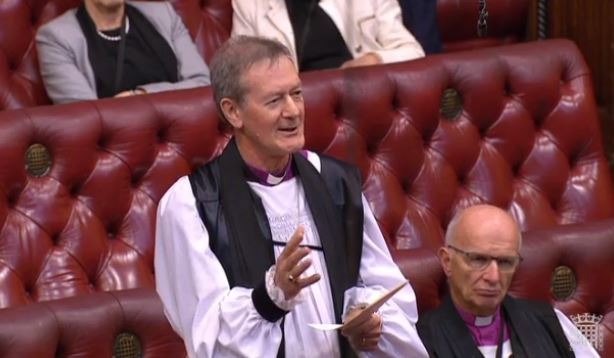
 The Lord Bishop of Worcester: My Lords, does the Minister accept that, whatever the statistics regarding effectiveness, for those who participate in it restorative justice is a profoundly affecting experience? I have witnessed the restorative justice programme in HM Prison Hewell in my diocese, and for all concerned—particularly for members of the community—it is a deeply affecting experience which is profoundly for the common good.
  The Lord Bishop of Durham: My Lords, I support many of the principles underlying this Bill: the importance of personal, as well as collective, responsibility; the value of decent work, not just financially, but for human dignity; the role of the welfare system in encouraging positive behaviours; the recognition that poverty is not simply about lack of income; and the desire for fairness for those who receive from and contribute to the system, including the vast majority of us who do both at different points in our lives. None of these is completely new, but the Government’s approach to welfare reform has certainly reinvigorated the debate about poverty, helping to challenge implicit assumptions and some very tired thinking. Governments naturally want to distinguish themselves, but in seeking to introduce a fresh perspective on old problems, there is always a danger of going too far or of throwing out the good with the bad. That is my concern about some of the measures being discussed today.
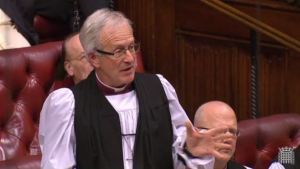 The Lord Bishop of Birmingham: My Lords, I am grateful to the Minister for her repeating of the Statement and, from these Benches, join your Lordships in offering our sympathy for the tragic loss of life and the injuries that occurred in Paris—and, as the noble and learned Lord, Lord Wallace, said, in other parts of the region, in recent weeks.
 The Church of England in Parliament
You must be logged in to post a comment.