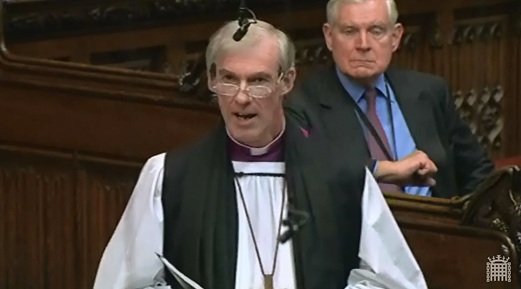
Assisted Dying Bill – Archbishop of York speaks against

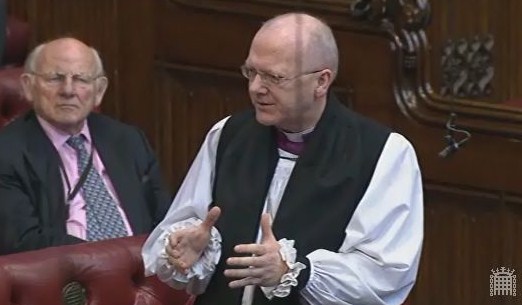
The Archbishop of York, Most Rev John Sentamu, spoke on 18th July 2014 in the Second Reading of the Assisted Dying Bill in the House of Lords.  His speech follows in full:
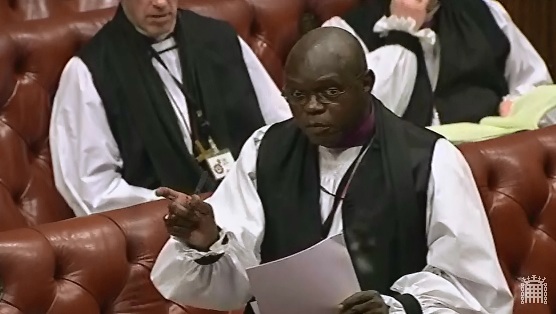
Archbishop of York

My Lords, let me state at the outset that the ‘official’ Church of England position was made very clear on 9th July 2005, when the General Synod voted on a motion referring to the joint submission of the C of E House of Bishops and the Roman Catholic Bishops’ Conference to your Lordships’ House Select Committee [1].  The motion argued strongly against making assisted suicide or euthanasia lawful. The vote was carried by 297 votes to 1.

This position was reaffirmed in a General Synod motion in 2012 [2].

My Lords, this present Bill is not about relieving pain or suffering. It makes that quite clear in its definition of a terminally ill patient to include those whose progressive illness can be relieved but not reversed.   This bill is about asserting a philosophy, which not only Christians, but also other thoughtful people of goodwill who have had experience in care for the dying must find incredible: that is, the ancient Stoic philosophy that ending one’s life in circumstances of distress is an assertion of human freedom.   That it cannot be.   Human freedom is won only by becoming reconciled with the need to die, and by affirming the human relations we have with other people.    Accepting the approach of death is not the attitude of passivity that we may think it to be.   Dying well is the positive achievement of a task that belongs with our humanity.   It is unlike all other tasks given to us in life, but it expresses the value we set on life as no other approach to death can do.    Continue reading “Assisted Dying Bill – Archbishop of York speaks against”

Bishop of Carlisle urges engagement with Indian Government on violence against women

On 17th July 2014, Lord Harries of Pentregarth asked Her Majesty’s Government what is their assessment of the new Government of India and the challenge presented by poverty in that country. The Bishop of Carlisle, the Rt Revd James Newcome, asked a supplementary question.

14.06.09 Bishop of CarlisleThe Lord Bishop of Carlisle: My Lords, does the Minister agree that while the gender gap in employment and political participation is narrowing in India, there is still much that needs to be done by the Government for the health and safety of girls and women? If that is the case, can the Minister assure us that this matter will be given the attention it deserves at the Girl Summit being hosted by the UK Government next week?

Baroness Northover: The Girl Summit is extremely important. The right reverend Prelate is right about the gender gap in India, but I also notice that in the budget of last week money was put into trying to ensure that girls attend and are safe in school. I have myself seen a major programme which puts money into the hands of families of girls to try to ensure that they stay in school and have the incentives to be there.

(via Parliament.uk)

Bishop of St Albans asks Government for update on ‘smart meter’ policy and efforts to tackle fuel poverty

On 17th July 2014, Lord Ezra asked Her Majesty’s Government whether, in the light of the recently published statistical report on fuel poverty indicating a rising trend in 2014, they intend to expedite the announcement of their policy for dealing with the matter. The Bishop of St Albans, the Rt Revd Alan Smith, asked a supplementary question.

Bishop of St AlbansThe Lord Bishop of St Albans: My Lords, those who keep a close eye on this area point out that issues of fuel poverty depend on which groups you look at. Clearly, in some groups this is a growing area. Indeed, they assert that there is a connection between the increase in fuel poverty of certain groups and the increase in the number of pre-paid meters that have been installed, partly because it is believed that they are the most expensive way to pay for fuel. In the light of that, can my noble friend tell us what consideration Her Majesty’s Government have given to promoting the five principles on the use of pre-paid meters which were agreed between Consumer Focus and the big six energy companies back in March 2011, to ensure consistency in their installation and use?

Baroness Verma: I am extremely grateful to the right reverend Prelate for his question, which enables me to reassure him and the House that we have looked very seriously at the pre-paid meter issue. We think that people on very low incomes must be among the greater beneficiaries of this policy, which is why we will make sure that through smart meters they are able to top up their meter as if they are topping up a mobile phone, so they have no chance of being cut off when they need their electricity the most.

(via Parliament.uk)

Church Commissioners – Oral and Written Questions

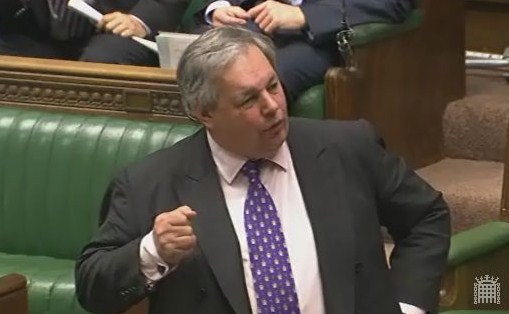
On 17th July 2014, the Second Church Estates Commissioner, the Rt Hon Sir Tony Baldry MP, answered a number of questions on the floor of the House of Commons, during the monthly Church Commissioner Questions slot. He answered questions on food banks, church and cathedral repairs, human trafficking and women bishops. He also answered a written question on Church Commissioners ICT. A full transcript of the session is reproduced below:

14.01 CCQ Baldry

Food Banks

Hugh Bayley (York Central) (Lab): What support the Church of England is giving to food banks.

The Second Church Estates Commissioner (Sir Tony Baldry): Four in five of the Church of England’s 13,000 parish churches are supporting local food banks. Continue reading “Church Commissioners – Oral and Written Questions”

Bishop of Durham supports amendements to tackle child abuse and neglect

“My Lords, I support the amendment. I begin by pointing out that, had I been in this House two years ago, I would not have supported it. It is my experience of listening to and hearing stories, not just from within the church sector but from many sectors, that has led me to be convinced that this is a move we need to make” – Bishop of Durham, 15.7.14

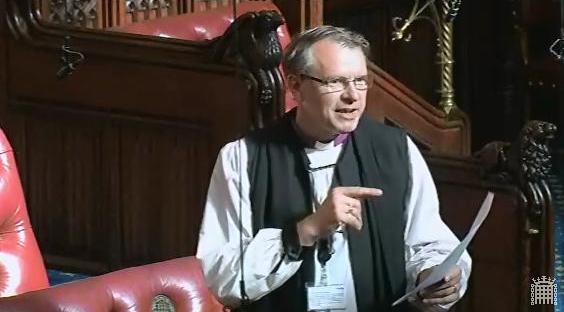
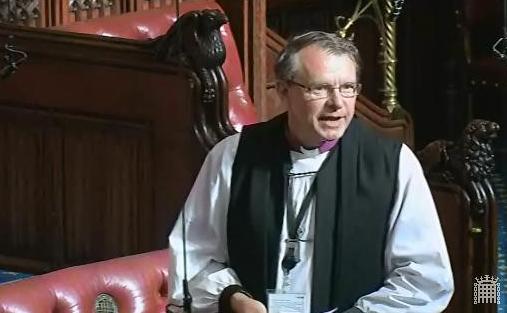
14.06.10 Bishop of Durham 4On 15th July 2014, the Bishop of Durham, the Rt Revd Paul Butler, co-sponsored two amendments to the Government’s Serious Crime Bill, during its Committee Stage. The first amendment sought to make three small changes to legislation making child neglect a criminal offense – raising the age of those covered by the provisions to 18, and made clarifications to the ways in which neglect would be classed as a criminal offense. The second amendment sought to create a duty to report abuse in institutions and activities where there are children and vulnerable adults. Both amendments were withdrawn after they had been debated, pending assurances from the Government.

Continue reading “Bishop of Durham supports amendements to tackle child abuse and neglect”

Bishop of St Albans calls for action of protection the public forest estate

On 15th July 2014, the Bishop of St Albans, the Rt Revd Alan Smith, spoke in support of amendments to the Government’s Infrastructure Bill, during its Committee Stage. The amendments, the the Bishop’s intervention, focused on forestry and the place of the public forest estate. The amendments were withdrawn at the end of the debate.

Bishop of St AlbansThe Lord Bishop of St Albans: My Lords, an interest in forestry has brought me along today. I am hugely grateful to the noble Baroness, Lady Royall, for what she said; indeed, she made many of the points that I wanted to make. I will therefore say just one or two things. In starting, I have come hotfoot from the General Synod, where we had a debate last night on Magna Carta, which I had to read. I discovered that three of the clauses there are about bishops and barons bringing the Executive to account on the forests—in those days King John wanted to make them bigger so that he could take more land. I now find myself here as a Bishop among Barons and Baronesses, reflecting on that. Continue reading “Bishop of St Albans calls for action of protection the public forest estate”

Bishop of Durham calls for victim-centred inquiry into child abuse

On 15th July 2014, Lord Storey asked Her Majesty’s Government what steps they are taking to prevent and tackle child abuse in the United Kingdom. The Bishop of Durham, the Rt Revd Paul Butler, asked a supplementary question:

14.06.10 Bishop of Durham 5The Lord Bishop of Durham: My Lords, in pursuing a review into questions of institutional child abuse, are her Majesty’s Government committed to recognising that listening to the voices of survivors and victims of child abuse is vital at every stage of this inquiry; that their voices, through for example the Stop Church Child Abuse campaign, are clear that ultimately only a full public inquiry will do; and that Sir Keir Starmer would be a trusted member of the inquiry panel?

Lord Ahmad of Wimbledon: The right reverend Prelate again makes a very important point. Let me assure him that the whole intention of this inquiry is to make it open and transparent. While it has been set up on a non-statutory basis at the current time, if the chairman and the panel decide that this requires a statutory underpinning then the Government have already committed to that—indeed, my right honourable friend the Home Secretary has done so. The right reverend Prelate also raises the important point about ensuring that any bodies involved in protection of children from child abuse—be that in the church or voluntary sectors or across the board—are also included in providing evidence. In terms of the specific suggestion, I shall certainly take that back.

(via Parliament.uk)

Bishop of Carlisle leads tributes to departing Leader of the House of Lords

On 15th July, tributes were offered to the out-going Leader of the House of Lords, the Lord Hill of Oareford, following his nomination as the United Kingdom’s candidate to the European Commission. The Bishop of Carlisle, the Rt Revd James Newcome, led the tributes on behalf of the Lords Spiritual.

14.06.09 Bishop of CarlisleThe Lord Bishop of Carlisle: My Lords, I associate those of us on these Benches with the generous comments from around the House about the noble Lord, Lord Hill. My colleagues have been grateful for the support, the wisdom and the guidance of the noble Lord and his office for the Lords spiritual to enable our contribution to the work of the House to match the high levels of all other parts of the House. He also did a wonderful job as Education Minister and he has been a good friend to the Church and to the Lords Spiritual. Continue reading “Bishop of Carlisle leads tributes to departing Leader of the House of Lords”

Written Answers – Second Church Estates Commissioner

On 15th July 2014, the Second Church Estates Commissioner, the Rt Hon. Sir Tony Baldry MP, answered two written questions on behalf of the Church Commissioners, on pay and procurement.

Tony Baldry MP

Pay

Mr Ben Bradshaw: To ask the right hon. Member for Banbury, representing the Church Commissioners, how many officials in the Church Commissioners, of each grade, have remained at that grade since 2010 but received a pay rise; and how much of a rise each such person at each such grade has received.

Sir Tony Baldry: The staff employed by the Church Commissioners and the other national institutions of the Church of England are not part of the civil service and are not on incremental scales. The value of pay awards from 2010 have been as follows: Continue reading “Written Answers – Second Church Estates Commissioner”

Bishop of Carlisle calls for Government action to tackle religious persecution in Republic of Sudan

“…the local Christian diocese has to shoulder most of the burden of caring for people who are in desperate need, and of attempting to feed them when its own resources are pitifully small. Have Her Majesty’s Government given any consideration to providing aid, and so helping to meet people’s basic human rights to food and drink, through the church in that part of Sudan? Heroic efforts are being made to alleviate desperate need, but funding is urgently required” – Bishop of Carlisle, 14.7.14

CarlisleOn 14th July 2014, Baroness Cox led a short debate in the House of Lords to ask Her Majesty’s Government what is their assessment of human rights in the Republic of Sudan. The Bishop of Carlisle, the Rt Revd James Newcome, took part in the debate. He spoke about the dire humanitarian situation in the country and the increasing role being played by the church; and also highlighted a number of instances of persecution on the grounds of religious beliefs, urging the Government to put pressure on the Republic of Sudan to respect and promote Article 18 of the UN Declaration of Human Rights.

The Lord Bishop of Carlisle: My Lords, I, too, am most grateful to the noble Baroness, Lady Cox. Unlike her, I cannot claim to be an expert on Sudan, but some of my colleagues who would normally speak on this issue have been unavoidably detained today in another debate of some importance to the church at the General Synod in York. I am very grateful for this opportunity to contribute to this debate because the human rights issues it raises are of such enormous significance, not only for the individuals directly concerned but for the way in which we direct our foreign aid and conduct our foreign policy. Continue reading “Bishop of Carlisle calls for Government action to tackle religious persecution in Republic of Sudan”