Second Church Estates Commissioner highlights role of Near Neighbours in community integration

During the questions following an urgent statement in the House of Commons on extremism, the Second Church Estates Commissioner, Rt Hon Sir Tony Baldry MP, raised the important role played by the Near Neighbours programme in promoting community integration.


14.01 CCQ BaldrySir Tony Baldry (Banbury): May I remind my right hon. Friend that, after the general election, practically the first meeting the Secretary of State for Communities and Local Government attended was at Lambeth Palace, where all the nation’s faith leaders were present? He committed the Government to fund and support the Near Neighbours programme, which enables faith communities throughout the country to work together to promote integration and tackle extremism. If this “duff up the Home Secretary” urgent question has achieved nothing else this afternoon, it will at least, hopefully, better explain to the Opposition and others where the division of responsibilities lie in government for counter-terrorism on the one hand and community integration on the other.

Mrs May: My right hon. Friend is absolutely right. He is right to draw attention to the excellent work the Department for Communities and Local Government has been doing under the leadership of my right hon. Friend, the Secretary of State. Indeed, my right hon. Friend, the noble Baroness Warsi has been doing very important work to bring communities together, particularly faith communities, to share their experiences and increase understanding between them. That is a vital part of the integration work that I would have hoped we all, across the Chamber, accept is necessary. We should support it wherever we see it.

(via Parliament.uk)

Queen’s Speech 2014: Bishop of St Albans on the rural economy

“Subsidiarity must be a key principle in any reforms—working towards a more participatory democracy, in which all people feel that they have a stake in a shared society and want to engage in the democratic process….We have to insist that people do not retreat into an unthinking, uncaring nimbyism that refuses to address the real problems facing us”- Bishop of St Albans 05/06/14

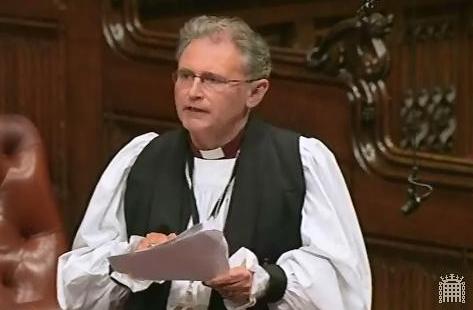
On 5th June 2014 in the third contribution from the Bishop’s Benches in response to the Queen’s Speech, the Bishop of St Albans, the Rt Revd Alan Smith, spoke about the rural economy and the impact that a wide range of issues, including housing, energy security and the Government’s plans for forestry, would have on its future. 

Bishop of St Albans

The Lord Bishop of St Albans: My Lords, I, too, congratulate my colleague the right reverend Prelate the Bishop of Rochester on his maiden speech. From these Benches, I can say that we are delighted that he will bring a great deal of insight and experience, not least into housing and prisons, into our debates. Continue reading “Queen’s Speech 2014: Bishop of St Albans on the rural economy”

Bishop of Derby’s response to Modern Slavery Bill Announcement

Bishop of Derby’s response to Modern Slavery Bill Announcement

(From the website of the Diocese of Derby)

5th June 2014

The Bishop of Derby, The Rt Revd Dr Alastair Redfern has commented on the Modern Slavery Bill announced in the Queen’s speech at the opening of parliament. Continue reading “Bishop of Derby’s response to Modern Slavery Bill Announcement”

Maiden speech of the Bishop of Rochester: Housing and the Queen’s Speech

“I cannot rest content for as long as there are those without somewhere to call home and, more sharply, without security in relation to the shelter over their head” – Bishop of Rochester, 5/6/14

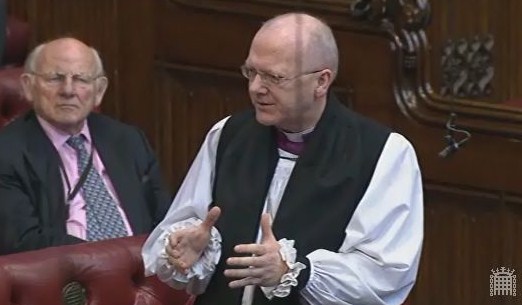
In the second response to the Queen’s Speech by the Lords Spiritual, Rt Rev James Langstaff, Bishop of Rochester delivered a maiden speech about housing. Welcoming some of the provisions in the Queen’s Speech about new home building, the Bishop voiced concern about supply and affordability and raised the work of Housing Justice and the Faith in Affordable Housing project. 

Hear an interview with the Bishop about his maiden speech and his thoughts on joining the House of Lords here

14.04.01 Rochester intro 2

The Lord Bishop of Rochester (Maiden Speech): My Lords, I thought that your Lordships might welcome a maiden speech as a kind of interlude in the midst of today’s business. I am most grateful for the welcome that I have received in your Lordships’ House since my introduction on, of all auspicious days, April Fools’ Day. I am particularly grateful for the courtesy, kindness and helpfulness shown by the Lord Speaker, Black Rod, the Clerk of the Parliaments and their staff. Continue reading “Maiden speech of the Bishop of Rochester: Housing and the Queen’s Speech”

Queen’s Speech 2014: Bishop of Leicester on local government and civic identity

..without some risk, innovation and courage in this area, local government will continue to be starved not only of cash but of the civic talent it desperately needsBishop of Leicester, 5/6/14

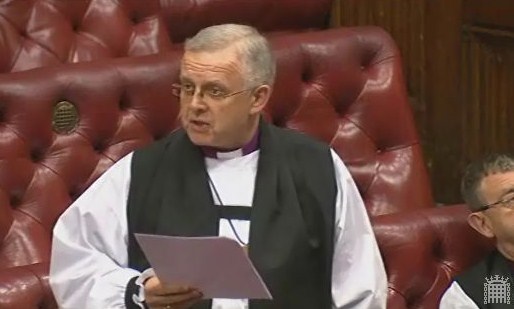
On 5th June 2014 in the first of the responses from the Bishops’ Benches to the Queen’s Speech, Rt Rev Tim Stevens, Bishop of Leicester focused on the need for revitalisation of local government. Citing political disconnect and the pledge in the Queen’s Speech to deliver a fairer society, the Bishop called for a creative reinvigoration of the relationship between central and local government, not least in the areas of health and social care. He cited Leicester’s plans for the reinterment of Richard III as an example of good local partnerships that also help create a sense of shared local identity. 

14.04.01 Bishop of Leicester


The Lord Bishop of Leicester: My Lords, I want to take the opportunity of this debate to raise some questions about the balance of power between London and the regions in our country today. The gracious Speech emphasised the new financial powers to be implemented for the Scottish Parliament and the National Assembly for Wales. While this is welcome, it highlights even more acutely the need for urgent action to address the very different environment for local government in England, in spite of what the Minister briefly said to us about resourcing local economic partnerships.

Continue reading “Queen’s Speech 2014: Bishop of Leicester on local government and civic identity”

A State Opening tradition – the Select Vestries Bill

After the General Election of May 1997, once the Queen had delivered her Speech to the new Parliament and departed it fell to Lord Richard, as Labour’s freshly appointed Leader of the House of Lords, to move the first item of business.

He announced to the assembled Lords Spiritual and Temporal:

“My Lords, I beg to move that the Bill for better regulating Select Vestries be now read a first time. I am not sure why I am doing this, but I am.”

[HL Deb 14 May 1997 vol 580 c9]
2013 State opeing
The State Opening of Parliament

Continue reading “A State Opening tradition – the Select Vestries Bill”

Bishops vote to make membership or support of BNP or NF disciplinary offence for clergy

(press release via ChurchofEngland.org)

BNP and National Front incompatible with teaching of Church

03 June 2014

The House of Bishops of the Church of England have voted to make membership or support of the British National Party (BNP) or National Front (NF) a potential disciplinary offence for its clergy. Continue reading “Bishops vote to make membership or support of BNP or NF disciplinary offence for clergy”

Can Lords Spiritual vote in general elections?

Archbishop of Canterbury Robert Runcie and Prime Minister Margaret Thatcher

When Robert Runcie, Archbishop of Canterbury, revealed in 1983 that he had voted in the recent general election (though not who for), he was unlikely to have imagined that it would give rise to newspaper headlines and questions in parliament. He had not broken the law, though the subsequent debate shone a light on an otherwise little-known feature of the House of Lords.  Continue reading “Can Lords Spiritual vote in general elections?”

Elder Abuse – Answers in Schools and Civil Society says Bishop of Oxford

“Western culture has developed—or, rather, deteriorated—into an atomised individualism… As we have scattered to our own personal enclaves, as it were, we have left the elderly behind as unproductive, unrewarding problems” – Bishop of Oxford, 14/5/14


11.12.15 Bishop of OxfordOn 14th May 2014 the House of Lords debated a question for short debate from Baroness Cumberlege, “To ask Her Majesty’s Government what assessment they have made of the incidence of elder abuse across the nation.” The Bishop of Oxford, Rt Rev John Pritchard spoke about the need to focus on schools and civil society to counter recent worrying trends.

Continue reading “Elder Abuse – Answers in Schools and Civil Society says Bishop of Oxford”

Free Schools – independent or interdependent? Question from Bishop of Oxford

In the House of Lords on 14th May 2014, Baroness Jones of Whitchurch asked Her Majesty’s Government “what early intervention measures they are putting in place to reduce the educational and financial implications of failing free schools.” The Bishop of Oxford, who chairs the Church of England’s Board of Education, asked a supplementary question:

Bishop of Oxford

The Lord Bishop of Oxford: My Lords, given that prevention is better than costly cure, can the Minister let us know what is being done to make sure that free schools are established as groups of interdependent schools, rather than independent and autonomous units? Can he let us know how what we have learnt from the academies programme—that we need to get schools grouped together in multi-academy trusts—is being transferred to free schools?

Lord Nash: The right reverend Prelate makes an extremely good point. Although it is true that a number of outstanding schools have been established entirely independently, the way forward is the school-to-school support model, with schools operating in local clusters and secondaries working with their primaries. We are taking this learning, which has been very successful in the academy movement, into the free schools movement.

(via Parliament.uk)